
TL;DR – Quick Answer
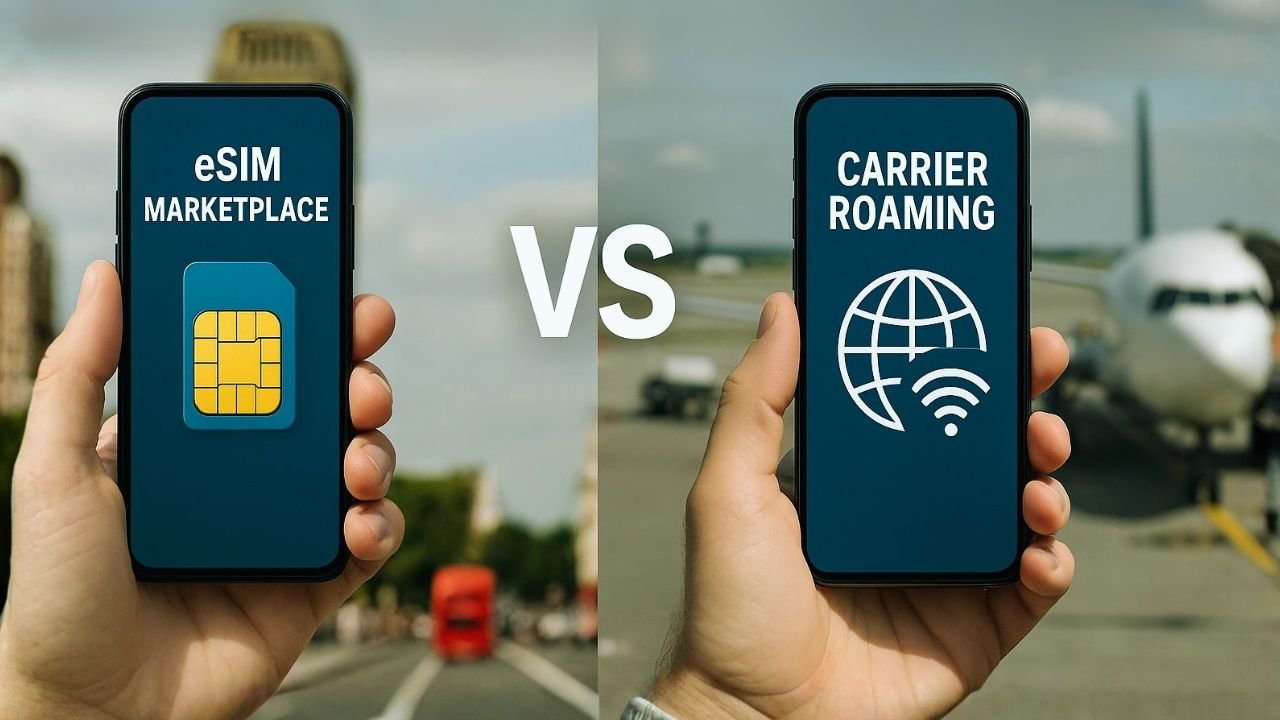
For most travelers with unlocked phones, eSIM marketplaces are the clear winner. They’re typically 60-85% cheaper than carrier roaming, easier to set up, and offer better coverage flexibility. You can grab a 7-day European data plan for $8-15 versus $60-100+ with carrier roaming.
However, carrier roaming still makes sense for short trips (1-3 days), business travelers needing seamless connectivity, or those who prefer zero setup hassle and don’t mind premium pricing. The best part? Your phone stays on your home number while using eSIM data, so you don’t miss any calls or texts.
Head-to-Head Comparison
| Feature | eSIM Marketplaces | Carrier Roaming |
|---|---|---|
| Average Cost (7 days in Europe) | $8-$15 for 1-3GB | $60-$100+ (often $10/day passes) |
| Setup Complexity | 5-10 minutes (scan QR code) | Instant (often auto-activates) |
| Data Speeds | 4G/5G (depends on plan) | Same as your home network (4G/5G) |
| Coverage Flexibility | Choose specific countries/regions | Limited to carrier’s roaming agreements |
| Plan Customization | Pick exact data amount and duration | Pre-set daily/weekly plans |
| Keep Your Phone Number | Yes (calls/SMS on primary line) | Yes (same number, seamless) |
| Surprise Charges Risk | None (prepaid, set amount) | Medium to High (overages possible) |
| Customer Support | App-based, varies by provider | Your existing carrier support |
| Best For | Budget travelers, long trips, tech-savvy users | Short trips, business travelers, simplicity-seekers |
| Device Requirements | Unlocked phone with eSIM support | Any phone (locked or unlocked) |
Understanding Your Options in 2026
Traveling internationally with your phone doesn’t have to mean choosing between insane roaming bills or going completely off-grid. The game has completely changed with eSIM technology, and if you’ve got an unlocked phone, you’re sitting on a golden ticket to massive savings and flexibility.
Here’s the thing: both eSIM marketplaces and carrier roaming have their place, but they serve very different needs and budgets. Let’s break down everything you need to know so you can make the smart choice for your next trip.
What Are eSIM Marketplaces?
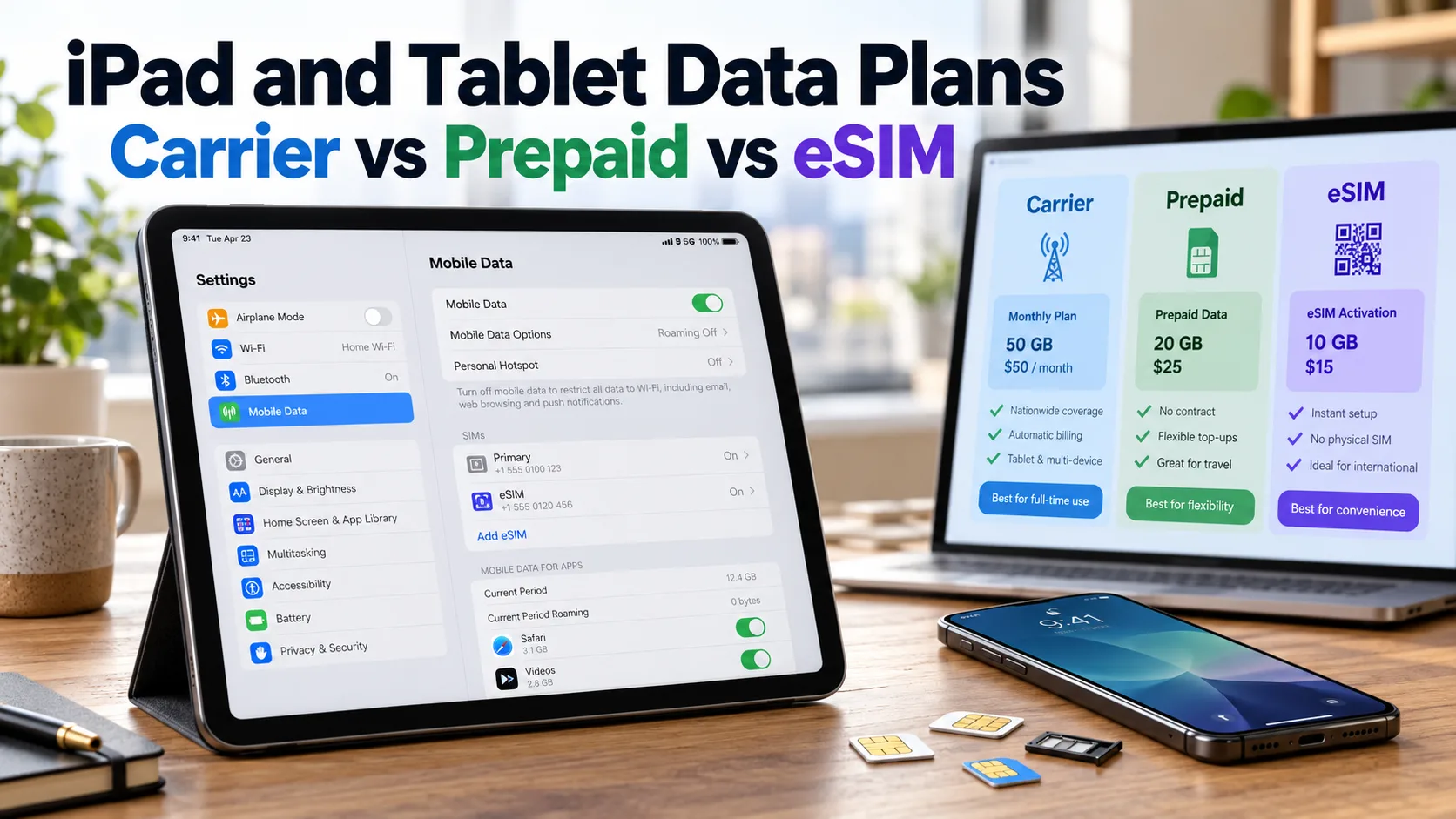
Think of eSIM marketplaces as the Airbnb of mobile connectivity. Instead of being locked into your home carrier’s expensive international plans, you’re shopping from a global marketplace of data providers. Companies like Airalo, Holafly, Nomad, Ubigi, and Saily let you browse hundreds of data plans across 180+ countries.
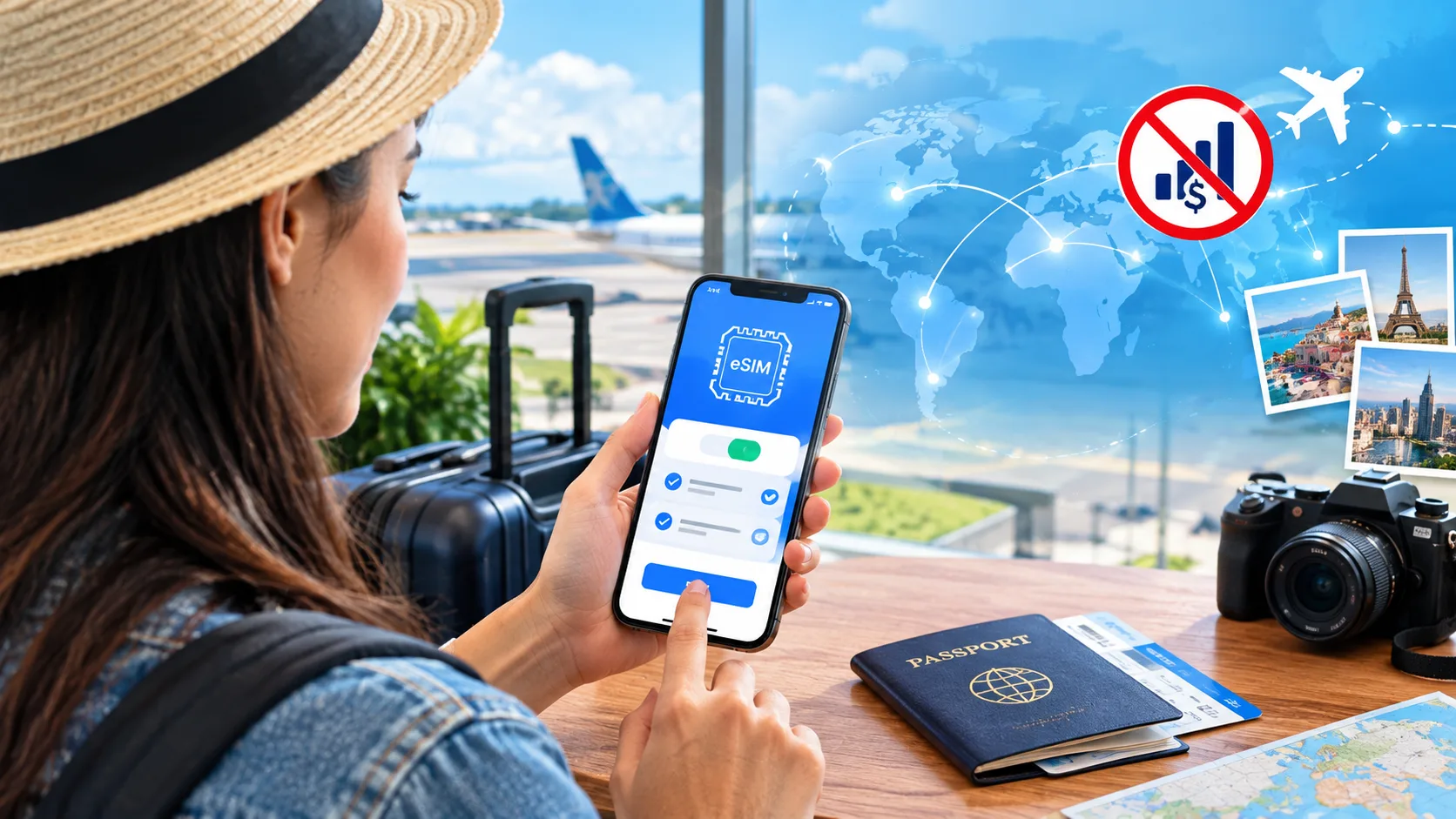
The magic happens through eSIM technology—a digital SIM card that’s already built into your phone. No physical SIM swapping, no hunting for shops in foreign airports. You buy a plan online, scan a QR code, and boom—you’re connected. Your phone can actually hold multiple eSIMs at once, so your home number stays active for calls and texts while the eSIM handles your data.
What Is Carrier Roaming?
Carrier roaming is the traditional way to stay connected abroad—you literally just land, turn on your phone, and it works. Your carrier (Verizon, AT&T, T-Mobile, etc.) has agreements with networks in other countries, so your phone automatically connects to partner networks. Everything stays on your regular number, your contacts reach you the same way, and there’s zero setup required.
The catch? You’re basically paying premium prices for that convenience. Most carriers offer “Travel Passes” or “International Day Passes” that run $10-12 per day, which sounds reasonable until you realize a week-long trip just added $70-85 to your travel budget.
The Real Cost Breakdown
eSIM Marketplace Option:
Carrier Roaming Option:
The math is pretty brutal for carrier roaming. You’re looking at spending 5-10 times more for basically the same service. Even if you only use data half the days (which triggers carrier charges), you’re still paying way more than an eSIM plan.
Pro Tip: Some premium credit cards (Chase Sapphire Reserve, Amex Platinum) offer carrier roaming reimbursements or partnerships with eSIM providers. Check your card benefits before you travel—you might score free international data.
eSIM Marketplaces:
Carrier Roaming:
Setup: Convenience vs Control
Setting Up an eSIM (5-10 Minutes)
Honestly, it sounds more complicated than it actually is. Most people knock this out in 5 minutes with the app walking them through each step. The trickiest part is usually remembering to activate it when you land—many travelers install it before the trip but forget to toggle it on at the destination.
Setting Up Carrier Roaming (Instant)
That’s it. Seriously. The setup is basically non-existent, which is why business travelers and less tech-savvy folks love it. You’re paying for that convenience, but for some people, it’s absolutely worth it.
Important: With carrier roaming, ALWAYS enable the “daily pass” or specific international plan before you travel. If you just turn on data roaming without a plan, you could get hit with per-MB charges that’ll make your eyes water ($2-10 per MB in some cases).
When to Choose Each Option
Reliability: What Actually Matters
Network Quality
Here’s where things get interesting. Both options connect you to the same local networks in your destination country—the difference is how you’re connecting and what data speeds you’re getting.
eSIM marketplaces partner with local carriers (often the same ones your home carrier uses for roaming). Premium eSIM providers usually deliver full 4G/5G speeds, but budget options might throttle to 3G or have deprioritized data during peak times. Always read the fine print on speed limitations.
Carrier roaming typically offers the same speeds you’d get at home, assuming the local network supports it. Your carrier has stronger negotiating power with international partners, so you’re less likely to face throttling. However, you’re limited to your carrier’s roaming agreements—if they don’t have a good partner in your destination, your experience could be spotty.
Coverage Differences
This is where eSIMs shine. Going to Albania, Georgia, or Morocco? Your carrier might have terrible or no roaming coverage. With eSIM marketplaces, you can search for providers with strong local networks in those exact countries. Some eSIM plans even let you connect to multiple networks, automatically jumping to the strongest signal.
eSIM Reliability Advantages
eSIM Reliability Challenges
Carrier Roaming Reliability Advantages
Carrier Roaming Reliability Challenges
Reliability: What Actually Matters
Best Practices for International Connectivity
Before You Leave
Before You Leave
Money-Saving Pro Tips
The Bottom Line
If you’ve got an unlocked phone and you’re traveling for more than a couple of days, eSIM marketplaces are the smart play. You’ll save a ton of money, get more flexibility, and it’s really not that complicated once you’ve done it once. The setup takes 10 minutes, and the savings add up fast.
Carrier roaming still has its place for ultra-short trips, business travel where you can’t afford any hiccups, or if you’re someone who genuinely values simplicity over savings. There’s no shame in paying for convenience—just do it with your eyes open about the cost difference.
The best advice? Try an eSIM on your next trip. Start with a short trip to a nearby country so you’re not too stressed if something goes wrong. Once you see how easy it is (and how much you save), you’ll never go back to expensive carrier roaming.
Your wallet will thank you, and honestly, it feels pretty good to be connected abroad without that nagging worry about bill shock when you get home. Happy travels!
Frequently Asked Questions
Yes! This is actually a smart strategy. Set your eSIM as your primary data line and keep your carrier SIM active for voice calls and SMS. Your phone can handle both simultaneously. Just make sure data roaming is OFF for your carrier SIM (to avoid charges) and ON for your eSIM.
Nope! Your original phone number stays completely active. The eSIM is purely for data (internet) in most cases. People can still call and text your regular number. Some eSIM plans do include a new local number for making calls, but your home number keeps working simultaneously.
Go to Settings → About → Carrier Lock (iPhone) or Settings → Connections → SIM card manager (Android). If it says “No SIM restrictions” or “Unlocked,” you’re good. If it’s locked, contact your carrier—they’re required to unlock your phone if you’ve paid it off and met the contract terms (usually 60-90 days of service).
Most eSIM apps let you top up instantly with more data. You’ll get a notification when you’re running low. The app-based purchase takes 2-3 minutes, and you’re back online. Alternatively, you can buy a completely new eSIM plan from a different provider if you want to switch.
eSIMs are actually MORE secure than physical SIM cards because they can’t be physically stolen or swapped. They use the same encryption as regular SIMs. Buy from reputable providers (Airalo, Holafly, Nomad, Ubigi), avoid sketchy cheap options, and you’re golden. Use a VPN for extra security on public WiFi.
This varies wildly by provider. Most eSIM marketplaces don’t offer refunds once the plan is activated, but they’ll usually provide support credits if there are technical issues. Some premium providers offer 7-day money-back guarantees. Always read the refund policy before purchasing.
Not while you’re at sea. eSIMs (and carrier roaming) only work when your phone connects to land-based cell towers. When you’re in port, they work perfectly. At sea, you’d need the ship’s satellite WiFi packages, which are expensive regardless of your phone setup.
There’s no single “best”—it depends on where you’re going. Airalo has the widest coverage (190+ countries) and good prices. Holafly offers unlimited data plans but costs more. Nomad has excellent regional plans. Ubigi has strong European coverage. Saily (by NordVPN) offers good security features. Compare prices and reviews for your specific destination.
You control which line is used for what. In your settings, you designate your “Primary” line (usually your home carrier) for calls/texts and your “Cellular Data” line (usually the eSIM) for internet. Your phone will automatically use the right line for each function once you’ve set it up.
Most eSIM plans allow hotspot/tethering, but check the terms—some budget plans restrict it. Carrier roaming typically allows hotspot use if your home plan does. Keep in mind that hotspot sharing drains your data much faster than just using your phone.
Disclaimer:
This article provides general information about eSIM marketplaces and carrier roaming options as of November 2025. Prices, plans, and coverage vary significantly by provider, destination, and individual circumstances. Always verify current pricing, coverage maps, and terms with your specific carrier or eSIM provider before traveling. Carrier policies, roaming agreements, and eSIM compatibility can change. We’re not affiliated with any carrier or eSIM provider mentioned. This content is for informational purposes only and should not be considered professional telecommunications advice.