
Most Americans assume that the phone they paid for is, well, theirs. The reality is a little messier. Carriers can legally “lock” your device to their own network for a set period, and the rules about when you can break that lock — and how — are scattered across federal law, FCC orders, and voluntary industry commitments that change by carrier.
If you’ve ever tried to switch from AT&T to T-Mobile, take your phone abroad, or sell a used iPhone, you’ve bumped into the edges of phone unlock laws in the US. The good news: unlocking your own phone is legal. The slightly more complicated news: when and how your carrier has to let you do it depends on which carrier you’re on, when you bought the device, and what kind of plan you signed up for.
This guide walks through everything you need to know about phone unlock laws USA-wide — the landmark act that made unlocking legal, the FCC’s role, the current rules at AT&T, T-Mobile, and Verizon, and the practical steps to exercise your consumer rights.
Key Takeaways
- Unlocking your own phone is legal in the U.S. thanks to the Unlocking Consumer Choice and Wireless Competition Act, signed into law on August 1, 2014, which restored the DMCA exemption for consumer phone unlocking.
- Carriers don’t have to unlock on a single national timeline. Phone unlock laws US-wide protect your right to unlock, but the when is set by each carrier’s policy and the voluntary CTIA Consumer Code.
- Verizon’s rules tightened significantly in 2026. After the FCC granted Verizon a waiver on January 12, 2026, devices bought on or after January 27, 2026 stay locked until fully paid off, with a 35-day delay for certain online payment methods.
- AT&T and T-Mobile are more predictable. AT&T unlocks postpaid devices after 60 days (6 months prepaid); T-Mobile unlocks postpaid after 40 days (365 days prepaid), provided the device is paid off and the account is in good standing.
- The safest shortcut is buying unlocked. iPhones, Samsung Galaxy, Motorola, and Google Pixel devices purchased directly from the manufacturer ship unlocked and skip carrier timelines entirely.
Is Unlocking Your Phone Legal in the U.S.?
Yes — unlocking a phone you own is legal in the United States. But that wasn’t always the case.
In October 2012, the Library of Congress ended a Digital Millennium Copyright Act (DMCA) exemption that had previously protected phone unlocking, briefly making it illegal for consumers to unlock newly purchased phones. The public pushed back hard. A White House petition gathered more than 114,000 signatures in 30 days, prompting both the FCC and Congress to act on the issue.
Two years later, the issue was resolved with new federal legislation that remains the foundation of phone unlock laws US-wide today.
The Law Behind It: The Unlocking Consumer Choice and Wireless Competition Act
The cornerstone of phone unlock laws in the US is the Unlocking Consumer Choice and Wireless Competition Act. It was introduced by Senator Patrick Leahy, passed the Senate by unanimous consent on July 15, 2014, passed the House by voice vote on July 25, 2014, and was signed into law by President Barack Obama on August 1, 2014.
What it actually does: it reinstated an exemption to the DMCA that allows consumers to circumvent the software locks on used wireless handsets so they can connect those devices to a different wireless network, as long as the new network’s operator authorizes the connection. In plain English, it made unlocking your phone legal again.
A few important nuances:
- The law protects the consumer’s right to unlock. It doesn’t directly force carriers to do the unlocking for you on a fixed timeline.
- DMCA exemptions are not permanent — they must be reauthorized periodically by the U.S. Copyright Office. The phone unlocking exemption has been renewed at every triennial review since.
- The act applies to wireless telephone handsets. Other connected devices (tablets, modems) sometimes fall under separate rules.
So the act of unlocking is protected by federal law. Whether your carrier has to help you do it is a separate question — and that’s where the FCC and carrier policies come in.
What the FCC Says (and What Changed in 2026)
The Federal Communications Commission has spent years trying to set a single, nationwide standard for when carriers must unlock customer phones.
In February 2014, CTIA — the trade group that represents the wireless industry — adopted six voluntary standards on mobile device unlocking into its Consumer Code for Wireless Service. AT&T, T-Mobile, and Verizon are all signatories to that code, along with many smaller carriers.
In June 2024, then-FCC Chairwoman Jessica Rosenworcel announced a Notice of Proposed Rulemaking that would have required all carriers to unlock mobile phones within 60 days of activation. The proposal entered public comment but was never finalized as a universal mandate.
Then things shifted. On January 12, 2026, the FCC granted Verizon’s request to waive a rule that had required the company to unlock phones after 60 days — a condition originally tied to Verizon’s 2007 purchase of 700 MHz spectrum. The FCC’s stated reasoning was that the unlocking requirement incentivized theft of Verizon handsets, and that a uniform industry standard would help stem the flow of devices into the black market.
The practical effect for Verizon customers — and for phone unlock laws in the US more broadly — was big. Within weeks, Verizon rolled out a much stricter policy that other carriers may eventually mirror.
AT&T, T-Mobile, and Verizon: Current Unlock Policies
Each major carrier handles unlocking a little differently. Here’s where each stands in 2026.
AT&T
AT&T’s policy is the simplest of the three. For postpaid customers, AT&T requires the device to have been purchased more than 60 days prior, paid in full (or with any installment plan balance at zero), the account to be current, and the device not to have been reported lost or stolen. If you meet all those, AT&T typically unlocks the phone automatically — often within 24 to 48 hours of eligibility.
For prepaid AT&T customers, the device needs six months of paid AT&T service, can’t be active on another account, and can’t be reported lost or stolen.
iPhone users can verify status by going to Settings > General > About > Carrier Lock. “No SIM restrictions” means the phone is unlocked.
T-Mobile
T-Mobile requires that the phone be sold by T-Mobile, not reported lost or stolen, on an account in good standing, and active on the network for at least 40 days for postpaid customers. If financed or leased, the device must be paid in full.
For T-Mobile prepaid plans, the device needs to be active for 365 days on the network, or alternatively, the account must have more than $100 in refills per active line and more than 14 days of service.
Verizon (The 2026 Change)
Verizon’s new policy is the strictest of the three. Devices purchased on or after January 27, 2026 stay locked until the device is paid off or contract terms are fulfilled. If you pay off the device online, in the My Verizon app, with a Verizon gift card, paper check, or magnetic stripe swipe, the unlock is delayed an additional 35 days. To avoid that delay, you have to pay using a secure method such as a credit card with an EMV chip, cash, or a contactless payment in a Verizon store.
For Verizon prepaid customers, the device must have 365 days of paid and active service before it is automatically unlocked.
Devices purchased from Verizon before January 27, 2026 still fall under the previous policy and unlock automatically after 60 days of service.
For activation issues on a newly unlocked phone, our guide on updated APN settings for AT&T, Verizon, T-Mobile, and other US carriers covers exactly what to enter once the lock is gone.
Apple iPhone, Samsung Galaxy, Motorola, and Google Pixel: Brand Considerations
Federal phone unlock laws apply to every brand sold in the US, but the practical process varies by manufacturer.
Apple iPhone
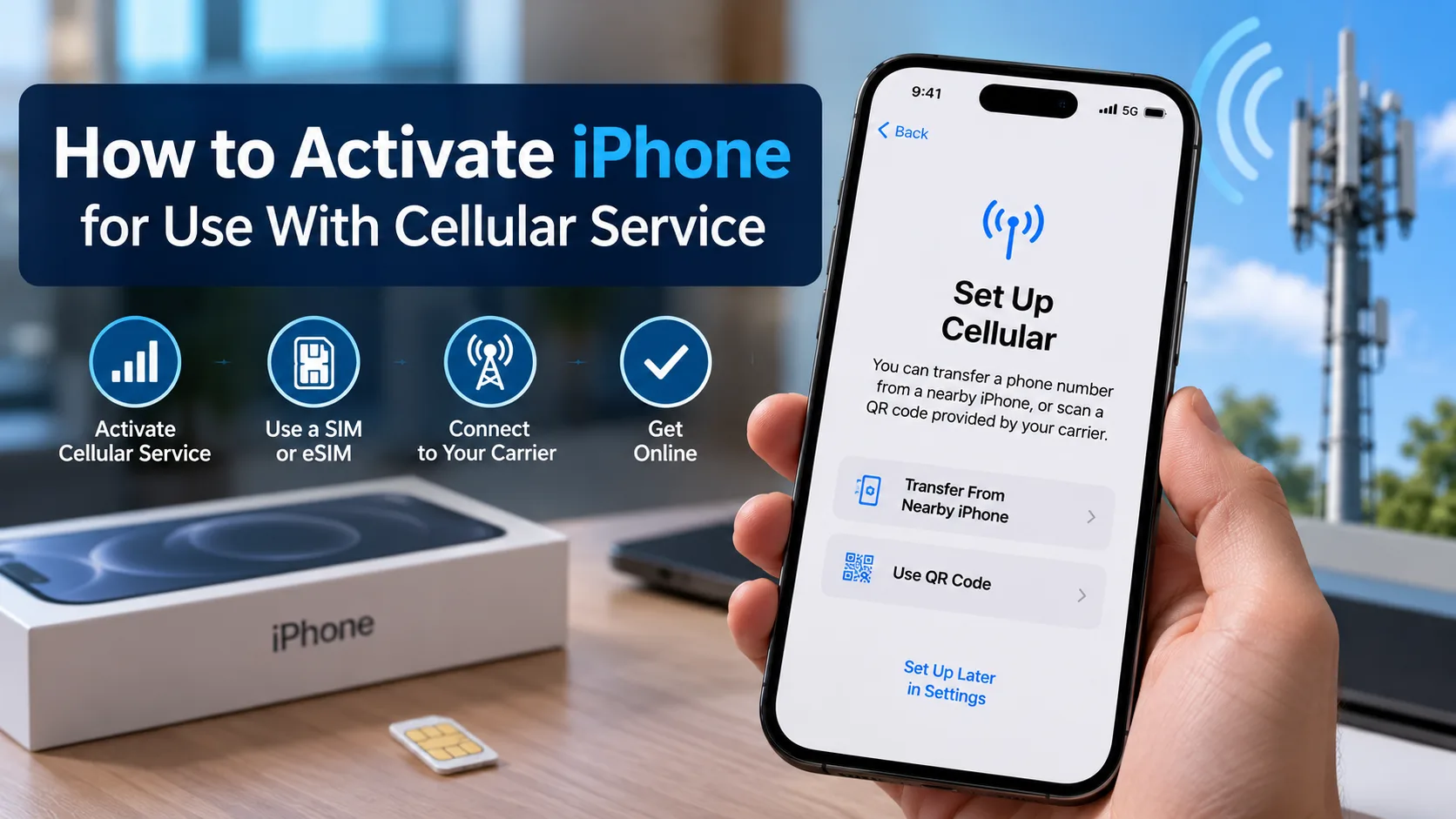
Apple doesn’t unlock phones — your carrier does. Once the carrier removes the lock on its end, the iPhone updates its status the next time it connects to a network. Our walkthrough on how to unlock a U.S. iPhone for free breaks the request process down step by step, and we also have a deeper carrier-by-carrier guide on unlocking an iPhone SIM from Verizon, AT&T, Sprint, or T-Mobile.
Samsung Galaxy
Samsung devices follow the same carrier-driven rules. Once the carrier authorizes the unlock, the phone usually recognizes the change automatically. Older Galaxy models may prompt for an unlock code on first boot with a new SIM.
Motorola
Motorola handsets sold through US carriers behave the same way — carrier locks are managed by the carrier, not Motorola. Unlocked Motorola phones bought directly from the company ship without a SIM lock.
Google Pixel
Pixels sold through the Google Store come fully unlocked out of the box. Pixels sold through carriers (notably Verizon) follow that carrier’s rules, so expect a Verizon-sold Pixel to stay locked longer than it used to.
Your Consumer Rights at a Glance
To pull it together:
- Unlocking a phone you own is legal under federal law.
- The Unlocking Consumer Choice and Wireless Competition Act of 2014 is what protects that right.
- Carriers can keep your phone locked until you meet their eligibility rules, but they can’t stop you from unlocking once those conditions are met.
- Deployed military personnel get special accommodations at Verizon and other carriers.
- A lost-or-stolen flag will block an unlock at every major carrier, no matter how long you’ve owned the device.
- Phones bought outright from Apple, Samsung, or Google directly are almost always already unlocked.
Conclusion
US phone unlock laws give you a clear right: the phone you paid for is yours to unlock once you’ve met your obligations. But the path from “locked” to “free to move” depends heavily on which carrier you’re on and when you bought the device — and with Verizon’s stricter 2026 policy, the gap between carriers has widened.
If you’re getting ready to switch carriers, travel internationally, or sell a phone, check your unlock status today and confirm exactly what your carrier requires. Need help with the next step? Browse our model and carrier-specific unlock guides at Unloky for plain walkthroughs, or drop your question in the comments — we read every one.Share
Frequently Asked Questions
No. Unlocking a phone you own has been legal in the U.S. since the Unlocking Consumer Choice and Wireless Competition Act was signed into law on August 1, 2014. You can do it yourself or pay a third party to handle it.
For their own customers and former customers in good standing, yes. Carriers may charge a reasonable fee to unlock devices for people who aren’t current or former customers.
Under FCC commitments, carriers must respond within two business days. The actual unlock can be near-instant or take a few extra days depending on the manufacturer and the carrier’s verification process.
Ask for the refusal reason in writing first. If you believe you meet the eligibility rules, you can file a complaint with the FCC at fcc.gov/consumer-complaints. The FCC can investigate and push for compliance.
Usually not. Most U.S. carriers require the device to be paid in full before they’ll process the unlock. Deployed military members can often request an early unlock with proper paperwork.