
A prepaid SIM will work when the phone (not the SIM) is unlocked and compatible with the new network; check the carrier’s policy first.
To qualify for an unlock, most carriers require paid active service for a set time (often 60 days to a year—viz., 60 days for Verizon, 6 months for AT&T Prepaid), the device paid off if financed, an account in good standing, and a phone not reported lost/stolen.
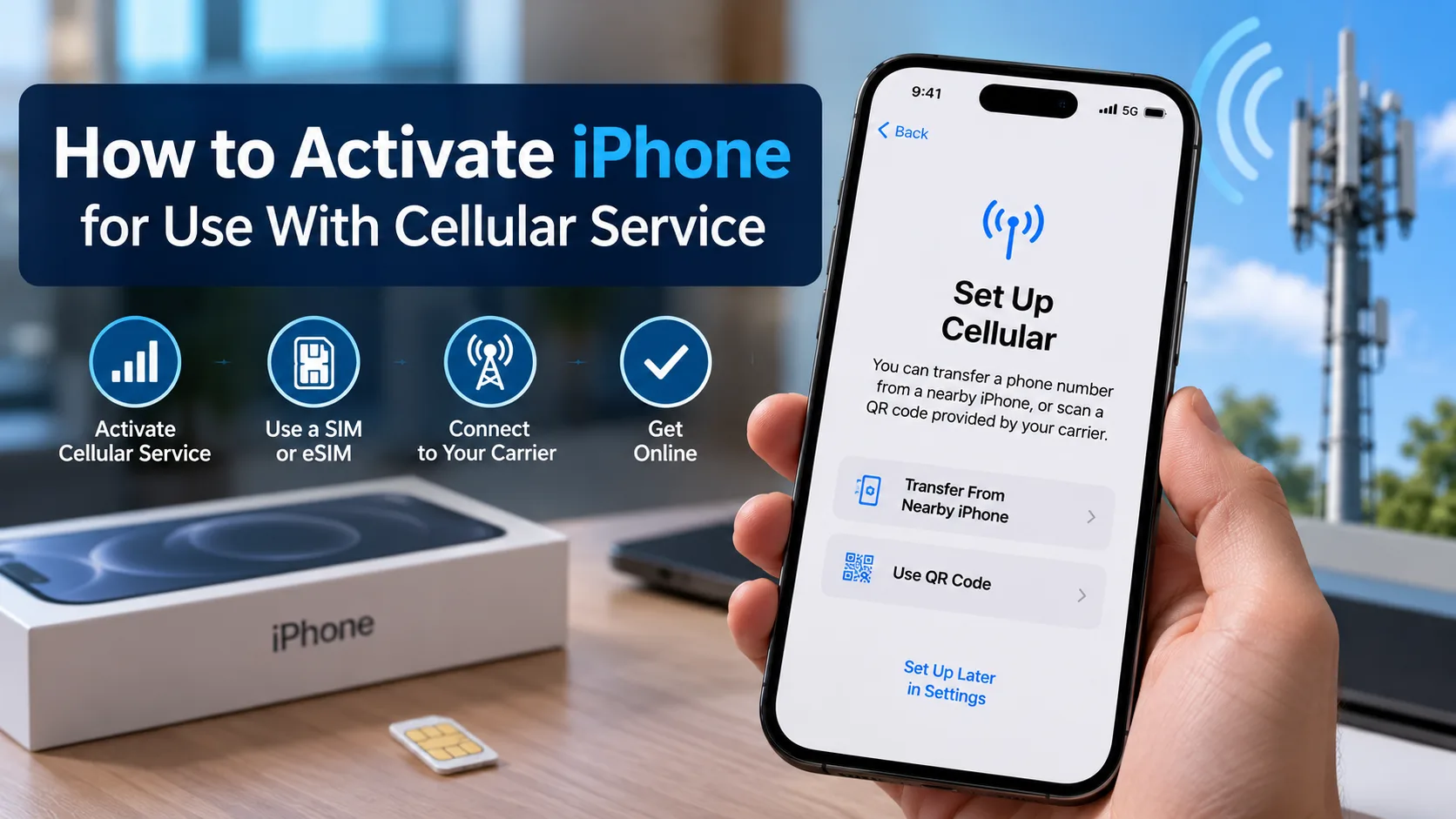
To activate: use an unlocked, compatible phone, get a SIM or eSIM, insert or download it, then activate online/app/phone, choose a plan and pay the first month (update APN if data/MMS doesn’t work).
Key Takeaways
- The SIM doesn’t need to be “unlocked” the phone does. A prepaid SIM will work when the phone is unlocked and compatible with the new network.
- Typical unlock requirements (carrier-dependent): paid active service for a set time, phone fully paid off if financed, account in good standing, and the device not reported lost/stolen or flagged for fraud.
- Examples: Many carriers use a time window (often 60 days to a year). For instance, Verizon commonly uses 60 days, while AT&T Prepaid often uses ~6 months of paid service. Other carriers set their own windows—always check your specific provider’s policy.
- Activation steps for a prepaid SIM: get an unlocked, compatible phone, obtain a new SIM/eSIM, insert or download it, then activate online/in-app by choosing a plan and paying the first month.
- Compatibility matters even after unlock. Your phone must support the new network’s bands/technology for calls, texts, data, VoLTE/5G, and features like Wi-Fi Calling.
What Is a Prepaid SIM Card?
A prepaid SIM card is a tiny chip that lets your phone connect to a mobile network without needing a long-term contract. Instead of getting billed monthly like postpaid plans, you prepay for your usage—talk, text, and data—on a weekly, monthly, or even daily basis.
Prepaid SIM cards are popular with:
- Budget-conscious users
- Students
- Travelers
- People with poor or no credit
- Anyone who wants flexibility without a contract
You can find prepaid SIMs at big carriers like T-Mobile, Verizon, and AT&T or from smaller MVNOs (mobile virtual network operators) like Mint Mobile, Visible, Straight Talk, and Boost Mobile.
Why Are Some Prepaid Phones Locked?
When you buy a prepaid phone, especially a low-cost one, it’s often “network locked.” That means it will only work with the carrier that sold it to you, at least for a certain period.
Carriers do this to discourage users from grabbing discounted phones and jumping ship. They want you to stick around for at least a few months—usually 6 to 12—before letting you unlock it for another provider.
In other words, even prepaid phones come with strings attached.
The Difference Between Activation and Unlocking
Before we dive deeper, let’s clarify something:
- Activation means setting up your prepaid SIM to start working on the network.
- Unlocking means removing the software lock that ties your phone to one specific carrier.
You can activate a new SIM card on a locked phone. But if you want to use that SIM in another carrier’s phone—or take your current phone to a different provider—you’ll likely need to unlock it first.
📖 Also Read: Top 5 Reputable Services to Unlock Your Samsung Phone in the U.S.
How to Activate a Prepaid SIM Card
Activating a prepaid SIM card is typically easy, especially in 2025, with most carriers offering online portals and automated tools. Here’s a general step-by-step guide:
Step 1: Insert the SIM Card
Power off your phone, remove the old SIM (if there is one), and insert your new prepaid SIM. Most phones use a SIM ejector tool or a paperclip to open the tray.
Step 2: Power On the Device
Turn your phone back on. It may automatically detect the new SIM, or you might get a message asking to configure network settings.
Step 3: Visit the Carrier’s Activation Page
Go to the activation page for your prepaid carrier. Common ones include:
- T-Mobile Prepaid: t-mobile.com/activate
- AT&T Prepaid: att.com/prepaid
- Verizon Prepaid: verizon.com/activate
- Metro by T-Mobile: metrobyt-mobile.com/self-serve
- Boost Mobile: boostmobile.com/activate
Enter your SIM card number (ICCID) and IMEI number (found in your phone’s settings or by dialing *#06#).
Step 4: Choose a Plan and Top Up
Most carriers will ask you to select a prepaid plan and pay for it upfront using a debit/credit card or a prepaid top-up card.
Step 5: Restart and Use
Once the SIM is activated, restart your phone again. You should now be connected to the network.
Common Activation Issues
Sometimes, SIM activation doesn’t go smoothly. Here are a few reasons why:
- Invalid or expired SIM card: SIMs have expiration dates if not activated.
- Phone is locked to another carrier: You’ll need to unlock the device before using a different SIM.
- Wrong APN settings: If mobile data isn’t working, update your APN settings manually or download the carrier’s configuration.
📖 Also Read: How Much Does It Cost to Unlock Your iPhone for International Travel?
What Are SIM Unlock Requirements for Prepaid Phones?
Unlocking a prepaid phone involves meeting specific conditions set by your carrier. These vary by provider, but here are some general rules:
General Requirements
- The phone must be active on the original carrier’s network.
- You must have had the phone for a certain minimum period (usually 6 to 12 months).
- The device must not be reported stolen, lost, or involved in fraud.
- You must request the unlock directly from the original carrier.
Let’s break this down further by major carrier.
Unlock Requirements by Carrier (2025 Edition)
T-Mobile Prepaid
- Must be active for 365 days with T-Mobile.
- If the account is canceled before 365 days, the phone becomes ineligible.
- Device must not be reported stolen or blocked.
- Request unlock via T-Mobile app or customer support.
AT&T Prepaid
- Must be active for 6 months of paid service.
- Unlock request must be submitted through att.com/deviceunlock.
- The account must be in good standing.
Verizon Prepaid
- Verizon automatically unlocks prepaid phones after 60 days of activation.
- No request is needed.
- If the phone is flagged as lost/stolen, it won’t be unlocked.
Boost Mobile
- Must have at least 12 months of paid service.
- Phone must be SIM unlock capable.
- Customers can request unlock via customer care or online portal.
Metro by T-Mobile
- Must have used the phone on the network for 180 days.
- Must request unlock through Metro’s customer support.
- Some phones may support Device Unlock App (preinstalled on Android devices).
Straight Talk / TracFone / Net10
- Must have had 12 months of active service.
- Device must not be refurbished, reported stolen, or involved in fraud.
- Request unlock at tfwunlockpolicy.com.
📖 Also Read: How to Unlock Mint Mobile Phone & SIM
How to Check If Your Prepaid Phone Is Locked
Here’s how to quickly check if your phone is still locked:
On iPhone
- Go to Settings > General > About
- Scroll to Carrier Lock – if it says “No SIM restrictions”, your phone is unlocked.
On Android
- Dial *#7465625#
- Look under “Network Lock”
- If it’s ON, the device is still locked.
Or simply insert a SIM card from another carrier and restart the phone. If you see a message like “SIM Not Supported” or “Enter Unlock Code,” your phone is locked.
How to Request an Unlock Code or Submit an Unlock Request
If your phone meets the unlock conditions, here’s how to proceed:
Step 1: Contact the Carrier
Reach out to customer support or visit the official unlock request page.
Step 2: Provide Required Info
- IMEI Number (found via *#06#)
- Account details (name, phone number, etc.)
- Possibly the SIM card number
Step 3: Receive Unlock Instructions
Carriers may:
- Send an unlock code via SMS/email
- Remotely unlock the phone over-the-air (especially for iPhones and newer Androids)
- Provide steps to complete the unlock manually
Can You Use an Unlocking Service or App?
There are third-party unlocking services and apps, but they come with risks:
- Some are scams.
- Others charge a high fee for what should be a free process.
- Using unofficial methods can void warranties or break terms of service.
Your safest bet? Always start by contacting the carrier. It’s usually free if your device qualifies.
eSIMs and Unlocking in 2025
With more phones using eSIMs, the unlocking process is becoming more software-based.
- iPhones from the iPhone 16 and newer are eSIM-only in the U.S.
- Many Android flagships now support dual SIM with one physical SIM and one eSIM.
Unlocking an eSIM-only device may still require carrier approval, but the process is typically quicker since there’s no physical SIM involved.
Can You Unlock a Prepaid Phone Early?
Some carriers may allow early unlocks in the following situations:
- Military Deployment: Most carriers offer exceptions for active-duty military personnel.
- Device Fully Paid Off: You may be able to escalate the request.
- Customer Retention Offers: Occasionally, if you threaten to switch, they might unlock to keep you.
But in most cases, you’ll need to wait out the minimum usage period.
Special Scenarios You Should Know
Moving from postpaid to prepaid
If you’re moving from a postpaid plan to a new prepaid carrier, make sure your unlock timer is satisfied. Even after payoff, some carriers keep a time-based lock for fraud prevention.
Switching from legacy/CDMA carriers
Modern US networks rely on LTE/5G with VoLTE (and increasingly VoNR). If your phone is older or imported, verify it supports VoLTE for your new carrier or you may not get voice service.
Military deployment and other exceptions
Many carriers publish exceptions (e.g., for deployed military). If you think an exception applies, ask the carrier to review your case with documentation.
Buying a used phone for prepaid
- Verify IMEI status (not lost/stolen/financed).
- Confirm it’s unlocked or eligible for unlock.
- Check band support for your intended prepaid network.
International travelers
Unlocking lets you use local prepaid SIM/eSIM abroad to save money. Check that your phone supports the local bands and consider downloading an eSIM before you fly for a seamless setup.
MVNOs vs. Main Carriers (What to Expect)
Many prepaid options are MVNOs—they rent network access from the big carriers but run their own plans and customer support.
- Unlock policy: Your current (locking) carrier’s policy controls the unlock, not the MVNO you’re moving to.
- Activation flow: MVNOs often have simple BYOP portals and eSIM support.
- Features: Wi-Fi Calling, Visual Voicemail, and 5G access can vary by MVNO. Check the plan details and device support pages.
Troubleshooting: Activation & Unlock Roadblocks
“PUK code” vs. “unlock code”
A PUK unblocks a SIM after too many wrong SIM PIN attempts. It does not unlock your phone from a carrier.
A network unlock is about freeing your phone to work on other carriers. Don’t confuse these—ask your provider which you actually need.
“SIM not provisioned” / “No service”
- Wait a few minutes after activation—it can take time to propagate.
- Reboot your phone.
- Confirm the line shows active in your prepaid account.
- Re-seat the SIM or re-install the eSIM.
- Update the APN settings per the carrier’s instructions.
eSIM won’t install
- Ensure Wi-Fi or data is stable during download.
- Use the latest QR or activation code; some codes expire.
- Remove stale eSIM profiles you no longer use, then try again.
Porting delays (keeping your number)
- Keep the old line active until the port completes.
- You’ll need: account number, transfer PIN (or port-out PIN), and billing ZIP from the old carrier.
- If it stalls, contact the new carrier’s porting team—they can see the status and nudge it along.
“Device not eligible” for unlock
- Double-check time/usage, payoff, good standing, and fraud/lost/stolen status.
- If you believe you qualify, escalate with supporting evidence (receipts, payoff confirmation, account notes).
Example Activation Flow (Start to Finish)
- Finish unlock with your current carrier (confirm via settings/SIM test).
- Verify compatibility with the prepaid provider’s IMEI checker.
- Buy SIM/eSIM and pick your plan.
- Install SIM or eSIM and go to the activation portal/app.
- Port your number (optional) with account number + transfer PIN.
- Pay first month, wait for the “active” confirmation.
- Update APN, enable Wi-Fi Calling (if supported), test calls/text/data.
In most cases, you can complete this in under an hour when you have all the info ready.
Frequently Asked Questions (FAQs)
Do I need to unlock the SIM or the phone?
You need to unlock the phone, not the SIM. The SIM just carries your line. A carrier-locked phone will reject SIMs from other networks until it’s unlocked.
How long do carriers make you wait to unlock a phone?
It varies. Many set a time window of paid active service—commonly 60 days to a year. As examples, Verizon often uses ~60 days, and AT&T Prepaid often requires ~6 months. Always check current policy for your provider.
My phone is financed. Can I still unlock it?
Usually not until it’s paid off in full. Even if time requirements are satisfied, a remaining balance can block the unlock.
If my phone is unlocked, will it 100% work on any prepaid carrier?
Not necessarily. It must also be compatible—supporting the right bands, VoLTE/5G, and carrier features. Always run the IMEI check on the new prepaid provider’s site.
What’s the difference between a PUK code and an unlock code?
A PUK unblocks a SIM after wrong SIM PIN attempts. It’s not a network unlock. A network unlock lets your phone accept SIMs from other carriers.
Can I unlock for free?
If you meet your current carrier’s rules (time, payoff, good standing, not lost/stolen), the unlock is typically free. Some prepaid brands might charge only if you don’t meet their criteria.