
TL;DR – Quick Answer
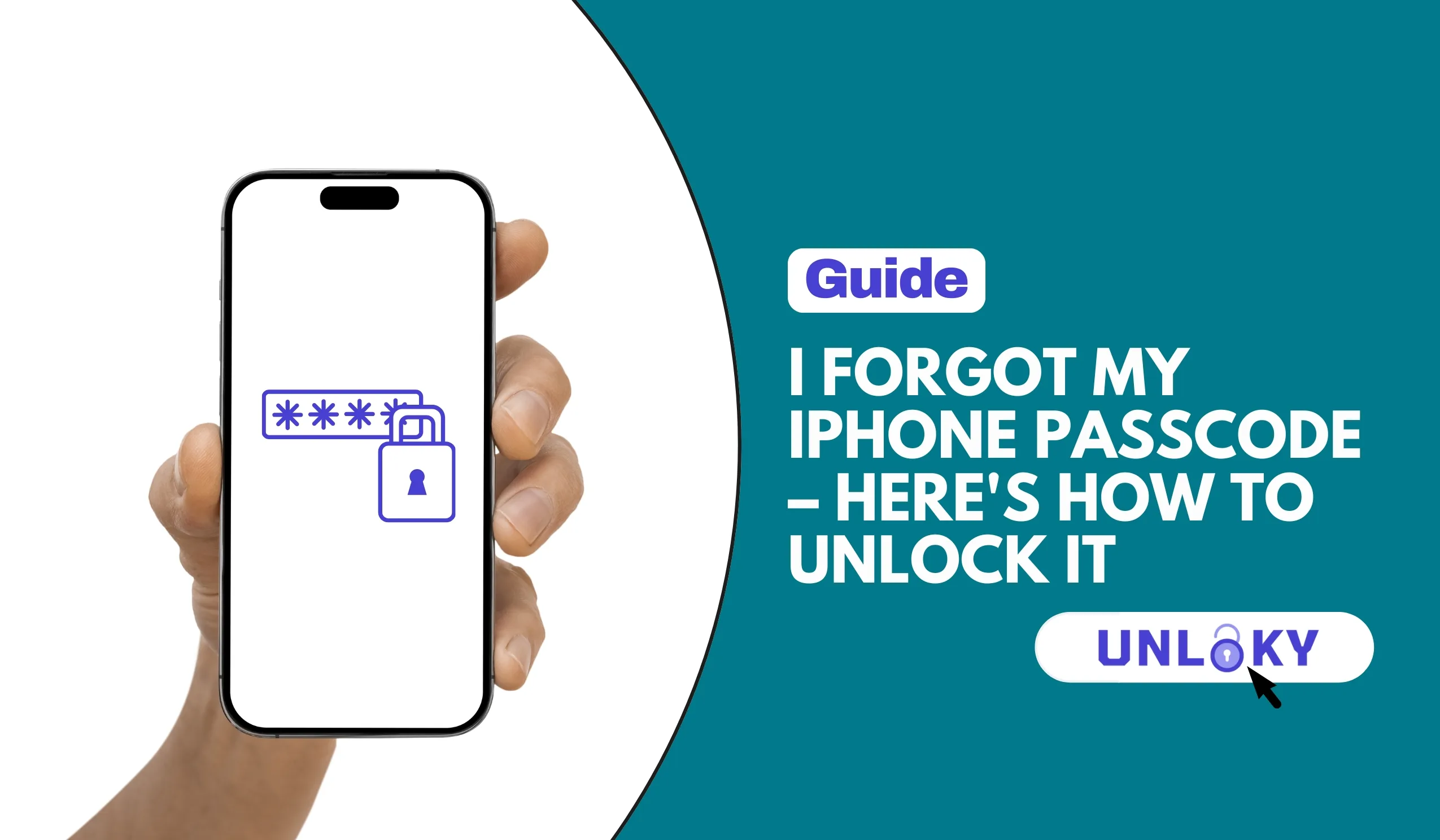
If you forgot your iPhone passcode, you’ll need to erase your device to regain access. However, if you’re running iOS 17 or later and changed your passcode within the last 72 hours, you can use your old passcode via the “Forgot Passcode?” option on the “iPhone Unavailable” screen. Otherwise, you’ll need to use the Erase iPhone feature (iOS 15.2+) or put your device in Recovery Mode using a computer. All methods require wiping your data, but you can restore from a backup afterward.
If you changed your passcode within 72 hours and remember the old one, tap “Forgot Passcode?” → “Enter Previous Passcode” to unlock without losing data.
Enter wrong passcode repeatedly until “Erase iPhone” appears. You’ll need your Apple ID password, and this will wipe all data.
Connect your iPhone to a Mac/PC, enter Recovery Mode, and restore through Finder or Apple Devices. This works for all iOS versions.
Despite what you may read online, there’s no “secret code” to bypass iPhone security. All legitimate methods require erasing your device or knowing your previous credentials.
Forgetting your iPhone passcode is frustrating, but don’t panic. Apple has built several official ways to help you regain access to your device. The catch? Most methods require erasing your iPhone – but if you have a backup, you can restore your data afterward.
In this guide, I’ll walk you through every legitimate method to unlock your iPhone when you’ve forgotten the passcode. We’ll cover what works, what doesn’t, and how to protect your data in the process.
📊 Method Comparison: Which One Should You Use?
| Method | iOS Version | Computer Needed | Data Loss | Requirements |
|---|---|---|---|---|
| Previous Passcode Reset | iOS 17+ | No | None | Changed passcode within 72hrs |
| Erase iPhone (Lock Screen) | iOS 15.2+ | No | Full Erase | Apple ID password, Wi-Fi/Cellular |
| Find My (iCloud) | Any | No | Full Erase | Find My enabled, Apple ID |
| Recovery Mode | Any | Yes | Full Erase | Mac or Windows PC |
| Apple Store Visit | Any | No | Full Erase | Proof of ownership |
🔐Method 1: Use Your Previous Passcode (iOS 17+)
This is the only method that lets you unlock your iPhone without losing any data. Apple introduced this feature in iOS 17, and it’s a lifesaver if you’ve recently changed your passcode and immediately forgotten it.
Despite what you may read online, there’s no “secret code” to bypass iPhone security. All legitimate methods require erasing your device or knowing your previous credentials.
iOS 17/18 • No data loss • No computer required
When you change your passcode, iOS 17+ gives you a 72-hour grace period where your old passcode still works. Here’s how to use it:
Step 1: From your Lock Screen, enter the wrong passcode 5 times until you see “iPhone Unavailable”
Step 2: Tap “Forgot Passcode?” in the bottom corner of the screen
Step 3: Select “Enter Previous Passcode” (this only appears if you changed it within 72 hours)
Step 4: Enter your old passcode
Step 5: Follow the prompts to set a new passcode immediately
This option expires automatically after 72 hours. You can also manually disable it in Settings → Face ID & Passcode → “Expire Previous Passcode Now” for security.
📱Method 2: Erase iPhone from Lock Screen (No Computer)
If you can’t use your previous passcode, the next best option (if you don’t have a computer) is to erase your iPhone directly from the lock screen. This feature was introduced in iOS 15.2 and requires your Apple ID credentials.
iOS 15.2+ • Erases all data • No computer required
This method works if your iPhone is connected to Wi-Fi or cellular data and you remember your Apple ID password. Find My must have been enabled on the device.
Step 1: Enter the wrong passcode repeatedly until you see “iPhone Unavailable” or “Security Lockout”
Step 2: Look for “Erase iPhone” (iOS 15.2-16) or “Forgot Passcode?” (iOS 17+) at the bottom
Step 3: If on iOS 17+, tap “Forgot Passcode?” then choose “Start iPhone Reset”
Step 4: Enter your Apple ID password to sign out of your account
Step 5: Tap “Erase iPhone” to confirm – this will wipe everything
Step 6: After restart, set up your iPhone and restore from backup if available
Your iPhone needs an active Wi-Fi or cellular connection, and Find My iPhone must have been enabled before it was locked. You also need to know your Apple ID password.
☁️Method 3: Erase via Find My (iCloud)
If you have access to another device or computer, you can remotely erase your locked iPhone through iCloud’s Find My feature. This works even if you can’t physically interact with the lock screen.
Any iOS version • Erases all data • No computer required
Use another phone, tablet, or any web browser to access iCloud and erase your iPhone remotely.
Step 1: Go to iCloud.com/find on any device or use the Find My app on another Apple device
Step 2: Sign in with your Apple ID and password
Step 3: Click “All Devices” and select your locked iPhone
Step 4: Click “Erase iPhone” to remotely wipe the device
Step 5: Once erased, set up your iPhone fresh and restore from backup
💻Method 4: Recovery Mode (With Computer)
This is the universal method that works on any iOS version and any iPhone model. You’ll need a Mac or Windows PC with Finder or Apple Devices app installed.
All iOS versions • Erases all data • Computer required
Recovery Mode allows you to completely restore your iPhone when other methods don’t work. The button combination varies by iPhone model.
Step 1: Turn off your iPhone by holding the Side button + Volume button until the slider appears
Step 2: Connect the cable to your Mac or Windows PC
Step 3: Connect to iPhone while holding the Side button – don’t release!
Step 4: Keep holding until you see the Recovery Mode screen (computer + cable icon)
Step 5: In Finder (Mac) or Apple Devices (Windows), click “Restore”
Step 6: Wait for the restore to complete, then set up your iPhone
Same process, but hold the Volume Down button instead of the Side button.
Same process, but hold the Home button instead.
The restore process downloads the latest iOS firmware, which can take 15-60 minutes. If your iPhone exits Recovery Mode during this time, let the download finish, then start the process again.
What About “Secret Codes” to Unlock?
Let’s be clear about this: there is no secret code, backdoor, or magic trick to bypass iPhone security. Any website or video claiming otherwise is either misleading you or trying to get you to download malicious software.
Emergency calls or special number combinations won’t bypass your passcode
Old Siri exploits have been patched since iOS 12.1 and no longer work
Calculator “hacks” circulating online are complete myths
Some work but still erase data – and many are scams or contain malware
The reason these bypasses don’t exist is simple: if they did, anyone who stole an iPhone could easily access your personal data. Apple’s security is designed to make this impossible without proper authentication.
💾Can I Unlock Without Losing Data?
This is the question everyone asks, and the honest answer is: probably not. Here’s the reality:
Unless you can use your previous passcode within 72 hours (iOS 17+), all methods to unlock a forgotten passcode require erasing your iPhone. The only way to recover your data afterward is from a backup.
Your options for data recovery depend on your backup situation:
If enabled, you can restore most of your data after erasing your iPhone
If you’ve backed up to iTunes/Finder, restore from that backup
Photos synced to iCloud remain safe and will restore automatically
Unfortunately, your data is gone. This is a lesson to set up backups!
If your iPhone runs iOS 15.2 or later, enter the wrong passcode repeatedly until you see “Erase iPhone” or “Forgot Passcode?” at the bottom of the screen. Tap it and enter your Apple ID password to erase and reset your device. You’ll need Wi-Fi or cellular connection and your Apple ID credentials. Alternatively, use Find My on another device or iCloud.com to erase your iPhone remotely.
You have three main options: (1) Use the “Erase iPhone” feature on the lock screen (iOS 15.2+), (2) Use Find My via iCloud.com or another Apple device, or (3) Put your iPhone in Recovery Mode using a computer. All methods erase your device, but you can restore from a backup afterward. The only exception is if you changed your passcode within 72 hours on iOS 17+ – you can use your old passcode to unlock without erasing.
No, there is no secret code, master password, or backdoor to bypass iPhone security. Apple’s encryption is designed to be unbreakable without proper authentication. Any website or video claiming to have a “secret iPhone unlock code” is either misleading you or attempting to distribute malware. Stick to official Apple methods only.
Only if you’re on iOS 17 or later AND you changed your passcode within the last 72 hours. In that case, you can use your previous passcode to unlock without any data loss. For all other situations, unlocking requires erasing your iPhone. However, if you have an iCloud backup or computer backup, you can restore your data after the erase.
If you have iOS 15.2 or later: enter wrong passcodes until you see the erase option, then use your Apple ID to wipe and reset. You can also use iCloud.com from any device with a browser. If neither works, visit an Apple Store or Apple Authorized Service Provider – bring proof of purchase or the original receipt to prove ownership.
“iPhone Unavailable” appears when you’ve entered the wrong passcode multiple times. After 5 wrong attempts, you’ll see “iPhone Unavailable, try again in 1 minute.” The wait time increases with each wrong attempt: 5 minutes, 15 minutes, 1 hour. After 10 failed attempts, your iPhone may erase itself (if enabled) or show “Security Lockout” with options to erase the device.
These options only appear if: (1) Your iPhone is running iOS 15.2 or later, (2) You’re connected to Wi-Fi or cellular, and (3) Find My was enabled before the device was locked. If you don’t see these options, your only choice is to use Recovery Mode with a computer. You can also visit an Apple Store for assistance.
Apple Store employees can help you erase and reset your iPhone, but they cannot bypass the passcode to preserve your data. You’ll need to prove you’re the legitimate owner (original receipt, purchase confirmation, or the Apple ID signed into the device). Without proof of ownership, they cannot help – this policy protects against theft.