
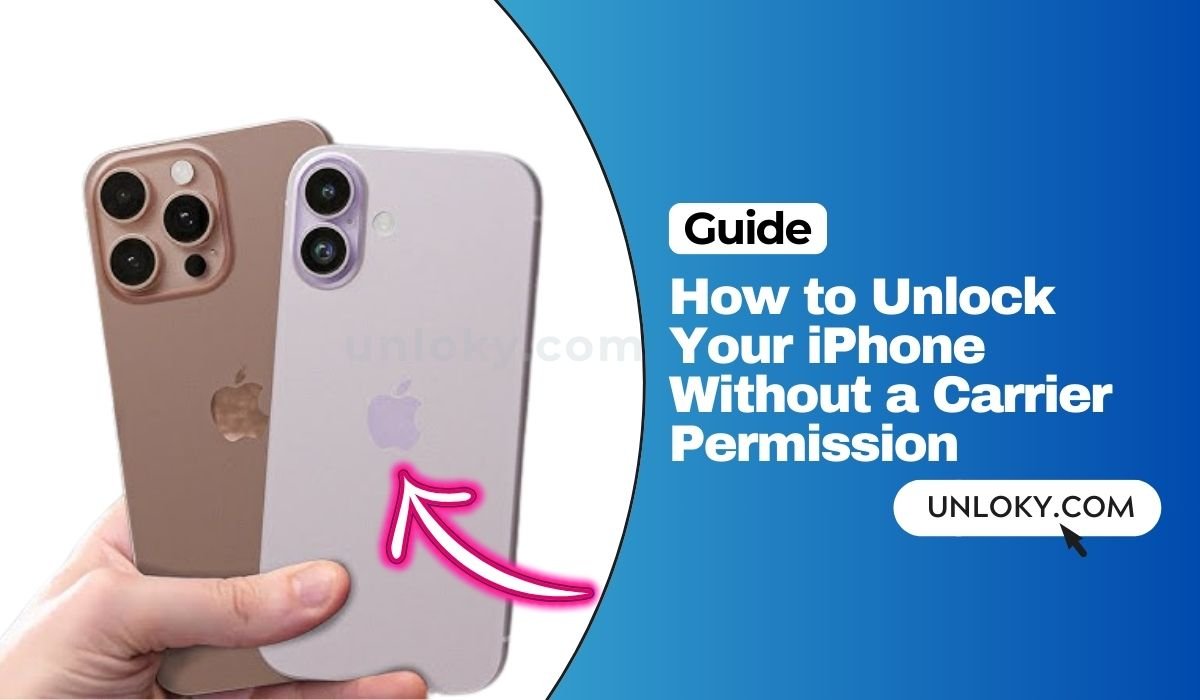
Unlocking your iPhone without carrier permission simply means bypassing the restrictions your network placed on the device so you can use it with any SIM card.
While carriers often want you to meet eligibility rules, there are other ways to gain freedom. Some users turn to trusted IMEI unlock services that register the phone as unlocked in Apple’s database, others use SIM unlock chips as a quick workaround, and advanced users may attempt jailbreaking for more control.
Each method has pros and risks, but the goal is the same: giving you the ability to switch networks, travel abroad, or resell your iPhone without being tied to one carrier.
Key Takeaways
- You can quickly see if your iPhone is carrier-locked by going to Settings > General > About. If it says No SIM Restrictions, your iPhone is already unlocked.
- Official vs. Unofficial Unlocks The safest and most permanent way to unlock your iPhone is through your carrier or a verified IMEI unlock service. Other methods like SIM chips or jailbreaking work but come with risks.
- Phones bought through carriers like Verizon, T-Mobile, Sprint, or Straight Talk often come locked. You’ll usually need to go through them first, but third-party IMEI services can help if they refuse.
- Some software, like EaseUS MobiUnlock, claims to unlock iPhones without carrier help. While convenient, these aren’t always permanent and may not work on the latest iOS versions.
- Carrier unlocks are usually free if you’re eligible, while IMEI unlock services can range from $20–$100. SIM chips are cheaper but less reliable, and jailbreaking carries risks of instability and lost warranty.
Understanding iPhone Carrier Locks
What Does a Carrier-Locked iPhone Mean?
When you buy an iPhone from a carrier, it’s often “locked” to that specific network. This means you can only use their SIM card and their mobile services. For example, if your phone is locked to AT&T, inserting a T-Mobile SIM card won’t work the phone will simply say “SIM Not Supported.” On the other hand, an unlocked iPhone has no such restrictions and can accept SIM cards from any compatible carrier worldwide.
It’s important to understand that a carrier lock is very different from other types of restrictions on your iPhone. A carrier lock only limits which SIM cards the device can use. It’s not the same as a screen lock (passcode), an Apple ID lock, or iCloud’s “Find My iPhone” activation lock. Those are security features tied to you as the user, while a carrier lock is a restriction placed by the mobile network.
Why Carriers Lock Phones in the First Place
Carriers don’t lock iPhones just for fun there’s a business reason behind it. When you buy a phone through a carrier, it’s often sold at a discounted price, bundled with a contract, or financed through monthly installments. By locking the device, the carrier ensures you stay on their network long enough to recover the cost of the phone and secure steady revenue from your monthly payments.
In many cases, locking is also tied to exclusivity deals between Apple and carriers. For example, certain iPhones in the past were released exclusively through one provider in specific regions, and locking was part of that agreement.
From a financial perspective, carriers benefit by keeping you tied to their services. But from a consumer’s point of view, this can feel restrictive. That’s why unlocking an iPhone often increases its resale value—an unlocked phone appeals to more buyers, works internationally, and gives you the freedom to switch providers without being tied down by a single company.
📖 Also Read: How to Unlock iPhone 8/8 Plus for Any Carrier for Free
Legal & Safety Considerations
Is It Legal to Unlock Without Carrier Permission?
In most regions, unlocking an iPhone is perfectly legal—as long as you own the device outright and it isn’t tied to fraudulent activity. In the United States, the FCC (Federal Communications Commission) has rules that protect consumers. Carriers are required to unlock your phone once you’ve met their terms (like finishing payments), and they cannot refuse a legitimate request. That said, if you try to unlock your iPhone without going through your carrier—using third-party services or hardware bypasses—you’re not breaking U.S. law directly, but you may still be violating your carrier’s terms of service.
In the European Union, the laws are generally more consumer-friendly. Many EU carriers are required to sell phones unlocked or to unlock them upon request without extra fees. Other regions, like parts of Asia and Latin America, also have regulations that favor consumer choice, though rules vary country by country. It’s always smart to check local laws before proceeding with an unofficial unlock.
The real risk isn’t so much criminal—it’s contractual. If you’re still financing your phone or under a contract, bypassing the carrier lock could be viewed as breaking your service agreement, which might lead to penalties or account issues.
Will Unlocking Void Your Warranty or AppleCare?
Apple’s warranty and AppleCare+ coverage are tied to the device, not the carrier. However, Apple does not officially support unofficial unlock methods. If you unlock your iPhone through Apple’s approved process (via carrier or official IMEI unlock), your warranty remains intact. But if you use third-party tools, jailbreaks, or SIM tricks, you could run into problems if you need repairs.
In reality, most hardware repairs at Apple Stores won’t check your unlock status, but if the phone has been jailbroken or altered with unofficial software, Apple can deny service. Software updates are another factor: unofficial unlocks sometimes break after iOS updates, leaving you with a relocked or unstable device. That’s why many users stick to IMEI unlock services, since those work with Apple’s own servers and survive future updates.
Things to Avoid
While it may be tempting to try the “fast and free” unlocks you see advertised online, many of them are dangerous. Fake unlock software often does nothing—or worse, installs malware that can steal data. Shady code sellers might claim they can email you a magic unlock code, but since iPhones don’t use codes for network unlocking, those offers are usually scams.
Some people also use SIM interposers (small chips that sit between your SIM card and the phone’s SIM tray) to trick the iPhone into accepting another carrier. While these can work temporarily, they’re known to cause problems like dropped calls, poor data speeds, or incompatibility with updates. In some cases, they can even damage your SIM slot.
The safest approach is to stick with trusted IMEI-based unlocks or wait for official carrier approval. Anything else can expose your phone—and your personal information—to unnecessary risk.
📖 Also Read: How to Unlock iPhone 7 Plus for Any Network Free
Methods to Unlock iPhone Without Carrier Permission
If your carrier refuses to unlock your iPhone, there are still ways to gain freedom over your device. Below are several step-by-step methods you can try. Each has its own benefits and risks, so it’s important to choose wisely.
Method 1 – Using an Official Unlock Service (Third-Party IMEI Unlocks)
How It Works:
IMEI unlock services work by whitelisting your phone’s IMEI number (a unique 15-digit identifier) in Apple’s official activation database. Once this is done, your iPhone becomes permanently unlocked and can work with any carrier.
Step 1: Find your IMEI number by dialing *#06# or checking in Settings > General > About.
Step 2: Choose a trusted third-party IMEI unlock provider with verified reviews.
Step 3: Provide your IMEI number, iPhone model, and current carrier.
Step 4: Pay the service fee (prices vary depending on carrier and model).
Step 5: Wait for confirmation—most services take between 24 hours to a few days.
Step 6: Insert a new SIM card and connect to Wi-Fi or iTunes to complete the unlock.
Pros: Permanent unlock, works directly with Apple’s servers, survives iOS updates.
Cons: Costs money, scams are common if you choose unreliable sellers.
Method 2 – Using a SIM Unlock Chip (Hardware Bypass)
How It Works:
A SIM unlock chip (also called a SIM interposer, like R-SIM or Turbo SIM) is a tiny adapter that fits between your SIM card and the iPhone’s SIM tray. It tricks the phone into accepting SIM cards from unsupported carriers.
Step 1: Buy a reliable SIM unlock chip that supports your iPhone model and iOS version.
Step 2: Place your new carrier SIM card onto the chip and insert both into your iPhone.
Step 3: Restart your iPhone and follow any on-screen setup prompts.
Step 4: If needed, enter a special unlock code provided with the chip.
Step 5: Test by making a call, sending a text, or using mobile data.
Pros: Instant results, cheaper than IMEI unlocks.
Cons: Not permanent, may cause issues after iOS updates, sometimes unstable with 4G/5G.
Method 3 – Jailbreaking the iPhone
How It Works:
Jailbreaking removes Apple’s software restrictions, allowing you to install unofficial apps, including tools that can bypass carrier locks.
Step 1: Research if your iOS version is jailbreak-compatible (newer versions are harder to crack).
Step 2: Back up your iPhone to iCloud or iTunes to prevent data loss.
Step 3: Use a trusted jailbreak tool (like Checkra1n or Unc0ver, depending on iOS version).
Step 4: Once jailbroken, install a carrier unlock app from unofficial app stores (Cydia).
Step 5: Insert your desired SIM card and test if the phone accepts it.
Pros: Gives you full control over your iPhone, sometimes the only option for older devices.
Cons: Risky—voids warranty, exposes you to malware, may cause instability.
Method 4 – Software-Based Unlock Tools
How It Works:
Years ago, tools like Ultrasn0w could unlock iPhones by modifying baseband software. Today, these methods rarely work except on very old iPhones.
Step 1: Confirm your iPhone model and iOS version. If it’s older (iPhone 4, 3GS, etc.), software unlocks may still work.
Step 2: Jailbreak your iPhone to gain access to baseband tools.
Step 3: Download Ultrasn0w or another unlock app from Cydia.
Step 4: Install, reboot, and insert your new SIM.
Pros: Free (if you have an older device).
Cons: Outdated—does not work on modern iPhones, unstable, limited use today.
Method 5 – Unlocking for International Travel Only
How It Works:
If you don’t need a permanent unlock but want to use your iPhone abroad, temporary solutions can help.
Step 1: Before traveling, check if your iPhone supports eSIM.
Step 2: Install an international travel eSIM provider app like Airalo or Holafly.
Step 3: Buy a data plan for your destination country.
Step 4: Activate the eSIM inside the app and keep your main SIM in place for calls.
Step 5: When you return home, switch back to your regular plan.
Pros: No need for a permanent unlock, convenient for short trips.
Cons: Only works where eSIM is supported, not a true unlock solution.
These methods cover almost every scenario, from permanent IMEI unlocks to quick travel hacks. But the best choice depends on your goals: long-term freedom, short-term flexibility, or budget-friendly fixes.
📖 Also Read: How To Activate a New iPhone on Sprint
Step-by-Step Guides
If you’ve decided to move forward with unlocking your iPhone without carrier permission, here are the practical step-by-step processes for the most common methods. Each method requires care, so follow the instructions closely.
Unlock with Third-Party IMEI Service
Step 1: Find Your IMEI Number
Your IMEI is the key to unlocking. To locate it, dial *#06# on your iPhone, or go to Settings > General > About and scroll down until you see the IMEI number. Write it down carefully, as even one wrong digit can delay or block your unlock.
Step 2: Choose a Trusted Unlock Service
Not all IMEI unlock services are reliable. Look for one with strong reviews, transparent refund policies, and support for your carrier and iPhone model. Avoid sites that look shady, promise “instant free unlocks,” or lack customer feedback.
Step 3: Complete the Unlock
After submitting your IMEI, carrier, and iPhone model, you’ll typically pay a service fee. Once the service processes the request, you’ll get a confirmation email. At that point, insert a new SIM card and connect your iPhone to Wi-Fi or iTunes. The device will contact Apple’s servers, and if the unlock is approved, you’ll see a message confirming your iPhone is now unlocked.
Unlock with a SIM Chip
Step 1: Insert SIM and Unlock Chip
Buy a SIM unlock chip such as R-SIM or Turbo SIM. Place your new carrier’s SIM card on top of the chip, then insert both together into your iPhone’s SIM tray.
Step 2: Set Up Carrier Options
When the iPhone restarts, you may be prompted to enter a code or select a carrier profile. These instructions vary depending on the brand of chip, so follow the included guide carefully. Some chips allow you to choose your carrier from a menu.
Step 3: Test and Troubleshoot
Try making a call, sending a text, and using mobile data. If something doesn’t work like LTE/5G not showing up restart the device or reinsert the chip. Keep in mind that iOS updates sometimes break SIM chip compatibility, so you may need a new chip later.
Jailbreak Unlock Process (Advanced Users)
Step 1: Prepare Your iPhone
Before attempting a jailbreak, always back up your data with iCloud or iTunes. Jailbreaking can cause system instability, so you don’t want to risk losing important information.
Step 2: Gather the Tools
Check if your iPhone model and iOS version are jailbreak-compatible. Tools like Checkra1n or Unc0ver are popular choices, but compatibility changes over time. Download the correct jailbreak tool from its official source—never from third-party sites that could contain malware.
Step 3: Unlock and Troubleshoot
Run the jailbreak tool and install Cydia, an app store for jailbroken devices. From there, you can install carrier unlock apps that bypass SIM restrictions. If issues arise—like apps crashing or the phone not recognizing SIM cards—reboot into safe mode or restore from backup.
Caution: Jailbreaking voids warranties, weakens your iPhone’s security, and may cause problems with updates. It’s best reserved for experienced users or those with older devices where official unlocks aren’t an option.
Troubleshooting Common Problems
Even after unlocking your iPhone without carrier permission, you might face some issues. Below are the most common problems and how to fix them.
iPhone Says “SIM Not Supported” After Unlock
This error usually means your phone is still rejecting the new SIM card.
Causes:
- The unlock didn’t process correctly (IMEI not updated in Apple’s servers).
- The SIM card is damaged or not properly inserted.
- The iPhone is blacklisted or tied to unpaid bills.
Fixes:
- First, restart your iPhone and reconnect to Wi-Fi or iTunes—it may need to sync with Apple servers.
- Try a different SIM card from the same or another carrier to rule out a faulty SIM.
- If the issue continues, contact the unlock provider to confirm your IMEI was successfully processed.
Unlock Doesn’t Work After iOS Update
Sometimes an iOS update will interfere with unofficial unlock methods like SIM chips or jailbreaks.
Why It Happens:
- Apple patches exploits that jailbreaks rely on.
- SIM chips may no longer trick the phone after an update.
- The update resets carrier settings, blocking the unlock method.
Solutions:
- If you used a third-party IMEI unlock, reconnect to Wi-Fi or iTunes. These unlocks are permanent and should re-activate.
- For SIM chip users, check if the manufacturer has an updated configuration. Sometimes, you’ll need to replace the chip with a newer version.
- Jailbroken users may need to wait for developers to update their tools before reapplying the unlock.
Phone Still Won’t Recognize Carrier SIM
If your iPhone refuses to connect to the carrier even after unlocking, it could be a settings or hardware issue.
Step 1: Reset Network Settings
Go to Settings > General > Transfer or Reset iPhone > Reset > Reset Network Settings. This clears saved Wi-Fi, Bluetooth, and carrier profiles, giving your SIM a fresh start.
Step 2: Reinsert the SIM
Take out the SIM card, check for dust or damage, and insert it again carefully. A loose connection can sometimes cause the phone to reject the card.
Step 3: Contact Support
If nothing works, reach out to your new carrier or the unlocking service. They can verify if your phone is truly unlocked and help troubleshoot compatibility issues (like frequency bands or LTE/5G support).
Alternatives to Unlocking Without Carrier Permission
If you don’t want to risk third-party unlock services or complicated workarounds, there are safer alternatives. These options may cost more upfront but provide peace of mind, long-term reliability, and complete freedom from carrier restrictions.
Buy a Factory Unlocked iPhone
One of the most straightforward alternatives is to purchase a factory unlocked iPhone directly from Apple or an authorized retailer.
Apple Store Unlocked Devices
When you buy an iPhone from the Apple Store and choose the “SIM-free” or “Unlocked” version, it comes without any carrier restrictions. This means you can use it with any compatible SIM card worldwide right out of the box. You won’t need permission from a carrier, and future iOS updates won’t interfere with its unlocked status.
Refurbished Unlocked iPhones
If a brand-new device is too expensive, Apple’s Certified Refurbished program or reputable third-party sellers like Amazon Renewed, Best Buy, or Swappa often sell fully unlocked iPhones at lower prices. These devices are tested, restored, and usually come with warranties, making them a safe and affordable option compared to gambling on unofficial unlock methods.
Switch to eSIM Plans
Another option is to use eSIM technology, which can sometimes work even when the physical SIM slot is carrier-locked.
How It Works
An eSIM is a digital SIM embedded in your iPhone. Many modern iPhones support dual SIM setups one physical SIM and one eSIM. Even if your physical SIM slot is restricted to your original carrier, some providers allow you to activate a new line on the eSIM side.
Benefits of Dual SIM Setups
- Flexibility: You can keep your original number on the locked SIM while using another carrier’s eSIM for data or international travel.
- Cost Savings: eSIM providers often offer cheaper travel data packages than roaming charges.
- Convenience: No need to swap SIM cards when traveling—just activate a new eSIM profile from an app.
This method doesn’t technically “unlock” your iPhone, but it bypasses restrictions and gives you many of the same benefits.
FAQs
Can you unlock an iPhone without a carrier?
Yes, it is possible. If your carrier refuses or delays the unlock, you can use third-party IMEI unlock services, SIM unlock chips, or even jailbreak methods. However, only IMEI-based unlocks are considered permanent and safe.
Is it possible to unlock a carrier-locked iPhone?
Absolutely. A carrier-locked iPhone can be unlocked either officially through the carrier (once eligibility rules are met) or unofficially using alternative methods. Once unlocked, the iPhone can work with SIM cards from any compatible carrier worldwide.
Can a carrier lock be removed?
Yes, but the method matters. Official carrier unlocks are the most reliable because they update Apple’s activation database permanently. Unofficial methods, like SIM chips or jailbreaking, can remove restrictions temporarily but may stop working after iOS updates.
Is it possible to unlock an iPhone that is locked?
Yes, but you first need to confirm the type of lock. A carrier lock can be removed with unlocking methods, while an iCloud Activation Lock or Apple ID lock cannot be bypassed legally. Carrier locks deal only with network restrictions.
Can you use a locked phone without a carrier?
You can still use a locked iPhone without inserting a SIM card. Features like Wi-Fi, FaceTime, iMessage, and apps work fine. But you won’t be able to make regular calls, send SMS messages, or use mobile data until the phone is unlocked or activated with the locked carrier’s SIM.
How much does it cost to unlock an iPhone from a carrier?
If you meet your carrier’s requirements (like finishing payments), they’ll usually unlock it for free. Third-party IMEI unlock services typically charge anywhere from $20 to $100, depending on the iPhone model and carrier. SIM unlock chips are cheaper, usually $5 to $20, but they aren’t permanent solutions.