
Switching to AT&T or moving your number to a new phone should feel simple, not stressful. This guide walks you through AT&T SIM card activation and AT&T eSIM activation in plain language. You’ll see what plan types AT&T offers, how to decide if AT&T is right for you, the exact steps to activate a physical SIM or eSIM, and device-specific directions for iPhone and Samsung Galaxy models. We’ll also cover BYOD (Bring Your Own Device), IMEI and EID basics, dual SIM setup, and the most common activation errors with quick fixes. If you follow along, you’ll go from “new SIM in hand” to “calls, texts, and data working” in minutes.
Key Takeaways
Make sure your phone is unlocked and AT&T-compatible, note your IMEI/EID, choose SIM or eSIM, activate via AT&T’s page, then restart and test calls, texts, and data.
iPhone 12–16 use Settings > Cellular > Add eSIM or Quick Start; Samsung Galaxy S24 series use Settings > Connections > SIM manager label lines and set default voice and data.
Get your old carrier’s account number and transfer PIN, start the port, and keep the old SIM active until calls/texts land on AT&T most transfers finish the same day.
“SIM not supported” usually means locked or incompatible; for eSIM failures use strong Wi-Fi and reinstall; toggle Airplane Mode, reboot, accept carrier updates, and contact support if needed.
Quick Answer
Activating an AT&T SIM card is quick when you have the basics ready: your SIM card number (ICCID), your phone’s IMEI, and your account info. You can turn service on online at att.com/activations (choose “Activate your device” for AT&T PREPAID and follow the prompts with your ICCID and IMEI), by phone at 844-517-2184 for prepaid (have your ICCID and IMEI handy and follow the automated steps), or in-store, where most new AT&T phones leave already activated. If you’re bringing your own device, find the ICCID on the SIM and the IMEI in Settings (or by dialing *#06#), then complete activation using one of the methods above. After activation, restart the phone, place a test call, send a text, and try mobile data to confirm everything’s working. If something doesn’t connect right away, wait a few minutes and reboot most lines come online shortly after you finish the steps.
What You’ll Learn in This Guide
You’ll get a clear picture of AT&T plan types and must-do steps before activation. We’ll then run through activation paths for physical SIM and eSIM, including special notes for iPhone 12 and newer (like iPhone 16 Pro Max), iPhone XR/XS/11/SE (2nd gen), and Samsung Galaxy S24 Ultra/S24+/S24 (plus newer Galaxy models). Finally, we’ll handle BYOD checks, IMEI/EID details, dual SIM setup, FAQs, and a bottom-line recap so you leave confident.
SIM vs eSIM (Why It Matters Before You Start)
A SIM is a tiny plastic card you insert into your phone. An eSIM is a digital SIM built into the phone no plastic card. Many modern phones support eSIM, and some U.S. iPhones (iPhone 14 and newer) are eSIM-only. Your activation steps depend on which you use:
- Physical SIM: You’ll insert the card, then activate the line online or in the app.
- eSIM: You’ll scan a QR code or accept a “pushed” activation from AT&T, then confirm in Settings.
If your phone supports both, pick the one that keeps life easier. eSIM is fast and secure; physical SIM is familiar and works on older phones.
📖 Also Read: How To Activate a New iPhone on Sprint (Now T-Mobile)
What Plans Does AT&T Phone Have?
AT&T’s lineup fits most budgets and use cases. Exact names and promos change often, but you’ll usually see:
Postpaid (monthly bill, best features)
These unlimited plans tend to include 5G access, hotspot data, and extras like international texting. Postpaid is great if you want premium coverage, device financing, multi-line discounts, and priority customer support.
Prepaid (pay in advance, flexible)
AT&T Prepaid plans offer solid value. You choose a set amount of data or unlimited, pay upfront, and skip credit checks. Prepaid often has fewer add-ons than postpaid, but it’s simple, predictable, and easy to start or stop.
Data-only (tablets, hotspots, watches)
If you’re activating a tablet, hotspot, or smartwatch, AT&T sells data-only or wearable lines that pair with your phone plan.
How to pick
Think about your monthly data use, hotspot needs, international travel, multi-line savings, and whether you want to finance a new phone. If you stream video daily or need hotspot for school or work, an unlimited plan with a fair hotspot bucket makes sense. Light users who mainly message and browse can save with prepaid.
Is AT&T Phone Right for Me?
AT&T works best if these points line up with your needs:
- Coverage where you live, work, and travel. Check AT&T’s coverage map and ask local friends. If your neighborhood has strong AT&T signal and stable 5G, you’re set.
- 5G performance that feels fast. Many AT&T markets deliver solid 5G mid-band speeds, great for streaming and hotspots.
- Features you actually use. Do you need hotspot? Mexico/Canada roaming? International day passes for trips? Make sure your plan includes them.
- Device compatibility. Unlocked, modern phones usually work well on AT&T. Older or carrier-locked models can cause activation errors.
If those boxes are checked, AT&T is likely a good fit.
What You Need Before Activation
Before you start, grab:
- Your phone (charged to at least 30%) and Wi-Fi access.
- Your AT&T SIM or eSIM QR code (from an AT&T store, mail, or email).
- Your IMEI (dial
*#06#or check Settings > About). For eSIM, you may also see an EID number keep it handy. - Account details (if porting a number from another carrier: account number and transfer PIN from your old carrier).
- Your AT&T account login (for postpaid) or payment method (for prepaid).
Having these ready makes activation smooth.
📖 Also Read: Using Any SIM Card in an Android or iPhone
How Do I Activate AT&T Phone? (Step-by-Step Guide)
Path 1: Activate a New Line with a Physical SIM
- Insert the SIM. Power off your phone. Use the SIM ejector tool to open the tray, place the SIM, and close the tray. Power back on.
- Go online to activate. Connect to Wi-Fi. Open your browser and go to AT&T’s activation page or open the myAT&T app. Enter your SIM/ICCID and IMEI when asked.
- Choose or confirm your plan. For a new line, pick a plan and finish checkout (postpaid or prepaid, depending on what you ordered).
- Wait for the signal. Within a few minutes, you should see AT&T bars and “5G” or “LTE.”
- Restart if needed. A quick restart helps the network register your device.
- Test your service. Make a call, send a text, and run a quick speed test over cellular (turn off Wi-Fi).
- Update carrier settings if prompted. On iPhone, you’ll see a pop-up; on Android, updates may install in the background.
- Set up voicemail. Press and hold 1 (Android) or tap Phone > Voicemail (iPhone) and follow the prompts.
Path 2: Activate an eSIM (New Line or Existing Number)
- Connect to Wi-Fi. eSIM downloads over the internet.
- Open your eSIM instructions. AT&T may push activation automatically (you’ll see an on-screen prompt), email a QR code, or give you an activation code in store.
- Add the eSIM on your phone.
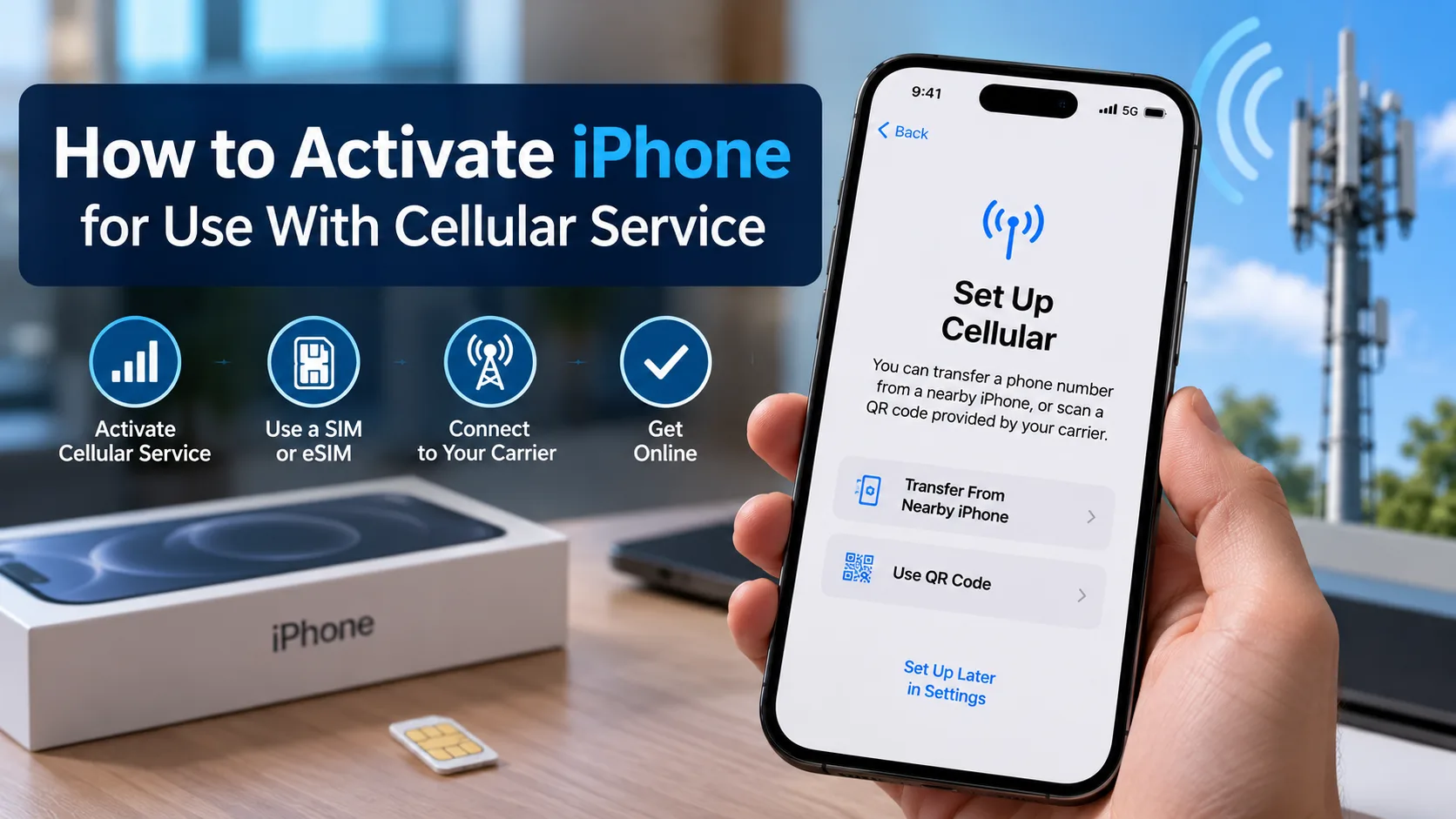
- iPhone: Settings > Cellular > Add eSIM (or Add Cellular Plan). Scan the QR code or tap “Use QR Code.” If you receive a prompt to “Set up this eSIM,” follow it.
- Samsung Galaxy: Settings > Connections > SIM manager > Add eSIM. Choose “Scan QR code” or “Enter activation code.”
- Confirm line details. Assign a label (For example, “AT&T”), choose your default line for calls, and select which line uses mobile data.
- Finish and test. You should see AT&T signal shortly. Place a test call and browse with Wi-Fi off.
Path 3: Bring Your Number from Another Carrier (Port-In)
- Gather exact account info from your old carrier (account number and transfer PIN/port-out PIN).
- Start activation with AT&T (online, app, or store) and enter that info carefully.
- Keep the old SIM in until your line switches to AT&T. Once calls start arriving on the AT&T SIM/eSIM, the port is done.
- Finish device setup (restart, test calls/data, voicemail).
Tip: Number transfers can take minutes to a few hours for mobile lines. Don’t cancel your old service porting will handle that.
Path 4: Upgrading a Device on an Existing AT&T Line
- Sign in to your AT&T account and confirm the line you’re upgrading.
- Move your SIM or add an eSIM.
- If your new phone uses a physical SIM, move the SIM from the old phone.
- If it’s eSIM-only (like newer U.S. iPhones), add the eSIM in Settings using AT&T’s QR code or automatic setup.
- Restart and test. Make a call, send a text, try data.
- Transfer messages and apps using Quick Start (iPhone) or Smart Switch (Samsung).
AT&T Phone eSIM Activation (Deep Dive)
eSIM is great if you switch phones often or want dual lines. AT&T supports three common eSIM flows:
- Carrier eSIM Activation (automatic). AT&T links your IMEI/EID to your line. When you sign in on a compatible phone, you’ll get an on-screen prompt to add the plan no QR code needed.
- QR code activation. You scan the QR code from AT&T in your phone’s settings to download your plan.
- Manual activation code. If you can’t scan, enter details manually (activation code/SM-DP+ address) provided by AT&T.
Best practices:
- Use stable Wi-Fi.
- Turn off VPN during download.
- If a download fails, remove the partially installed plan and try again after a restart.
- Keep your EID handy AT&T may ask for it.
📖 Also Read: How to Unlock a Sprint Phone (With or Without an Account) Free
Device-Specific Steps
iPhone 12 or Newer (including iPhone 16 Pro Max)
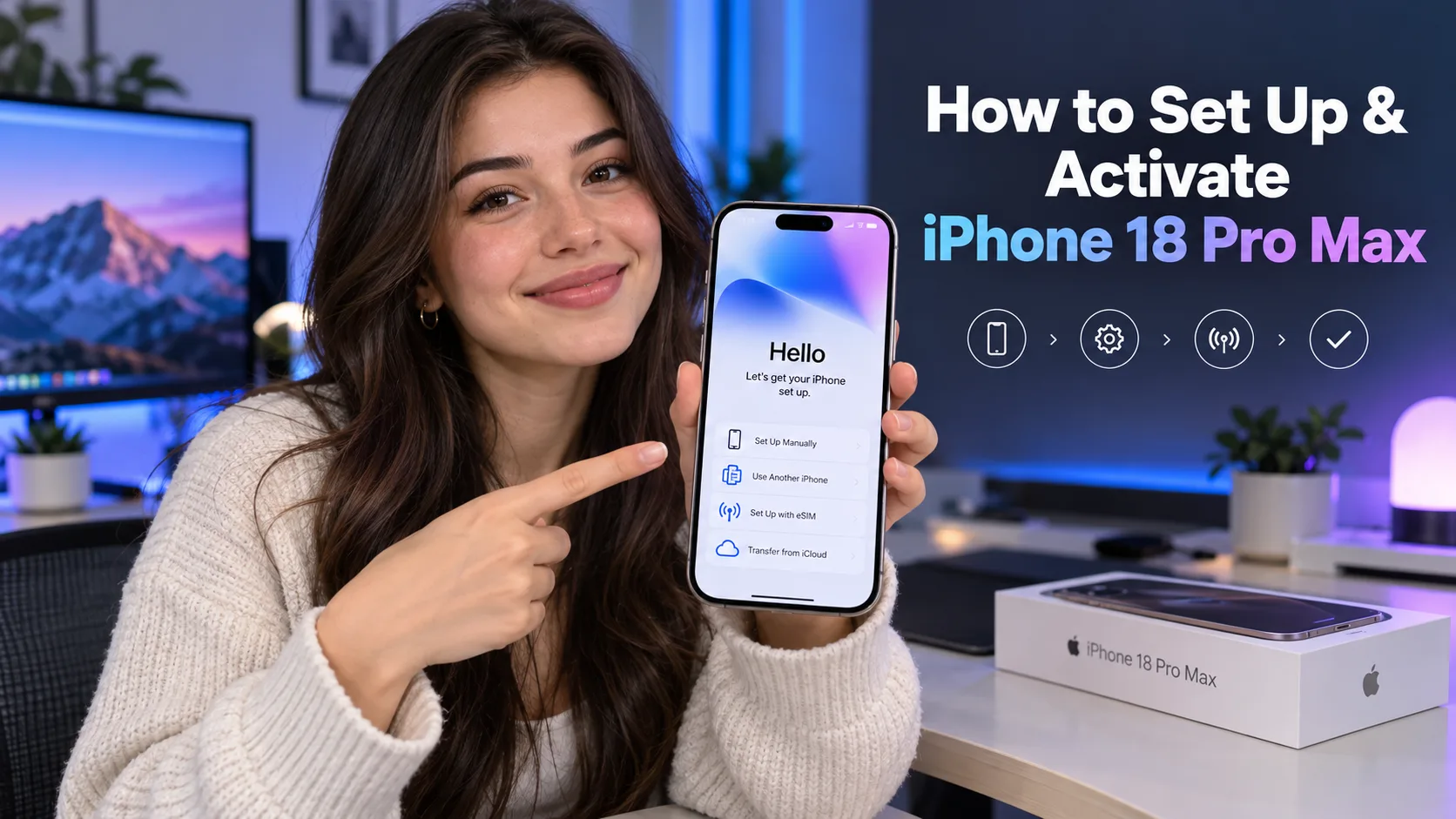
Many newer U.S. iPhones are eSIM-only. If your iPhone has no SIM tray, you’ll activate with eSIM.
To add AT&T eSIM:
- Connect to Wi-Fi.
- Go to Settings > Cellular > Add eSIM (or Add Cellular Plan).
- Tap Use QR Code and scan the AT&T code, or accept the automatic setup prompt if it appears.
- Label the line (For example, “AT&T”), set Default Voice Line, and choose Cellular Data line.
- When the status shows connected and you see bars, make a test call and browse with Wi-Fi off.
To transfer your number from another iPhone
Use Quick Start during setup. When asked about cellular service, choose to transfer eSIM. Follow on screen steps on both devices.
Carrier settings & updates
If you see a Carrier Settings Update alert, tap Update. These small files help your phone talk to AT&T’s network.
iPhone XR, iPhone XS, iPhone 11, iPhone SE (2nd Gen, 2020)
These models support both physical SIM and eSIM.
- Physical SIM route: Insert the SIM, power on, and complete online activation.
- eSIM route: Settings > Cellular > Add eSIM, then scan your AT&T QR code or follow the automatic prompt.
Dual SIM tips:
You can run one line for work and another for personal. Pick which line uses data (you can switch on the fly), set your default voice line, and choose which line iMessage uses (Settings > Messages > Send & Receive).
Samsung Galaxy S24 Ultra, Galaxy S24+, Galaxy S24 (and newer Galaxy models)
Samsung’s SIM manager makes eSIM easy.
To add AT&T eSIM:
- Open Settings > Connections > SIM manager.
- Tap Add eSIM.
- Choose Scan QR code or Enter activation code.
- After download, pick your preferred SIM for data and calls.
- Toggle Allow mobile data switching if you want the phone to auto-switch data during weak signal moments.
Physical SIM:
If your Galaxy has a tray, power off, insert the AT&T SIM, power on, then complete online activation. Open Settings > Connections > Mobile networks to confirm Network mode is set to 5G/LTE/Auto.
Note: Steps are similar for newer Galaxy phones too (For example, future models after the S24 series or S25 series). The menus may shift slightly but still live under Settings > Connections.
How Do I BYOD (Bring Your Own Device) to AT&T Phone?
Bringing your own phone saves money and time. Here’s the clean path:
- Confirm compatibility. Your device must be unlocked and support AT&T’s required network features (HD Voice/VoLTE and 5G/LTE bands). Most modern iPhones and U.S. Samsung/Google phones are fine.
- Get a SIM or eSIM. Order online or visit a store. For eSIM-only iPhones, request an eSIM activation.
- Pick a plan. Choose postpaid for premium features and financing options, or prepaid for flexibility.
- Activate.
- Physical SIM: Insert the SIM and complete online activation.
- eSIM: Add the eSIM in Settings by scanning AT&T’s QR code.
- Test everything. Make a call, send a text, and browse. If data doesn’t work, restart or check APN (your phone usually auto-loads it).
Advanced note (optional): If you’re a techy user importing a phone, look for LTE bands 2/4/5/12/17/66 and 5G bands like n5/n77 for the best AT&T experience. If that sounded like alphabet soup, skip it most mainstream unlocked phones already meet these needs.
Do I Need to Know My IMEI?
Yes. AT&T uses your IMEI to check eligibility and assign service correctly. Find it by dialing *#06# or go to Settings > General > About (iPhone) or Settings > About phone (Android).
- Dual-SIM phones show IMEI1 and IMEI2.
- For eSIM, you may also see an EID number keep it ready if AT&T asks.
Knowing these IDs upfront prevents delays.
What About Dual SIM Devices?
Dual SIM lets one phone hold two lines at once. You might keep a personal line and a work line, or a local line plus a travel line.
On iPhone (dual eSIM on newer models)
Go to Settings > Cellular. Tap a line to label it (Work, Personal), choose Default Voice Line, and pick the Cellular Data line. Turn on Allow Cellular Data Switching if you want the phone to hop to the other line’s data when signal dips.
On Samsung/Android
Go to Settings > Connections > SIM manager. Set Preferred SIM for calls and mobile data. You can toggle data switching and turn a line off temporarily when you don’t need it.
Handy uses:
- Keep your main number private while using a second line for marketplaces or apps.
- Add a short-term travel eSIM for roaming without touching your main line.
Troubleshooting: Common Activation Errors (And Quick Fixes)
“SIM Not Supported”
Why: The phone is carrier-locked to another network or incompatible.
Fix: Check if your device is unlocked. If it’s locked, request an unlock from the original carrier. If it’s unlocked but still failing, confirm the model supports AT&T’s required network features.
“SIM Not Provisioned” or “No Service”
Why: The line isn’t fully active yet or the network hasn’t attached your device.
Fix: Wait a few minutes, then restart. Make sure you completed the activation steps. If it persists, sign in to your AT&T account to confirm the line status.
eSIM Download Failed
Why: Weak Wi-Fi, VPN, or a partial install.
Fix: Turn off VPN, get strong Wi-Fi, remove the half-installed plan, restart, and add the eSIM again. Ensure you’re using the latest QR code/activation code.
Data Not Working
Why: APN or plan provisioning delay.
Fix: Toggle Airplane mode on and off. Restart the phone. Ensure Mobile Data is on. On Android, check Access Point Names under Mobile networks (usually auto-configured). If still stuck, give it 10–15 minutes or contact support.
Number Port Delays
Why: Account number or transfer PIN mismatch with your old carrier.
Fix: Double-check that information and resubmit. Keep the old SIM active until the port completes.
PUK Lock (SIM Locked After Wrong PIN)
Why: Too many incorrect SIM PIN attempts.
Fix: Get your PUK code from AT&T (in your account or by contacting support). Enter it carefully to unlock the SIM.
Voicemail Not Working After Activation
Fix: Call your voicemail to finish setup. If you had visual voicemail before, it should return once the line finishes provisioning. A restart can help.
Pro Tips for a Smooth Activation
- Back up your phone before you start, in case you switch devices.
- Charge the battery and connect to reliable Wi-Fi, especially for eSIM.
- Turn off VPNs during eSIM download they can block activation servers.
- Keep your old SIM active until a port-in is complete.
- Restart once after activation it solves many small glitches.
The Bottom Line
Activating AT&T is straightforward when you have the right info ready. Pick the plan that fits your needs, confirm your phone is unlocked and compatible, and choose the activation path that matches your device physical SIM or eSIM. iPhone and Samsung steps are quick, and dual SIM is easy to manage once you label lines and pick a default. If you hit a snag, the common fixes above restart, verify account details, re-add eSIM over strong Wi-Fi usually get you back on track fast.
Frequently Asked Questions (FAQs)
How long does AT&T activation take?
Most lines activate within a few minutes after you finish the steps online or in the app. If you’re moving your number from another carrier, it can take a little longer often under an hour, sometimes a few hours. Keep the old SIM in until calls and texts start arriving on your AT&T line.
Do I need an unlocked phone to use AT&T?
Yes, if your phone was bought from another carrier, it usually needs to be unlocked before it will accept an AT&T SIM or eSIM. If it’s still locked, request an unlock from the original carrier first. Factory-unlocked phones and most U.S. unlocked iPhones/Androids work right away once activated.
Where do I find my IMEI (and EID for eSIM)?
Dial *#06# to see your IMEI on screen. You can also check Settings > About (iPhone) or Settings > About phone (Android). eSIM-capable phones also show an EID save it, because AT&T may ask for it during eSIM setup.
Can I keep my current number when switching to AT&T?
Absolutely. During activation, you’ll enter your old carrier’s account number and a transfer/port-out PIN. Leave your old service active until the transfer finishes. Once your calls/texts ring on the AT&T line, the port is complete.
What is the difference between a physical SIM and an eSIM and which should I choose?
A physical SIM is a small card you insert; an eSIM is a digital SIM you download. eSIM is faster to set up, harder to lose, and great for dual-line use. A physical SIM is familiar and works well on older phones. If your phone is eSIM-only (many newer iPhones), you’ll activate with eSIM.
My data or calls aren’t working after activation what should I try?
First, restart the phone and toggle Airplane Mode off/on. Make sure Mobile Data is on and, if prompted, accept any carrier settings update. For eSIM, remove any failed install, reconnect to strong Wi-Fi, and add the eSIM again. If you ported a number, give it a bit of time; mismatched account info can delay service, so double-check the details if issues continue.