
If you want the freedom to pop in any SIM local, travel, prepaid, or from a different carrier you need two things: an unlocked phone and a network that your phone actually supports. Once those are in place, setup usually takes just a few minutes. This guide walks you through every step, explains the gotchas, and shows simple fixes if things don’t work right away.
Key Takeaways
- You can use any SIM only if the phone is carrier-unlocked—get the official unlock from the original carrier; it won’t wipe your data or normally void warranty.
- Confirm your exact model supports the new carrier’s LTE/5G bands and VoLTE/Wi-Fi Calling; region variants and some MVNOs limit features.
- Insert the SIM or add an eSIM, accept carrier settings, then add the correct APN if data/MMS don’t work; dual-SIM lets you keep your home number while using a travel data plan.
- SIM Not Supported” means still locked; “No Service” points to band/coverage or network-mode issues try another SIM, toggle Airplane Mode, update software, and avoid shady unlock sites or blacklisted devices.
TL;DR
To use any SIM card in your iPhone or Android, make sure the phone is carrier-unlocked and compatible with the new carrier’s network bands. Insert the SIM or add an eSIM, then set the APN for data/MMS if it doesn’t auto-configure. Test calls, texts, and data. If you see “SIM Not Supported” or “No Service,” the phone is still locked or the network isn’t compatible. Always prefer an official carrier unlock and avoid shady “instant unlock” sites.
Know Your SIM Options (Physical SIM vs. eSIM)
Most modern phones support one or more of these:
- Physical SIM (nano SIM). A tiny card you insert into a tray. Many Android phones and older iPhones have this.
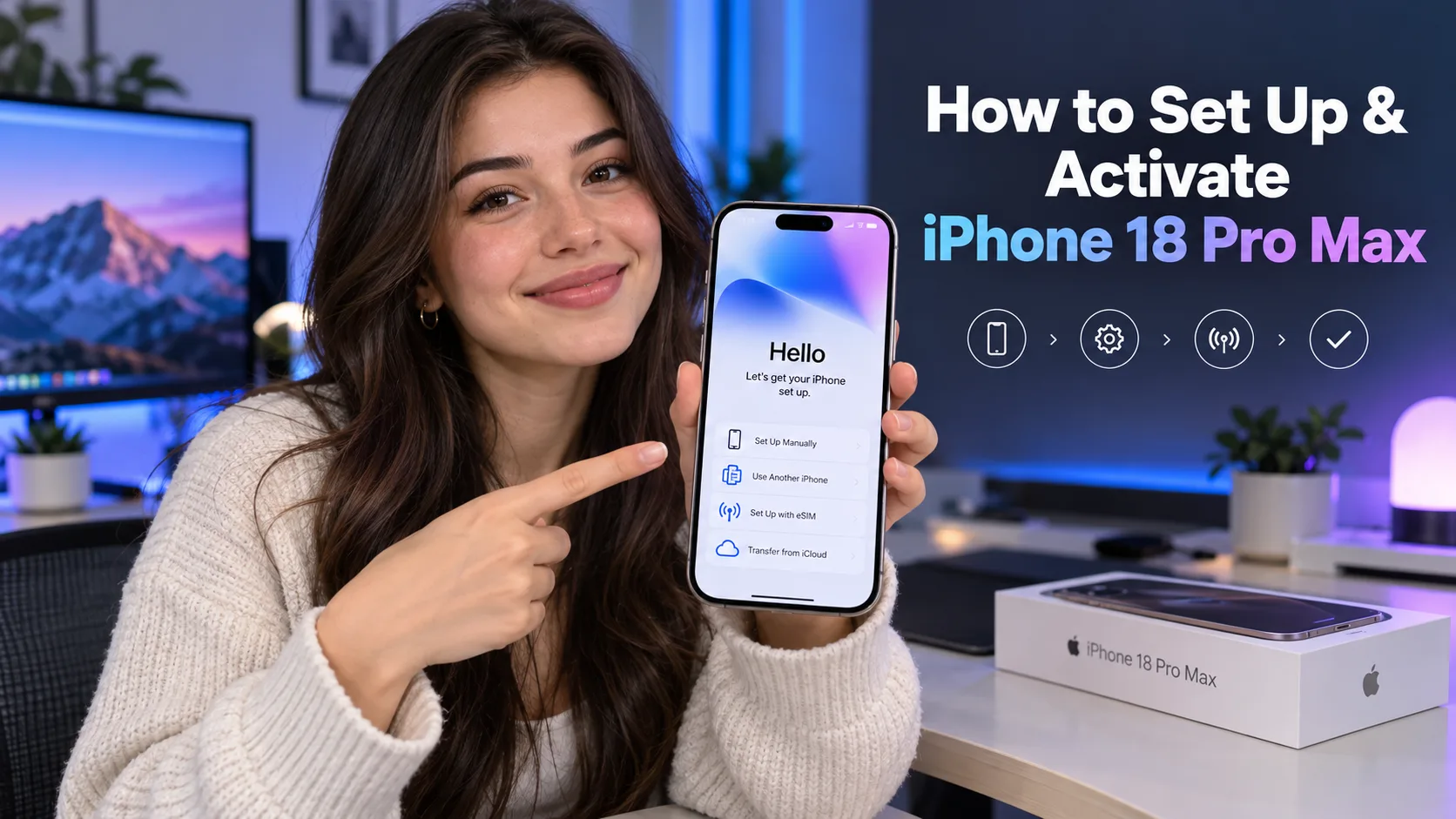
- eSIM (embedded SIM). A digital SIM you download to the phone by scanning a QR code or entering an activation code. iPhone models from XR/XS and many Android flagships support eSIM. Some newer iPhones are eSIM-only in certain regions.
- Dual SIM / Dual eSIM. Many phones let you use two lines at once (for example, a personal line and a travel data plan). You can set defaults for calls, messages, and data.
Tip: If you travel often, consider using eSIM for the short-term plan and keeping your home number on the physical SIM. It makes swapping service easier.
Step 1: Check If Your Phone Is Unlocked
The fastest way to confirm is to test with a different carrier’s SIM or a cheap travel eSIM. If calls, texts, and data work, you’re unlocked. Here are built-in checks too:
On iPhone
Go to Settings > General > About and look for Carrier Lock.
- If it says “No SIM restrictions,” your iPhone is unlocked.
- If you see a specific carrier name or a message like “SIM locked,” it’s locked to that carrier.
On Android
Exact wording varies by brand (Samsung, Google Pixel, OnePlus, etc.), but you can try:
- Settings > Network & Internet (or Connections) > SIMs (or Mobile networks).
- Look for an option like “Network Unlock,” “SIM status,” or “Carrier lock.”
- If nothing is clear, the real test is still to insert another carrier’s SIM.
Note: Some phones may appear unlocked for calls/texts but still block data or hotspot on certain carriers. That’s usually a carrier policy or feature support issue rather than a lock.
Step 2: If It’s Locked, Unlock It the Right Way
The safest way to unlock is through the original carrier. Requirements vary, but you’ll usually need:
- The phone not reported lost or stolen.
- The account in good standing (no overdue bills).
- The device used on that network for a certain time period (varies by carrier).
- For financed phones, the device often needs to be paid off.
iPhone Unlocks (Carrier-Side Only)
Apple does not provide “unlock codes.” When a carrier approves your request, it flips a switch in Apple’s database. After that:
- Insert a SIM from another carrier and follow prompts, or
- Connect to Wi-Fi and restart; sometimes a quick restore via Finder/iTunes finalizes it.
Android Unlocks (Code or App)
Many Android devices use a Network Unlock Code (NUC) or an official device unlock app preloaded by the carrier. Once the carrier approves, you’ll receive the code or the app will show an Unlock button.
Avoid: Third-party or “instant” unlock sites promising secret codes. They often fail, can waste money, and may put your IMEI at risk.
Step 3: Confirm Network Compatibility (Bands & Features)
Even unlocked, a phone must match the frequency bands and network features of the carrier where you plan to use it.
- Bands: LTE and 5G use different bands in different countries. Your phone needs the bands used by the target carrier for reliable coverage and speed.
- VoLTE / VoNR: Many networks now require Voice over LTE (4G) or Voice over New Radio (5G) for calls. If your phone lacks the right certification on that carrier, calls may fail even if data works.
- Carrier features: Wi-Fi Calling, Visual Voicemail, and 5G Standalone may be limited on some carriers, especially with imported phones.
How to check quickly:
- Find your model number (iPhone: Settings > General > About; Android: About phone) and look up its bands on the maker’s site.
- Visit your new carrier’s coverage and compatibility page and check supported bands and features.
- If you’re buying used, prefer models officially sold for your region.
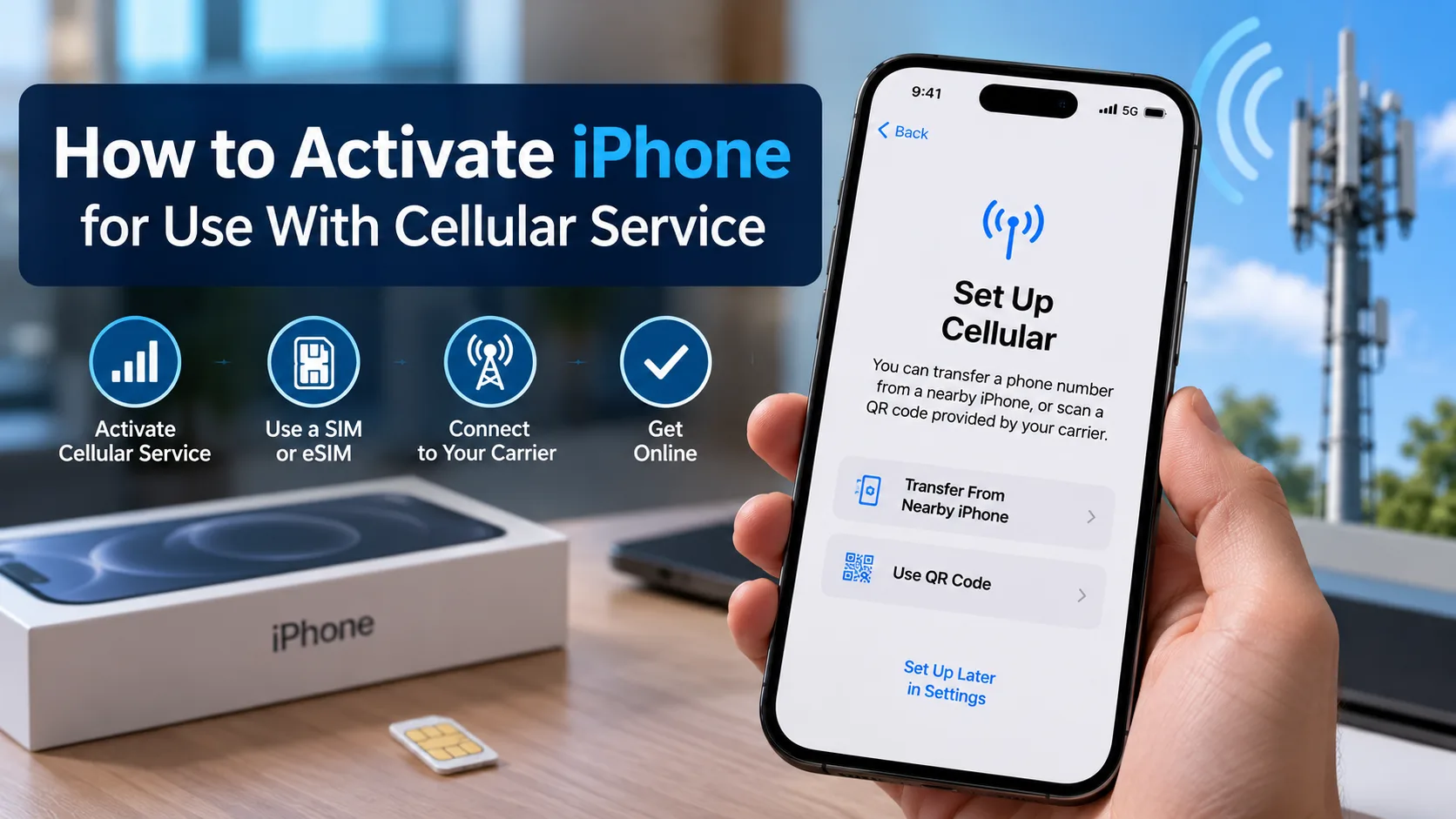
Step 4: Insert a Physical SIM or Add an eSIM
Physical SIM (Android & iPhone)
Power off the phone, insert the SIM into the tray (gold contacts down, corner notch aligned), then power on. You should see the carrier name and signal bars within a minute or two. If not, toggle Airplane Mode off/on or restart.
eSIM on iPhone
- Go to Settings > Cellular (or Mobile Service) > Add eSIM.
- Scan the QR code your carrier gave you, or choose Use QR Code / Use Carrier Activation if offered.
- If you have a manual code, use Enter Details Manually and fill in the SM-DP+ address, activation code, and confirmation code if provided.
- Label your plan (e.g., “Travel Data”) and choose the default line for calls and data.
eSIM on Android (Pixel/Samsung/others)
- Go to Settings > Network & Internet > SIMs (names vary).
- Tap Add eSIM or Download a SIM instead.
- Scan QR or input the activation details manually.
- Select defaults for data, calls, and messages.
Tip: For dual-SIM phones, you can keep your home number on one line and set the travel eSIM as the data line only. Your home line can keep receiving calls and messages over Wi-Fi.
Step 5: Set or Fix APN for Data and MMS
Sometimes voice and SMS work but mobile data or MMS don’t. That’s almost always an APN (Access Point Name) issue.
- On iPhone: Settings > Cellular > Cellular Data Network (may not appear on some carrier profiles). Enter the APN your carrier provides.
- On Android: Settings > Network & Internet > SIMs > Access Point Names. Create a new APN with the fields from your carrier (Name, APN, MMSC, MMS proxy/port, MCC/MNC if required).
After saving, select the new APN, toggle Airplane Mode, then test data and picture messages.
📖 Also Read: How to Unlock a Sprint Phone (With or Without an Account) Free
Using Any SIM on iPhone: A Simple, Safe Workflow
- Check unlock status: Settings > General > About > Carrier Lock = No SIM restrictions.
- Insert SIM or add eSIM: Settings > Cellular > Add eSIM or open the SIM tray and insert the card.
- Wait for activation: If prompted, follow the on-screen steps or connect to Wi-Fi for carrier activation.
- Update carrier settings: If a popup appears, tap Update.
- Set APN (if needed): Add APN under Cellular Data Network.
- Test everything: Make a call, send/receive SMS and MMS, and run a quick speed test on mobile data.
- Optional: Assign Primary/Secondary lines and choose which line handles data in dual-SIM setups.
Using Any SIM on Android: A Simple, Safe Workflow
- Check lock status: Try another SIM or look for any Network unlock menu under Settings.
- Insert SIM or add eSIM: Settings wording varies, but look for SIMs, Mobile networks, or Connections.
- Automatic provisioning: Many carriers auto-load APNs; accept any carrier profile prompts.
- Set APN manually: If data/MMS fails, add the APN in Access Point Names and select it.
- Network mode: Ensure LTE/5G is enabled under Preferred network type.
- Test calls, SMS, MMS, data: Confirm all four work before you travel or cancel an old plan.
Travel Use: Local SIM vs. Travel eSIM
Local SIM (or local eSIM): Often the cheapest for lots of data and best local speeds. You may need a passport and local ID in some countries. Buying in-store helps with setup.
Travel eSIM: Fast and convenient. You can buy before you fly, install with a QR code, and switch on data when you land. Great for short trips or multiple countries. Costs more per GB than true local plans but saves time.
Pro move: Keep your home number active for calls and banking SMS. Set the travel eSIM as your data line. Use messaging apps (iMessage, WhatsApp, Signal) over data to avoid roaming charges.
MVNOs: Big-Network Coverage at Lower Prices
An MVNO (mobile virtual network operator) sells service that runs on a major carrier’s network. For example, a budget carrier might use the same towers as a big carrier but with different plan prices and policies.
- Pros: Lower monthly costs, no long contracts, easy to try for a month.
- Cons: Some MVNOs may have lower priority during network congestion. Features like 5G standalone, Wi-Fi Calling, or Visual Voicemail may be limited on certain devices.
If your phone is unlocked and compatible with the underlying network, an MVNO SIM or eSIM usually works fine.
Common Problems and Easy Fixes
“SIM Not Supported” or “Invalid SIM”
This means the phone is still locked to another carrier. Contact the original carrier for an official unlock. If you bought the phone used, ask the seller to unlock it or return it.
“No Service” or “Emergency Calls Only”
- Make sure Airplane Mode is off and the SIM is seated correctly.
- Check Preferred network type and enable LTE/5G.
- In rural areas or different countries, your phone might not support the right bands. Try another carrier’s SIM or a travel eSIM that lists your phone model as compatible.
Data Works, Calls Fail (or the other way around)
- Your device may lack VoLTE/VoNR certification on that carrier. Some imported models can use data but can’t place calls.
- Try Wi-Fi Calling if supported. Otherwise, consider a different carrier that fully supports your model.
MMS/Picture Messages Don’t Send
- Add or correct the APN and MMSC fields.
- Turn off iMessage temporarily to test plain SMS/MMS, then re-enable.
eSIM Won’t Activate
- Double-check the SM-DP+ address and activation code.
- Connect to stable Wi-Fi and try again.
- Ask the carrier to reissue the eSIM or provide a fresh QR code.
SIM or Network PIN/PUK Confusion
- SIM PIN: Locks the physical SIM. If you forget it, the SIM may ask for a PUK. The PUK comes from your carrier and is different from a phone passcode.
- Network Unlock Code (NUC): Used on some Android phones to remove the carrier lock. Only your original carrier can provide a valid code.
Slow Data or No 5G
- Check your plan includes 5G and that your phone supports the carrier’s 5G bands.
- In Settings, make sure 5G Auto/On (iPhone) or 5G (Android) is enabled.
- Try another APN if the carrier provides more than one.
Region Locks and Model Variants (Important for Imports)
Some phones have regional software locks or limited band support based on where they were sold. Even unlocked, an imported device might miss key bands for your local network. Before you buy:
- Confirm the exact model number and supported bands.
- Prefer devices officially sold in your region if you want the best feature support (VoLTE, Wi-Fi Calling, Visual Voicemail).
Buying Used? Avoid Blacklist Trouble
A phone can be unlocked and still be blacklisted (reported lost, stolen, or blocked for fraud). Blacklisted phones may show signal but won’t work on many networks. Always:
- Check the IMEI/serial with a trusted checker before paying.
- Ask for proof of paid-off status for financed phones.
- Keep your receipt and seller’s info.
Advanced Tips for Power Users
- Carry APN notes: Save the APN details for your favorite travel carriers in a note app so you can set them quickly if auto-provisioning fails.
- Use dual-SIM smartly: Set line A for calls/SMS (home number) and line B for data (travel). On iPhone, go to Settings > Cellular to pick the default lines; on Android, check SIMs or Mobile networks.
- Watch battery: Two active SIMs can use more power. If you don’t need both at once, turn one line off temporarily.
- Keep software current: Carrier settings and modem firmware updates fix a lot of odd network bugs.
- Store unlock proof: Screenshots of approval emails or “No SIM restrictions” can save time if a carrier mis-flags your device later.
Safety, Legality, and Warranty Notes
- Legality: In many countries, unlocking is allowed, but you must own the device or have the account holder’s permission.
- Warranty: Official carrier or OEM unlocks normally don’t void hardware warranty. Rooting or unauthorized modifications can.
- Security: Never share your IMEI or activation codes with random websites. Always work with official carriers or well-known providers.
📖 Also Read: How to Unlock a Spectrum iPhone (Fast, Safe, and Step-by-Step)
Real-World Scenarios
You’re traveling next week and want cheap data
Buy a travel eSIM that covers your destination. Install it before you fly, and switch your Cellular Data to that line on arrival. Keep your home SIM active for calls and banking codes over Wi-Fi.
You’re switching carriers at home
Confirm your phone is unlocked and your model supports the new carrier’s bands. Order the new SIM/eSIM, activate it, set APN if needed, and port your number. Keep the old line active until the port completes.
You bought a “factory unlocked” phone online
Validate by inserting a different carrier’s SIM. If you see “SIM Not Supported,” it’s not truly unlocked—contact the seller or, if the original carrier is known, request an official unlock.
Common Questions About (Using Any SIM Card)
How do I know if my phone is unlocked?
On iPhone, go to Settings > General > About and check Carrier Lock. If it says “No SIM restrictions,” you’re unlocked. On Android, the wording varies by brand, so the quickest test is to insert a different carrier’s SIM: if calls, texts, and data work, it’s unlocked.
Can I use any SIM without unlocking first?
No. A carrier-locked phone only accepts SIMs from that one carrier. To use other SIMs or an eSIM from a different provider, you must get an official carrier unlock. Avoid random “instant unlock” sites—most are unreliable and can waste your money.
Will unlocking erase my data or void my warranty?
An official carrier or manufacturer unlock does not wipe your photos, apps, or messages, and it typically does not void hardware warranty. Still, it’s smart to back up your phone before making changes. Only unofficial hacks, rooting, or other modifications risk your warranty.
I switched SIMs and calls work, but data or MMS doesn’t. Why?
That’s usually an APN issue. Your phone needs the correct Access Point Name to use mobile data and send picture messages. Add or update the APN in Settings (iPhone: Cellular Data Network; Android: Access Point Names), save, then toggle Airplane Mode off/on and test again.
Can I use eSIM and a physical SIM at the same time?
Yes, many modern phones support dual SIM (two lines at once). You can keep your home number on one line and set the other line (often a travel eSIM) for mobile data. In Settings, choose which line handles calls, texts, and data—change it anytime.
What does “SIM Not Supported” or “No Service” mean after I insert a new SIM?
“SIM Not Supported” usually means the phone is still carrier-locked. “No Service” can point to band incompatibility, no coverage, or a disabled network mode (like 5G/LTE off). First, confirm the phone is unlocked, then check that your model supports the new carrier’s bands and features (VoLTE/5G), and make sure network mode is enabled in Settings.
📖 Also Read: What to Do When Your Phone Says ‘SIM Not Supported
The Bottom Line
To use any SIM in your Android or iPhone, focus on two essentials: get the phone unlocked the proper way and make sure it’s compatible with the network you want. After that, activation is simple: add the SIM or eSIM, set the APN if needed, and test calls, texts, and data. Stick with official unlocks, keep your software updated, and you’ll enjoy carrier freedom wherever you go.