
TL;DR – Quick Answer
To activate an iPhone, you can use a physical Nano-SIM or set up an eSIM. For a physical SIM, pop the SIM tray open with a SIM eject tool or paper clip, place the nano-SIM on the tray so the angled corner (notch) lines up, then slide the tray back in fully. If your SIM has a PIN, enter it when asked—don’t guess, because too many wrong tries can lock the SIM and stop calls or cellular data until you replace it.
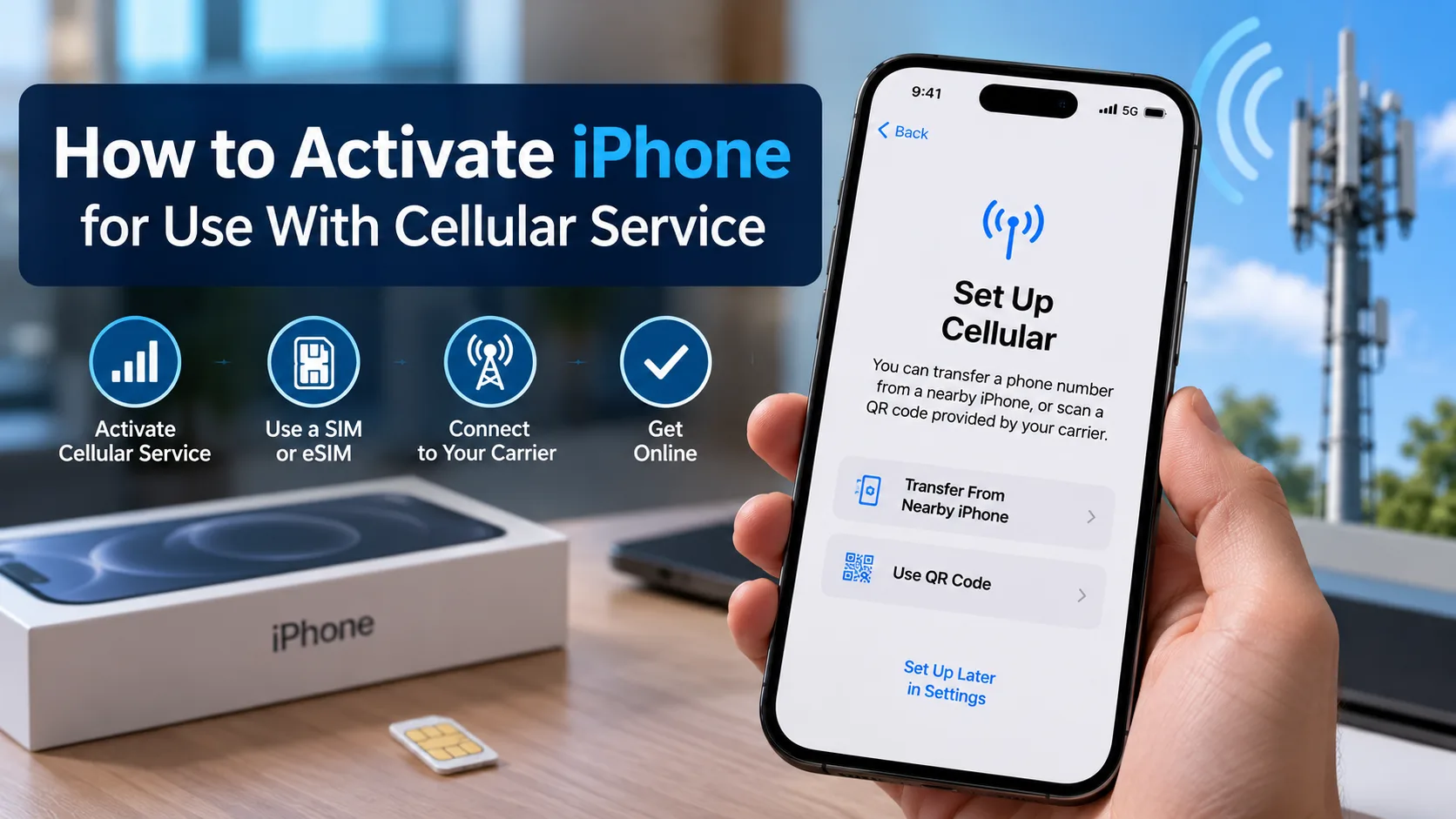
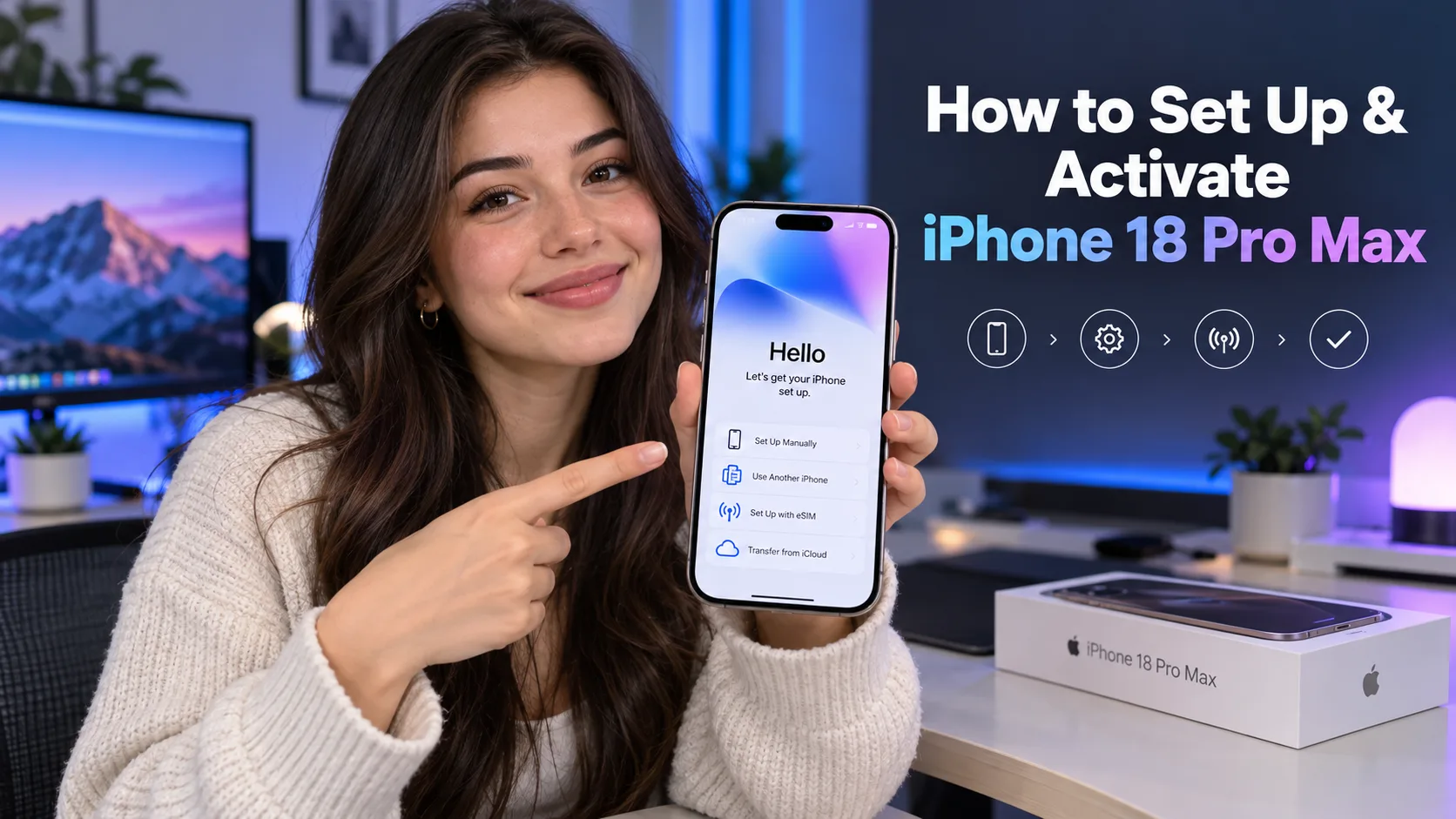
For an eSIM, make sure your iPhone is connected to Wi-Fi first (Wi-Fi is usually required for eSIM activation). You can activate it during initial setup when iPhone shows Cellular Setup, or later by going to Settings > Cellular (or Mobile Service) > Add eSIM / Set Up Cellular. From there, you can choose Use QR Code (scan it or enter details manually), use your carrier’s app, or on iOS 16+ select Transfer From Nearby iPhone to move service from your older iPhone.
If your carrier supports it, you can also convert a physical SIM to an eSIM on compatible iPhone models (often iOS 16+). Go to Settings > Cellular > Add eSIM / Set Up Cellular, pick the phone number that’s currently on the physical SIM, then tap Convert to eSIM and follow the on-screen steps. Keep in mind that some iPhone models (and some regions) don’t support physical SIM at all, so eSIM may be the only option.
Physical SIM: Use the ejector tool → Insert nano-SIM → Wait for signal
eSIM (QR Code): Settings → Cellular → Add eSIM → Scan QR code from carrier
eSIM (Carrier App): Download carrier app → Follow in-app activation steps
Physical SIM vs eSIM: What’s the Difference?
Before you start, it helps to know which type of SIM you’re working with. iPhones support two types of SIM technology, and newer models in the US are eSIM-only.
A small plastic card you insert into your iPhone’s SIM tray. Available on iPhone 13 and earlier (US), and most international iPhone models including iPhone 14-17.
A digital SIM built into your iPhone. No physical card needed—you activate it electronically. iPhone 14 and later in the US are eSIM-only. Supports storing 8+ eSIM profiles.
If you bought an iPhone 14, 15, 16, or 17 in the United States, your phone doesn’t have a physical SIM tray—it’s eSIM-only. International versions still have the SIM tray on most models.
How to Activate a Physical SIM Card
Got a nano-SIM card from your carrier? Here’s how to get it up and running on your iPhone. This works for new phones, SIM swaps, or when switching carriers.
What You’ll Need
Before you start, make sure you have your nano-SIM card ready (the small one—about the size of your fingernail), a SIM ejector tool or paperclip, and a WiFi connection nearby just in case.
Step-by-Step Instructions
While you can swap SIMs with the phone on, turning it off prevents any potential issues. Hold the side button and volume button, then slide to power off.
On most iPhones, the SIM tray is on the right side of the phone. You’ll see a small pinhole—that’s where you’ll insert the ejector tool.
Push the SIM ejector tool (or a straightened paperclip) firmly into the hole. The tray will pop out. Pull it out gently.
Place your nano-SIM card into the tray. There’s a notched corner on the SIM—it only fits one way, so don’t force it. The gold contacts should face down.
Push the tray back into the phone until it sits flush. Make sure it’s in the same orientation you removed it.
Turn your iPhone back on. You should see your carrier name appear in the top-left corner within a minute or two. If prompted, follow any on-screen setup instructions.
If your SIM was already activated by your carrier (most are), you won’t need to do anything else. Make a test call to confirm everything’s working.
How to Activate an eSIM on iPhone
eSIM activation is even easier than physical SIMs—no tools required. You’ve got several options depending on your carrier and situation.
Method 1: Scan a QR Code (Most Common)
Your carrier typically provides a QR code either via email, in a physical kit, or on their website. Here’s how to use it:
On your iPhone, go to Settings → Cellular (or Mobile Data in some regions).
Tap “Add eSIM” or “Set Up Cellular.” Then select “Use QR Code.”
Point your iPhone’s camera at the QR code from your carrier. The phone will detect it automatically.
Tap “Continue” when prompted, then “Add Cellular Plan.” Wait for activation to complete—this usually takes under a minute.
You can give your plan a custom name like “Work” or “Personal” to keep things organized if you have multiple lines.
Method 2: eSIM Carrier Activation
Some carriers pre-assign eSIM profiles to iPhones sold through their stores. If this applies to you:
When you turn on your new iPhone, it’ll automatically detect the assigned eSIM
You’ll see a notification saying “Carrier Cellular Plan Ready to Be Installed”
Tap the notification and follow the prompts to activate
Method 3: eSIM Quick Transfer
Switching from an old iPhone to a new one? You can transfer your existing eSIM directly:
During setup of your new iPhone, you’ll see an option to transfer your phone number from your old device.
Choose which cellular plan you want to move over.
You may need to confirm the transfer on your previous device.
The old SIM gets deactivated once the new one goes live.
You’ll need a WiFi connection to activate an eSIM. Make sure you’re connected before starting the process, especially during initial phone setup.
Comparison: Activation Methods at a Glance
Not sure which method is right for you? Here’s a quick comparison of all the ways to activate cellular service on your iPhone.
| Method | Best For | Time Required | WiFi Needed | Difficulty |
|---|---|---|---|---|
| Physical SIM Insert | Traditional setup, international models | 2-3 minutes | Optional | Easy |
| eSIM QR Code | New activations, carrier switching | 1-2 minutes | ✓ Yes | Easy |
| eSIM Carrier Activation | Phones bought from carriers | 1 minute | ✓ Yes | Very Easy |
| eSIM Quick Transfer | Upgrading iPhones | 2-5 minutes | ✓ Yes | Easy |
| Convert Physical to eSIM | Freeing up SIM slot | 2-3 minutes | ✓ Yes | Easy |
| iPhone Model | Physical SIM | eSIM | Dual SIM Support |
|---|---|---|---|
| iPhone 17 Series (US) | ✗ No | ✓ Yes | Dual eSIM |
| iPhone 16/15/14 (US) | ✗ No | ✓ Yes | Dual eSIM |
| iPhone 14-17 (International) | ✓ Yes | ✓ Yes | eSIM + Physical |
| iPhone 13 and earlier | ✓ Yes | ✓ Yes | eSIM + Physical |
| iPhone SE (3rd Gen) | ✓ Yes | ✓ Yes | eSIM + Physical |
Troubleshooting SIM Activation Problems
Running into issues? Don’t worry—most activation problems have simple fixes. Here are the most common issues and how to solve them.
Fix: Remove the SIM tray, check that the card is seated properly (notched corner aligned), and reinsert. If the error persists, try the SIM in another phone to rule out a damaged card. You may also need to check if your iPhone is carrier-locked.
Fix: Make sure you’re connected to WiFi or have cellular signal. Check Apple’s System Status page to confirm the activation servers are online. If still stuck, restart your iPhone and try again. As a last resort, connect to iTunes/Finder on a computer to activate.
Fix: This usually means your iPhone is locked to a different carrier. You’ll need to contact the original carrier to request an unlock, or use the SIM from the carrier your phone is locked to.
Fix: Confirm you’re on WiFi. Toggle Airplane Mode on and off. Go to Settings → General → About and check for carrier updates. If using a QR code, make sure it hasn’t expired (some are one-time use). Contact your carrier if the code doesn’t work.
Fix: This is usually Apple’s server being overloaded (common during new iPhone launches). Wait 15-30 minutes and try again. Connecting to a different WiFi network sometimes helps.
Fix: Reset network settings (Settings → General → Transfer or Reset → Reset → Reset Network Settings). This clears saved networks and cellular data settings, often fixing connection issues.
If none of these fixes work, contact your carrier’s customer support or visit an Apple Store. There may be an account-level issue that needs to be resolved on their end.
Carrier-Specific Activation Tips
Different carriers have slightly different processes. Here’s what to know for the major US carriers:

AT&T fully supports both physical SIM and eSIM. You can activate through the myAT&T app, online at att.com, or by calling customer service. eSIM QR codes are available in your online account or can be sent via email. AT&T also supports converting physical SIMs to eSIM directly on your iPhone.

Verizon offers eSIM activation through the My Verizon app—it’s actually the easiest method. When buying a new iPhone from Verizon, eSIM Carrier Activation is often pre-configured. For prepaid accounts, you may need to call Verizon to set up eSIM.

T-Mobile’s T-Mobile app handles eSIM activation smoothly. They also support eSIM Quick Transfer between iPhones. T-Mobile prepaid customers can activate eSIM online at t-mobile.com or through the app.
MVNOs (Mint, Visible, Cricket, etc.)
Most major MVNOs now support eSIM, but the process varies. Mint Mobile, Visible, and US Mobile have excellent app-based eSIM activation. Cricket and some smaller MVNOs may still require physical SIMs or have limited eSIM support—check with your specific carrier.
Final Tips for Smooth Activation
Here are a few extra pointers to make sure your SIM activation goes off without a hitch:
Keep your old phone handy — You might need it for verification codes or to approve the SIM transfer.
Back up before switching — Always back up your old iPhone before transferring your number to a new device.
Update iOS first — Running the latest iOS version ensures you have access to all eSIM features and bug fixes.
Screenshot your eSIM QR code — If your carrier sends a QR code, save it somewhere safe in case you need to re-activate later.
Contact carrier support early — If something goes wrong, carriers can often fix activation issues remotely in minutes.
That’s everything you need to know about activating a SIM card on your iPhone. Whether you’re setting up a brand new phone or switching carriers, the process is designed to be quick and painless. If you run into any issues, the troubleshooting section above should help you get back on track.
Yes, but with limitations. You can complete initial setup using WiFi only, skipping the cellular activation step. The phone will work for WiFi-based apps, but you won’t be able to make calls or send SMS texts until you add a SIM or eSIM.
Usually just 1-3 minutes. Physical SIMs that are already carrier-activated work almost instantly. eSIM activation via QR code typically takes under 2 minutes. In rare cases during high-traffic periods, it might take up to 24 hours for full service to be available.
On iPhones that support it (like international iPhone 14-17 models or iPhone 13 and earlier), yes! This is called Dual SIM. You can use one number for work and another for personal calls, or keep a local SIM while traveling abroad while maintaining your home number on eSIM.
If you’re keeping the same carrier and phone number, your existing SIM card should work in your new iPhone. Just pop it in. For eSIM, you’ll need to request a new eSIM profile from your carrier—Android eSIMs can’t be directly transferred to iPhone.
Most carriers don’t charge specifically for SIM activation if you’re already on a plan. However, some charge activation fees for new lines ($25-$35 typically). Prepaid carriers usually include activation in the cost of the SIM kit. eSIM activation is almost always free.
Only if your iPhone is unlocked. Carrier-locked iPhones only accept SIM cards from that specific carrier. If you see “SIM Not Supported,” your phone is likely locked. Contact your carrier to request an unlock if you’ve met their requirements.
Your carrier name should appear in the top-left corner of your screen (or in the Dynamic Island/status bar area). You can also go to Settings → Cellular and see your plan information. Try making a test call to confirm everything’s working.
Yes, if your carrier supports it. Go to Settings → Cellular, select your physical SIM line, and tap “Convert to eSIM.” Follow the prompts to complete the conversion. Not all carriers offer this feature, so check with yours first.
Need Help Unlocking Your iPhone?
If your SIM won’t activate because your iPhone is carrier-locked, check out our complete unlocking guides for all major carriers.
The information provided in this article is for general informational and educational purposes only. While we strive to keep the content accurate and up-to-date, wireless carrier policies, iPhone features, and activation procedures may change without notice. We are not affiliated with, endorsed by, or officially connected with Apple Inc., AT&T, Verizon, T-Mobile, or any other carrier mentioned in this guide. All product names, logos, and brands are property of their respective owners. Before making any changes to your cellular service or device settings, we recommend contacting your carrier directly to confirm current procedures and any applicable fees. We are not responsible for any issues, damages, or charges that may result from following the instructions in this guide.