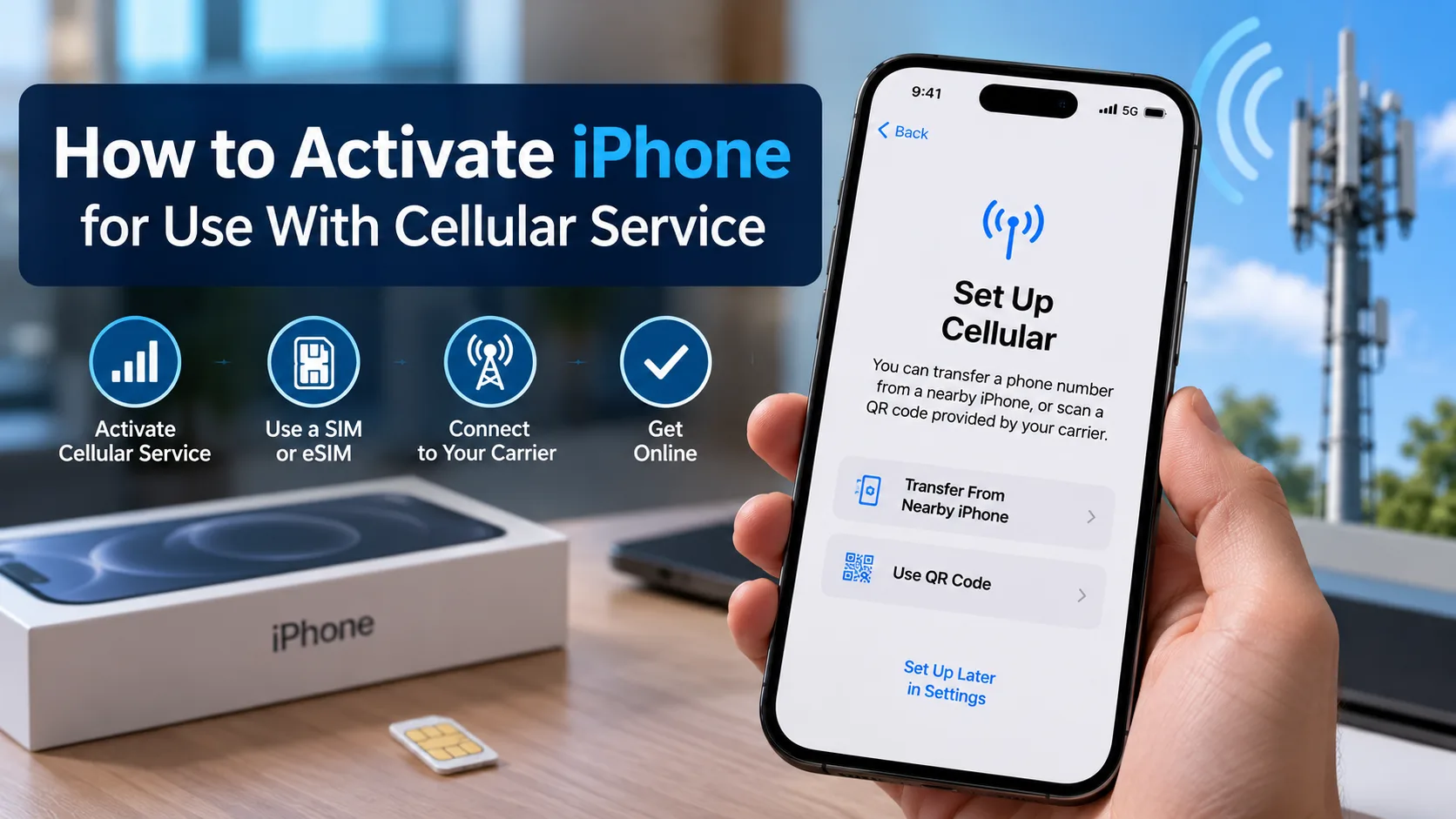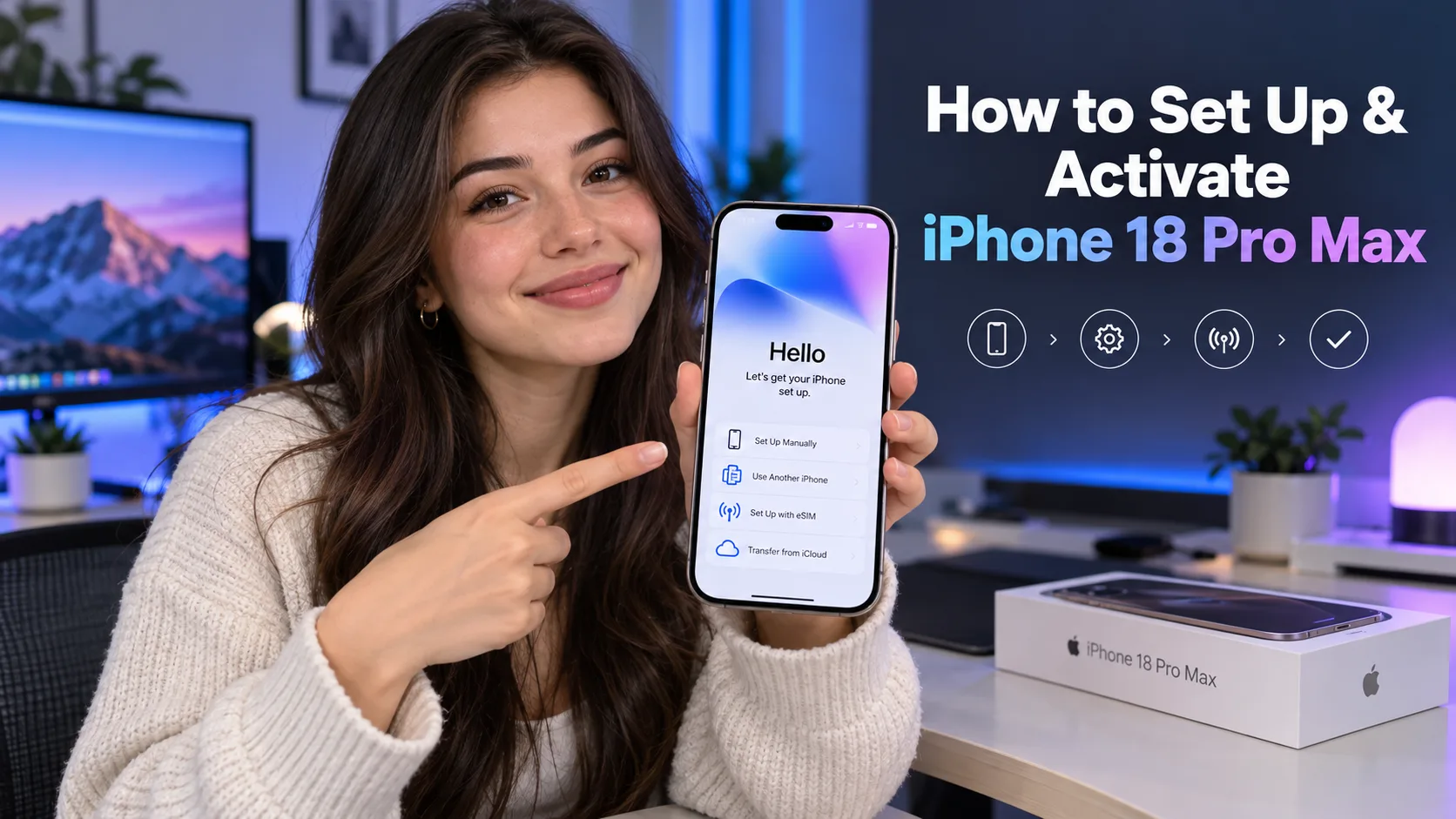

An unlocked phone makes switching carriers simple and cheap. Because it isn’t tied to one network, you can grab BYOD deals, try MVNO plans, add a travel eSIM, and keep your number with less hassle. To switch fast, first confirm your phone is unlocked (iPhone: Settings > General > About > Network Provider Lock; Android: Settings > About phone or test another SIM). Check compatibility for LTE/5G bands and VoLTE/Wi-Fi Calling, back up your data, then activate a new SIM or eSIM and start the number port with your account number and PIN. Finish by updating APN settings, turning on Wi-Fi Calling, and testing calls, texts, data, and 2FA codes.
Key Takeaways
- Carrier freedom, no lock-in With an unlocked phone, you’re not tied to contracts or one network—upgrade anytime and switch carriers whenever coverage or pricing is better.
- Real savings with BYOD & MVNOs Bring-Your-Own-Device discounts and lower-cost MVNO plans let you chase promos and cut monthly bills without buying new hardware.
- Travel smart with eSIM/Dual-SIM Add a local SIM/eSIM abroad for cheap data while keeping your home number active for calls, texts, and 2FA—skipping pricey roaming.
- More value, longer life A permanently unlocked phone (database unlock) survives resets and updates, sells faster for more, and stays useful across networks and plans.
- Know the gotchas Phones bought on carrier installments usually stay locked until paid off and officially unlocked; before switching, confirm band/VoLTE support and a clean IMEI, then port your number with your account PIN for zero downtime.
What “Unlocked” Actually Means (and What It Doesn’t)
Network lock vs. screen/PIN/FRP
An unlocked phone is free to accept SIMs or eSIMs from different carriers. That’s it. Unlocking does not remove your screen PIN, password, or biometrics. It also does not bypass Apple’s Activation Lock/iCloud or Google’s Factory Reset Protection (FRP). Those are theft and account protections that stay tied to your Apple ID or Google account. A device can be unlocked and still be blocked from networks if its IMEI is blacklisted as lost or stolen.
Factory-unlocked vs. carrier-unlocked
Factory-unlocked phones are sold open from day one by the manufacturer or retailer. They’re ready for any compatible carrier as soon as you turn them on. Carrier-unlocked phones start out locked to one provider and are freed after you meet that carrier’s rules (like time on network and a paid-off balance). When a carrier unlocks your phone, they update the device’s status in their systems so it will accept other carriers’ SIMs/eSIMs.
Physical SIM vs. eSIM
Unlocking applies to both physical SIM and eSIM. On a SIM-tray phone, you can pop in a new SIM from another carrier. On an eSIM-only phone, you just add a new cellular plan digitally with a QR code or app. Dual-SIM (two lines at once) is a big perk: keep your old line active while you test a new carrier, or run a cheap local data eSIM when you travel without losing your home number.
Temporary vs. permanent unlocks
Some carriers or devices support a temporary unlock that works for a short window (often used for travel). When the timer ends—or sometimes after a reset—the phone relocks to the original carrier. A permanent unlock updates the device’s unlock status in the carrier/manufacturer database. It survives software updates and factory resets, so you remain free to switch carriers whenever you like.
📖 Also Read: Why Buy an Unlocked Phone vs Carrier Locked (The Complete Guide)
The 5 Big Reasons an Unlocked Phone Makes Switching Carriers Easy
1) Instant Carrier Freedom
With an unlocked phone, switching is as simple as inserting a new SIM or adding an eSIM and turning on service—no store visit or long hold times required. It’s perfect for trial runs on a new network before you port, moving to a new neighborhood during lease renewal, or solving dead zones at home or work without buying a new device. The quick path is straightforward: get a new SIM or eSIM, activate the line in the app or online, and update APN settings if data or MMS doesn’t work right away.
2) Better Plan Deals—Especially With BYOD & MVNOs
Unlocked phones qualify for Bring Your Own Device offers, which often waive activation fees and lower monthly costs because you’re not financing hardware. You also gain access to MVNOs that use the big networks at lower prices, letting you choose the exact mix of data, hotspot, and perks you need. Many households save more by mixing lines—keep one heavy-data line on a premium carrier for priority speeds, and move lighter users to budget MVNO plans on the same or a different network.
3) Travel Flexibility & Roaming Control
Going abroad, you can load a local eSIM for cheap data while keeping your main number live for banking, 2FA, and important calls. This beats daily international passes and lets you control which line handles data, calls, and texts so you don’t rack up roaming fees. On the road, toggle data to the local plan, keep calls on your home number, and switch back instantly when you return—no SIM juggling or store visits.
4) Higher Resale Value & Longer Device Life
Unlocked phones are easier to sell and usually command a higher price because buyers can use them on the carrier of their choice. That flexibility also extends your device’s lifespan: when promotions end or coverage changes, you can hop to a better plan or network without replacing your phone, squeezing more value out of the hardware you already own.
5) Control Over Features (Less Bloat, Faster Changes)
Unlocked devices typically face fewer carrier restrictions, making it easier to enable Wi-Fi Calling, VoLTE, and 5G on networks that support your model. You avoid or can remove much of the carrier bloatware that slows updates and clutters your app drawer, and you can move faster to a carrier with stronger 5G where you live or work. When your needs change, your phone isn’t the bottleneck—just switch service and keep going.
📖 Also Read: Verizon Unlock Policy Explained for 2025: When and How It Unlocks
Before You Switch—A Quick Compatibility & Risk Check
Band support & VoLTE/Wi-Fi Calling
Make sure your phone’s radios match the target carrier’s LTE/5G bands and voice features. Look up your exact model number (not just “iPhone 13” or “Galaxy S22”) on the manufacturer’s specs page, then compare its supported bands to the carrier’s published bands. Confirm the phone is approved for VoLTE (HD Voice) and, if you need it, Wi-Fi Calling—some carriers only enable these on specific models. After activating the new line, test calls, texts, data, and MMS; if data or MMS fails, update or add the carrier’s APN.
Financing, contracts, and balances
If your device is financed, leased, or tied to bill-credit promos, it may remain locked until the balance is paid or the promo term ends. Check for early termination fees, trade-in clawbacks, or lost monthly credits if you leave early. Ask your current carrier for a payoff quote and written unlock confirmation before you port; once paid and eligible, the carrier should process a permanent unlock so the phone accepts other SIMs/eSIMs.
IMEI status
Even an unlocked phone won’t work if its IMEI is blacklisted as lost, stolen, or fraud-related. Verify the IMEI with your current carrier and—if buying second-hand—ask the seller to activate a test line or run an official check. Avoid devices with “financing blocks,” which can appear later if previous bills go unpaid. A clean IMEI plus the right bands is your green light.
eSIM readiness
Confirm your phone supports eSIM (many newer iPhones are eSIM-only; Android support varies by model and region). For a smooth transition week, use dual-line: keep your old number on the current SIM/eSIM while you activate a new eSIM to test coverage and data. Set the new line as the default for data, keep calls/texts on the old line, and once you’re happy, port your number and make the new line primary. This approach avoids downtime and lets you compare networks side-by-side.
How to Check if Your Phone Is Unlocked (Fast)
On iPhone
Open Settings > General > About and scroll to Network Provider Lock. If it says “No SIM restrictions,” your iPhone is unlocked. If you see any restriction text, the phone is still locked to a carrier. For extra confirmation, try adding a new plan at Settings > Cellular > Add eSIM (or insert a different carrier’s physical SIM on models with a tray) and see if it activates.
On Android
There isn’t one universal screen on Android, but you can get quick clues. Go to Settings > About phone and note your exact model. Then try Settings > Network & Internet (or Connections) > Mobile network > Network operators and run a manual search. If multiple carrier networks appear and a non-original SIM/eSIM works for calls and data, it’s likely unlocked. The most reliable test is inserting an active SIM or adding an eSIM from a different carrier—if it registers and data/voice work, the phone is unlocked.
IMEI-based checks
Your IMEI can confirm unlock/compatibility, but use it wisely. Best options: check with your current carrier or use official BYOD/compatibility checkers from major carriers, which read database status without exposing you to shady sites. Be cautious with third-party “IMEI unlock” lookups: results can be outdated, and sharing your IMEI with untrusted services is a privacy risk. Treat IMEI tools as a secondary check—the definitive proof is a successful activation with another carrier’s SIM or eSIM.
📖 Also Read: How Long for Metro by T‑Mobile to Auto‑Unlock Your Device?
How to Unlock If You’re Still Locked
Carrier path
The cleanest way to unlock is through your current carrier. First, make sure you meet their eligibility rules—this usually means the device is fully paid off, not reported lost or stolen, and has been active on the network for a set period. Gather your account number, the phone’s IMEI, and your account PIN or passcode. Then request the unlock through the carrier app, website, chat, or phone support. Once approved, many iPhones unlock automatically after you insert a non-original SIM or restore via iTunes/Finder; some Android models prompt you to confirm the unlock or use a built-in “Device Unlock” app to finalize it. After completion, power-cycle the phone, insert or add the new SIM/eSIM, and test calls, texts, data, and Wi-Fi Calling.
Manufacturer/factory-unlocked option
If you’re shopping for your next phone—or your carrier won’t approve an unlock—consider a factory-unlocked model from the manufacturer or a trusted retailer. These phones arrive open to multiple networks on day one, so you can switch carriers or add eSIMs without waiting on policies. You also avoid carrier bloatware and often get faster software updates. The trade-offs: you may miss out on carrier-only financing deals or bill-credit promotions, and you must double-check band support and VoLTE/5G compatibility for the networks you plan to use. For frequent travelers, a factory-unlocked phone plus dual-SIM can be the most flexible setup.
Avoiding shady “instant code” sites
Be cautious with third-party “instant unlock” or “IMEI code” sites. Many are unreliable, use outdated databases, or simply take payment without delivering a valid unlock. Worse, some methods can involve tampering that risks blacklisting your IMEI, voiding warranties, or breaking critical features like updates, RCS, or Samsung/Google security services. Sharing your IMEI and payment details with unvetted vendors is also a privacy and fraud risk. Stick to official carrier unlocks or buy factory-unlocked phones from reputable sources—you’ll get a permanent, database-level unlock that survives resets and software updates.
The One-Day Switching Plan (Zero Downtime)
Prep & backup (30–45 min)
Start by backing up your phone so nothing gets lost—use iCloud/Finder on iPhone or Google Backup/your OEM tool on Android. Confirm the phone is unlocked
- (iPhone: Settings > General > About > Network Provider Lock.
- Android: insert/add a different carrier SIM/eSIM and test).
Gather your account number, port-out PIN/passcode, and billing ZIP (and the last 4 of SSN if your carrier requires it). Make sure the device is paid off and the IMEI is clean. Update iOS/Android and carrier settings, charge to 50%+, connect to Wi-Fi, and take a quick screenshot of current APN settings in case you need to re-enter them later.
Start a new line or port-in (20–40 min)
If you want a risk-free test, activate a new line first on an eSIM or physical SIM and keep your old line active. On dual-SIM phones, set the new line for data and leave calls/texts on the old line while you check coverage and speeds at home/work. If you’re ready to move immediately, begin a port-in with your new carrier’s app or website; they’ll ask for your account number and port-out PIN. Don’t cancel your old service—keep it live until the port finishes.
Port your number (30–60 min typical)
Most mobile-to-mobile ports complete within an hour, though some take longer. During the window, you might see brief quirks (e.g., calls arriving on one line while data is on the other). Keep both lines active if you have dual-SIM. Leave the phone powered on and avoid SIM/eSIM swaps mid-port. When the port completes, your old account closes automatically in most cases; verify in your old carrier app and turn off autopay once the final bill posts.
Post-switch tune-up (10–20 min)
Open settings and confirm the new carrier name appears and data, calls, SMS/MMS work. If data or picture messages fail, re-enter or reset the APN. Enable Wi-Fi Calling, VoLTE/HD Voice, and 5G if supported. Set up voicemail and record a greeting. On iPhone, check iMessage/FaceTime registration; on Android, open Messages to enable RCS. Test hotspot, update your number for banking/OTP and other 2FA services, and keep the old line/eSIM disabled (not deleted) for a day in case you need to roll back. Once everything’s solid, remove the old plan and recycle the SIM if applicable.
eSIM Power Moves When Switching
Try-before-you-buy trials
Many carriers and MVNOs offer short eSIM trials you can load in minutes. Install the provider’s app over Wi-Fi, request a trial, and add the eSIM when prompted. Set the trial line as your default for cellular data while keeping calls and texts on your current line. Spend a day testing at home, the office, your commute, and regular spots like the gym or grocery store. Run a few speed tests at different times, place a couple of Wi-Fi Calling/VoLTE calls, stream video, and check hotspot performance. If data or MMS misbehaves, recheck APN/carrier settings in Cellular/Mobile Network. When the trial ends, you can remove the eSIM profile in settings with a tap.
Dual-SIM safety net
Use dual-SIM to avoid downtime: keep your old number active during the first week and put data on the new line. Label lines clearly (e.g., “Old” and “New”), then set defaults: data → new line; calls/texts → old line. For important contacts, you can set a per-contact line so calls route where you expect. On iPhone, confirm iMessage/FaceTime > Send & Receive uses the right number; on Android, open Messages to enable RCS on the new carrier. If you want all inbound calls to reach one device during the port window, consider temporary call forwarding from the old line. Once you’re satisfied with coverage and reliability, complete the port and make the new line your primary.
Travel stack
On trips, pair your home eSIM (for your number and banking/2FA) with a local data eSIM for cheap, fast internet. Before takeoff, buy a regional or in-country eSIM, add it on arrival, and set cellular data to the local plan. Turn off data roaming on the home line to avoid surprise fees, but leave it enabled for calls/SMS if needed—or rely on Wi-Fi Calling where allowed. Keep messaging apps like WhatsApp tied to your home number so contacts reach you normally while your data rides the local eSIM. When you return, switch data back to your home plan and disable the travel eSIM; you can keep the profile stored for your next visit.
Mini Carrier & MVNO Planner
Table (fields filled with typical, plan-dependent guidance)
- Verizon (Major Carrier)
- Network: Verizon native
- Price: $65–90+ per month
- Hotspot: Included on mid/high tiers; capped after allowance
- Deprioritization: Premium data threshold, then deprioritized
- 5G Bands: n5 (low), n77 (C-band), n260/261 (mmWave)
- Wi-Fi Calling: Yes (device-dependent)
- International: Day Pass and roaming add-ons
- Visible (MVNO on Verizon)
- Network: Verizon
- Price: $25–45 per month
- Hotspot: Allowed; speed/usage caps
- Deprioritization: Lower priority than Verizon postpaid
- 5G Bands: n5/n77 (device & market dependent)
- Wi-Fi Calling: Yes (on compatible models)
- International: Limited options; Wi-Fi Calling works abroad
- T-Mobile (Major Carrier)
- Network: T-Mobile native
- Price: $60–90+ per month
- Hotspot: Included; high-speed buckets available
- Deprioritization: After premium data threshold
- 5G Bands: n71 (low), n41 (mid), some n77; limited mmWave
- Wi-Fi Calling: Broad support
- International: Data/roam perks on higher tiers
- Mint Mobile (MVNO on T-Mobile)
- Network: T-Mobile
- Price: $15–40 per month (multi-month pricing)
- Hotspot: Most plans allow it; caps apply
- Deprioritization: Behind T-Mobile postpaid
- 5G Bands: n71/n41 (device-dependent)
- Wi-Fi Calling: Yes (on supported phones)
- International: Affordable roaming packs
- AT&T (Major Carrier)
- Network: AT&T native
- Price: $65–90+ per month
- Hotspot: Included on select tiers; caps after allowance
- Deprioritization: Premium data, then deprioritized
- 5G Bands: n5 (low), n77 (C-band), n260/261 (mmWave)
- Wi-Fi Calling: Yes (device-dependent)
- International: Day Pass and roaming add-ons
- Cricket Wireless (MVNO on AT&T)
- Network: AT&T
- Price: $30–60 per month
- Hotspot: Add-on or select plans only
- Deprioritization: Behind AT&T postpaid customers
- 5G Bands: n5/n77 (device-dependent)
- Wi-Fi Calling: Yes (on compatible devices)
- International: Mexico/Canada add-ons on certain plans
- Google Fi (MVNO on T-Mobile + US Cellular)
- Network: T-Mobile (plus US Cellular in some areas)
- Price: $20–65+ per month
- Hotspot: Tethering included within plan data
- Deprioritization: Lower priority than T-Mobile postpaid
- 5G Bands: n71/n41/n77 (device-dependent)
- Wi-Fi Calling: Strong support, especially on Pixel/iPhone
- International: Robust coverage, simple per-GB pricing abroad
How to read the table
If you live rural, prioritize low-band coverage first (n71 on T-Mobile; n5 on AT&T/Verizon) and legacy LTE bands for voice fallback. A little premium data on a major carrier can beat a cheaper MVNO if towers are sparse and congestion is low but coverage is patchy. In dense cities, mid-band capacity (n41 and n77) and premium-data thresholds matter more than raw “unlimited.” Look for higher premium-data buckets and check deprioritization notes so rush-hour speeds don’t tank. For work-from-home, verify Wi-Fi Calling support on your exact device, confirm hotspot rules for backup connectivity, and favor plans with stable latency over headline speeds. If you travel often, weigh international add-ons against a local travel eSIM; a plan with reliable Wi-Fi Calling and simple roaming can keep your primary number live while your data rides a cheaper local profile.
FAQs
Do carriers still lock phones by default?
Yes—many carriers still sell phones locked to their network for a period, especially when you finance the device or take bill-credit promos. Factory-unlocked models (bought directly from the manufacturer or a trusted retailer) are open from day one. If you’re unsure, check your unlock status in Settings and ask your carrier about eligibility and any pay-off requirements.
Will Wi-Fi Calling work after I switch?
Usually, as long as both your phone and the new carrier support it. After activating the new SIM/eSIM, toggle on Wi-Fi Calling and VoLTE/HD Voice, then place a test call. Some MVNOs limit certain features on specific devices, so verify support for your exact model. If calls fail, update carrier settings and ensure your emergency address is set.
Can I keep my number when moving to an MVNO?
Yes. Number porting works the same way: provide your current account number, port-out PIN/passcode, billing ZIP, and the exact account name. Keep your old line active until the port completes—canceling early will block the transfer.
How long does a port usually take?
Mobile-to-mobile ports often finish in 15–60 minutes, but a few hours isn’t unusual. Landline or VoIP numbers can take 1–3 business days. During the window you might see temporary oddities (texts on one line, data on another). Leave both lines active until everything settles.
Why is my data slow after switching?
Common causes include deprioritization on budget plans, hitting a high-speed data cap, wrong APN settings, weak band support for your phone in that area, or tower congestion. Fixes: reset or re-enter the APN, toggle VoLTE/5G on, try LTE-only if 5G is flaky, move to a less congested band/area, or consider a plan with more premium data.
Is eSIM safer than a physical SIM?
Both are secure when your account is protected. eSIM reduces risks from physical theft or SIM swapping at a store, but social-engineering attacks against your account can still trigger a fraudulent port. Use a strong account password, set a port-out PIN, and enable any SIM-swap/number lock features your carrier offers.
Do I lose warranty if I unlock?
Official carrier or manufacturer unlocks do not void your warranty. Unofficial “instant code” services or firmware tampering can cause problems—potentially breaking features, blocking updates, or risking a blacklist—so stick to legitimate unlock paths.
Can I switch while traveling?
Yes. With eSIM, you can activate a new plan from anywhere with Wi-Fi. Many travelers keep their home number active for calls/2FA on one line and run a local data eSIM for cheap internet. Turn off roaming on the home line if you want to avoid fees, and use Wi-Fi Calling where supported.
What is APN and when do I change it?
The Access Point Name (APN) tells your phone how to reach your carrier’s data and MMS services. If you have no data, broken picture messages, or odd speeds after switching, add or reset the APN. iPhone: Settings > Cellular > Cellular Data Options > Cellular Network. Android: Settings > Network & Internet (or Connections) > Mobile network > Access Point Names. Use your new carrier’s official APN values.
How do I avoid SIM-swap fraud during a port?
Set a port-out PIN and account password, enable number lock/SIM-swap protection, and keep your email secured with a strong password and 2FA. Avoid sharing personal details publicly, watch for “your number is moving” alerts, and prefer app-based or hardware-key 2FA for banks instead of SMS codes. If anything looks off, contact both carriers immediately to freeze the port.