
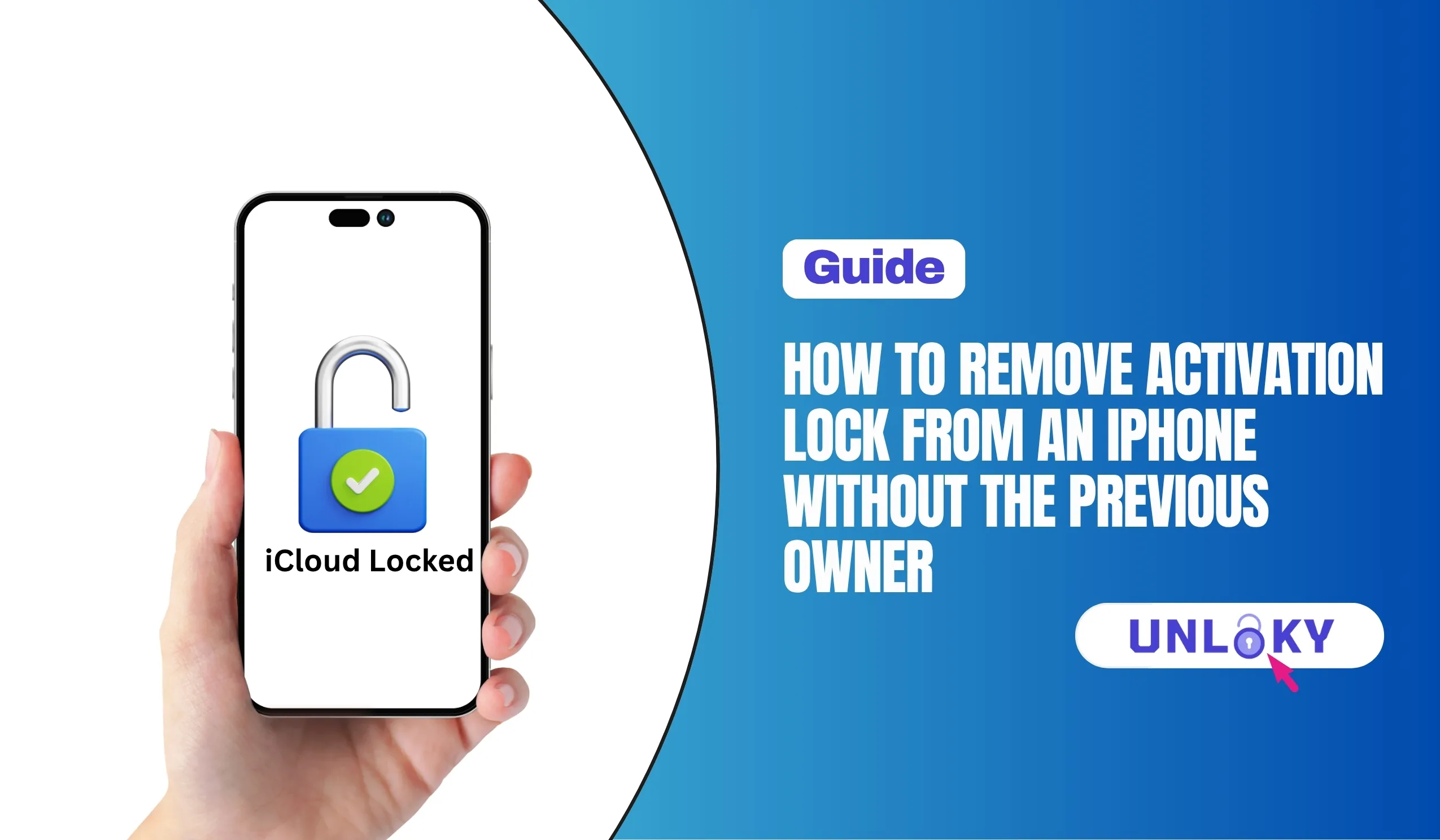
Activation Lock on an iPhone is one of Apple’s strongest security features. It is designed to protect your device if it is lost or stolen. While this is very helpful for security, it can become a real problem if you buy a second-hand iPhone and the previous owner did not remove their Apple ID.
Many users search for how to remove Activation Lock from an iPhone without the previous owner because they are stuck at the setup screen and cannot use their device. The truth is, Apple has made this lock very difficult to bypass for safety reasons. However, there are still a few legal and safe ways you can try to regain access.
In this guide, you will learn step-by-step methods, important warnings, and the best solutions to fix this issue without damaging your device or breaking Apple’s rules.
Key Takeaways
- Apple Support is your best bet — Submitting a free Activation Lock request at al-support.apple.com with proof of purchase is the only method that permanently removes the lock on modern iPhones (3–7 day turnaround).
- Modern iPhones can’t be bypassed reliably — If your device has an A12 chip or newer (iPhone XS, 11, 12, 13, 14, 15, 16, 17), third-party “unlock tools” simply don’t work. Anyone claiming otherwise is selling you a scam.
- Try Apple ID recovery first if it’s your phone — Most “locked out” cases are just forgotten passwords. Visit iforgot.apple.com before assuming you need a complex bypass — it’s free and takes 10 minutes.
- Bypass tools only work on iPhone 5s through X — Tools like Tenorshare 4MeKey work on older models, but you lose cellular, calls, SMS, and iCloud access. Most bypasses also break after every reboot.
- Always verify before buying used — Make sellers factory reset the iPhone in front of you, get the original receipt, and check the IMEI on Swappa or IMEI.info. A 30-second check saves you from a $500 paperweight.
So You’re Stuck on the “iPhone Locked to Owner” Screen
You bought a used iPhone off Facebook Marketplace, eBay, or maybe inherited one from a relative. You power it on, get through a few setup screens, and then bam — “iPhone Locked to Owner. Sign in with the Apple ID that was previously used to activate this iPhone.” And the previous owner? Either unreachable, deceased, or just unwilling to help.
I’ve been writing about iPhone unlocking for years, and let me be straight with you: the internet is full of garbage advice on this topic. Sketchy YouTube tutorials, scam websites promising “instant unlocks for $19.99,” fake apps that just steal your money. Most of it doesn’t work, and a lot of it will leave you worse off than when you started.
This guide cuts through the noise. We’ll cover what actually works in 2026, what doesn’t, and exactly which method fits your situation. One important reminder before we start: these methods only apply to phones you legitimately own. If the iPhone is stolen, return it. Apple now cross-references serial numbers with police databases, and you can face real legal trouble.
The 4 Methods That Actually Work in 2026
Here’s a quick look at each method, ranked from “safest and free” to “last resort.” Pick whichever fits your situation — most people find their answer in the first two.
FREE
Apple Support Request
- 100% legitimate, no risk
- Permanent removal (not a bypass)
- Requires proof of purchase
- Works on every iPhone model
- Keeps full functionality
- Maintains warranty status
FREE
Apple ID Recovery
- Best if it’s actually your phone
- Use iforgot.apple.com
- Reset via email or phone number
- Works for forgotten passwords
- Two-factor recovery available
- Zero data loss
Third-Party Unlock Tools
$30–70
- Works on iPhone 5s through X
- Requires Mac or Windows PC
- Tenorshare 4MeKey, PassFab, etc.
- iOS 14–16.7 supported
- No cellular/SIM after bypass
- iPhone 11+ rarely works
FREE
iCloud DNS Bypass
- No software needed
- Limited functionality only
- iOS 8–10 mostly
- Apps, browser, basic features
- Won’t make calls or texts
- Temporary fix only
Any website or service claiming to “unlock any iPhone in 5 minutes for $20” is a scam. Same goes for “IMEI unlock services” that just take your money and disappear. Apple’s security on modern iPhones is genuinely strong — if it sounds too good to be true, it absolutely is.
Method Comparison: What You’re Really Getting
Here’s the side-by-side breakdown so you can see exactly which method makes sense for your situation. Pay attention to the “iPhone Compatibility” row — that’s the dealbreaker for most people.
| Feature | Apple Support | Apple ID Recovery | Third-Party Tools | DNS Bypass |
|---|---|---|---|---|
| Cost | Free | Free | $30–70 | Free |
| Time Required | 3–7 days | 10 min – 24 hrs | 30–60 min | 5 min |
| iPhone Compatibility | All models | All models | iPhone 5s–X only | iPhone 5s–6s |
| iOS Compatibility | All versions | All versions | iOS 14–16.7 | iOS 8–10 |
| Removes Lock Permanently | Yes | Yes | Tethered (often) | No |
| Calls & Texts Work After | Yes | Yes | No | No |
| iCloud Login Works | Yes | Yes | No | No |
| App Store Works | Yes | Yes | Limited | Limited |
| Survives Factory Reset | Yes | Yes | Sometimes | No |
| Risk Level | None | None | Medium | Low |
| Proof of Purchase Needed | Yes | No | No | No |
| Best For | Legit owners w/ receipt | Forgot own Apple ID | Old iPhone owners | Salvage/parts use |
Method 1: Apple Activation Lock Support Request (The Right Way)
This is hands-down the best option if you have any documentation showing you bought the iPhone. Apple recently updated their process and it’s actually pretty smooth now. They’ll review your case and remotely remove the Activation Lock — no software, no jailbreak, no risk.
What you’ll need before you start
Apple’s pickier than they used to be, so gather everything you can find:
Step 1: Original receipt or invoice. From Apple, an authorized retailer (Best Buy, Costco, Target), or a carrier (Verizon, T-Mobile, AT&T). The receipt must show the IMEI or serial number — a generic “iPhone purchase” receipt won’t cut it.
Step 2: The iPhone’s serial number or IMEI. Find it on the Activation Lock screen (tap the small “i” icon), or look on the original box. You can also dial *#06# if the device boots that far.
Step 3: Government-issued photo ID. Driver’s license, passport, or state ID. Apple compares the name on the receipt with the name on your ID.
Step 4: Visit al-support.apple.com. This is Apple’s dedicated Activation Lock support portal. Upload your documents, fill out the form, and wait for their email response — usually within 3–7 business days.
Step 5: Or call Apple directly. If the form feels overwhelming, call 1-800-692-7753 and a human will walk you through it. Sometimes faster than the online form.
If you bought the iPhone secondhand and don’t have the original receipt, Apple won’t help — but the ORIGINAL buyer can still submit the request even years later. If you can track down the person you bought it from, ask them to do this for you. Many will, especially if you offer a small thank-you payment.
Method 2: Recover Your Own Apple ID (If It’s Your Phone)
You’d be surprised how often “Activation Lock without the previous owner” actually means “I AM the owner, I just forgot my Apple ID password.” If there’s any chance the locked Apple ID was yours at some point, try this first — it takes 10 minutes and costs nothing.
The recovery process step by step
Step 1: Look at the Activation Lock screen. Apple now shows a hint of the Apple ID — usually the first letter and the email domain (like “j••••@gmail.com”). That alone might jog your memory.
Step 2: Go to iforgot.apple.com. On any phone or computer. Enter the email you think it might be. Apple will send a verification code or ask security questions.
Step 3: Reset your password. Use email reset, SMS code, or your trusted device. If you have two-factor authentication on, you’ll need access to a trusted phone number or device.
Step 4: Enter the new password on your iPhone. Go back to the Activation Lock screen, type the email and your new password. Done.
Method 3: Third-Party Bypass Tools (Older iPhones Only)
If your iPhone is older — specifically the iPhone 5s through iPhone X — there are software tools that exploit a hardware-level flaw called “checkm8.” Tools like Tenorshare 4MeKey, PassFab iPhone Unlocker, and AnyUnlock use this exploit to bypass Activation Lock.
I’ll be real with you about what these tools actually do: they don’t truly REMOVE the lock — they bypass it. The phone works, but with limitations. And on iPhone 11 and newer (anything with the A12 chip or later), Apple patched the hardware vulnerability and these tools just don’t work anymore. Companies still advertise support for newer phones to make sales, but actual success rates are near zero.
- Web browsing and Wi-Fi
- App Store (with new Apple ID)
- Apps, photos, camera
- Music, videos, basic features
- Settings and customization
- iMessage on Wi-Fi (sometimes)
- Cellular calls and SMS
- Mobile data / cellular internet
- SIM card recognition
- iCloud sync and backup
- Find My iPhone
- Many bypasses break after reboot
The bypass is “tethered” on most modern iOS versions, meaning every time the iPhone reboots or runs out of battery, you have to redo the bypass with the computer. For a daily driver, that’s miserable. For a backup or “kids’ iPad” type situation, it’s livable. Don’t pay $70 expecting a permanent fix.
Method 4: iCloud DNS Bypass (Honestly, Skip This)
You’ll see this method everywhere online, so I want to address it. The DNS bypass redirects the activation server check to a custom DNS, giving you limited access to the device. The catch? It only works on really old iOS versions (iOS 8 to iOS 10), basically iPhone 5s, 6, and 6s territory.
If you somehow ended up with one of these dinosaurs and just want to play music or use Wi-Fi, here’s the gist: connect to Wi-Fi, tap “More Wi-Fi Settings,” configure DNS manually, and use a public iCloud bypass DNS server like 78.109.17.60. Then go back through setup and you’ll hit a partial menu.
For any iPhone made in the last 5 years, this method does literally nothing. Apple patched it long ago. Save yourself the time.
Which Method Should You Actually Pick?
Let me make this dead simple. Find your situation below and follow the matching method.
- You bought it new from Apple/carrier
- You have the original receipt
- The previous owner is deceased and you have legal documents
- You inherited it from family
- You want a permanent, legitimate fix
- You have an iPhone 11 or newer
- You’re 95% sure the locked email is yours
- You can access the recovery email/phone
- It’s been on the shelf for a while
- You changed phones and forgot the old credentials
- You don’t want to pay anything
- You want it solved in minutes, not days
- You bought it new from Apple/carrier
- You have the original receipt
- The previous owner is deceased and you have legal documents
- You inherited it from family
- You want a permanent, legitimate fix
- You have an iPhone 11 or newer
- The iPhone might be stolen
- It’s an iPhone 11/12/13/14/15/16/17
- You see “Lost Mode” message
- Police report exists for the IMEI
- You bought it dirt-cheap on Marketplace
- The seller refuses to meet in person
For 90% of people reading this, the answer is the Apple Activation Lock Support request. It’s free, it’s legitimate, it permanently removes the lock, and modern iPhones genuinely cannot be bypassed reliably any other way. The catch is needing proof of purchase — so before you buy any used iPhone, ALWAYS get the original receipt from the seller.
If you’ve already bought a locked iPhone with no receipt and no way to contact the previous owner, you have three realistic options: contact the seller and demand they remove it remotely (legally, they have to if you paid for a working phone), sell it for parts on eBay (you’ll recoup 30–50% of the value), or use it as a Wi-Fi-only device via third-party tools if it’s old enough.
Don’t fall for “iCloud unlock services” online. They’re scams — the working method is right there in the official Apple support portal.
How to Avoid This Mess in the First Place
If you’re reading this BEFORE buying a used iPhone, here’s how to make sure you never end up locked out:
Have them factory reset the iPhone right in front of you. Watch them sign out of iCloud (Settings → [Their Name] → Sign Out) before doing the reset.
After the reset, set up the iPhone partway through the welcome screens. If you make it to the home screen without seeing “Sign in with Apple ID,” you’re golden.
Even an old one. The original purchase receipt is your insurance policy. If the seller can’t provide one, the price should drop significantly to compensate.
Use a free tool like IMEI.info or Swappa’s ESN check before paying. It’ll flag if the phone is reported stolen or has a bad ESN. Takes 30 seconds and saves you hundreds.
PayPal Goods & Services, credit card, or platforms like Swappa or Back Market. Cash and Zelle leave you with zero recourse if the phone turns out locked.
Don’t Confuse Activation Lock With Carrier Lock
This trips up tons of people. Activation Lock and Carrier Lock are completely different things, and the fix for each is different too.
| What you see | What it is | How to fix |
|---|---|---|
| “iPhone Locked to Owner / Sign in with Apple ID” | Activation Lock (iCloud) | Apple Support, Apple ID recovery, or this guide |
| “SIM Not Supported / Activation Required” | Carrier Lock | Contact original carrier (Verizon, T-Mobile, AT&T) |
| “This iPhone is currently linked to an Apple ID” | Activation Lock (during setup) | Same as Activation Lock — this guide |
| “Enter Passcode” with no SIM message | Screen passcode | Erase iPhone via iTunes or Recovery mode |
| “Device Supervised by [Company]” | MDM Lock (work phone) | Contact the company’s IT department |
If your iPhone shows a carrier name and asks for activation but doesn’t mention an Apple ID, that’s a carrier lock — totally separate problem with totally different solutions. Carriers are required by FCC rules to unlock fully-paid devices on request.
Frequently Asked Questions
Honestly, no — not reliably. Apple’s A12 chip and later (iPhone XS, 11, 12, 13, 14, 15, 16, 17, and all newer models) have hardware-level security that blocks the checkm8 exploit that older bypass tools rely on. Anyone selling you a “working bypass” for an iPhone 12 or newer is either lying or running a temporary trick that breaks on the next reboot. Apple Support is genuinely your only realistic path on modern iPhones.
Usually 3 to 7 business days, but I’ve seen it go faster (24 hours) and slower (2 weeks) depending on how busy they are and how clear your documentation is. If you submit a perfect receipt with matching ID, it tends to move quickly. If your documents are fuzzy or partial, expect back-and-forth emails that drag things out
If the iPhone is legitimately yours, using software to access your own device isn’t illegal in the US. But if the phone is stolen and you knowingly bypass the lock, that’s a different story — that’s receiving stolen property and potentially fraud. The tool itself isn’t the issue; how you got the phone is.
You can sell it as a “for parts” device on eBay or Swappa, where buyers know exactly what they’re getting. You’ll get 30–50% of the working value typically. What you can’t do is sell it as a working phone — that’s deceptive practices and you’ll get reported and banned from most platforms. Be upfront in the listing.
Yes, Apple has a Digital Legacy program for this exact situation. You’ll need a death certificate, the deceased’s Apple ID email (or Legacy Contact key if they set one up), and proof of your relationship or legal authority over the estate. Submit through Apple’s Digital Legacy request portal. It takes longer than a normal Activation Lock request — sometimes 30+ days — but it does work.
Jailbreaking and Activation Lock removal are different things. A jailbreak gives you root access to the operating system; it doesn’t bypass Apple’s activation servers by itself. Some bypass tools use a jailbreak as a step in the process, but jailbreaking alone won’t unlock an iCloud-locked iPhone. Plus, jailbreaks for modern iOS versions are rare and often unstable.