
Your iPhone is unlocked. Apple confirms it. Yet the new SIM card you just popped in refuses to cooperate. Before you panic — it’s probably not a lock issue. It’s something sneakier: an eSIM conflict, bad APN settings, or a provisioning glitch hiding in plain sight.
TL;DR — Quick Answer
“No SIM restrictions” only confirms your iPhone is carrier-unlocked — it doesn’t guarantee every SIM will work on the spot. The most common culprits behind this confusing situation are: eSIM vs. physical SIM conflicts on dual-SIM iPhones, missing or incorrect APN settings that block data while showing signal bars, carrier provisioning delays where the network hasn’t finished activating your line, and iMessage/FaceTime activation loops that tie up your number. Start by toggling Airplane Mode, checking your APN under Settings → Cellular → Cellular Data Network, and contacting your carrier to confirm provisioning is complete.
What “No SIM Restrictions” Actually Means
When you go to Settings → General → About and see “Carrier Lock: No SIM restrictions,” your iPhone is telling you one specific thing — it’s not locked to a single carrier. You’re free to use SIM cards from AT&T, T-Mobile, Verizon, or any carrier worldwide.
But here’s what that message does not tell you:
It doesn’t confirm the SIM card itself is active. It doesn’t verify that APN settings are configured correctly. It doesn’t check whether your carrier has finished provisioning the line on their backend. And it definitely doesn’t guarantee compatibility between your iPhone model’s supported bands and the carrier’s network frequencies.
Think of it like this: “No SIM restrictions” is the lock on your front door being open. But you still need the right key (an active, provisioned SIM) to actually walk through and use the house.
Separate reasons a SIM can fail even on an unlocked iPhone
How long it takes Verizon to auto-unlock after device activation (days)
Version with confirmed iMessage dual-SIM activation bug (Oct 2025)
US iPhone models with no physical SIM tray (eSIM-only)
Quick check: On iPhone 16 models and later (US versions), there’s no physical SIM tray at all — they’re eSIM-only. If you’re trying to use a physical SIM card, that’s already the problem.
6 Real Reasons Your New SIM Still Won’t Work
You’ve confirmed the phone is unlocked. Good. Now let’s figure out what’s actually going wrong. These are the six most common causes people run into — ranked from most frequent to least.
Your SIM might be physically installed, but the carrier hasn’t finished activating the line on their servers. This is especially common with new accounts, ported numbers, and MVNO carriers that piggyback on bigger networks.
The Access Point Name is how your phone connects to the carrier’s data network. Without the correct APN, you’ll see signal bars but get zero internet. Some carriers don’t push APN settings automatically.
On dual-SIM iPhones, an old eSIM profile can interfere with a new physical SIM (or vice versa). The phone gets confused about which line should handle voice, data, or messaging.
When you swap SIMs, iMessage tries to re-verify your number. If the old carrier’s deactivation overlaps with the new one’s activation, you can get stuck in a loop that blocks normal SIM function.
Different carriers use different LTE/5G frequency bands. An iPhone bought for one carrier may technically work with others but miss key bands, leading to weak signal or no connection in your area.
A scratched SIM card, lint in the tray, or a SIM that isn’t sitting flush can produce “No SIM,” “Invalid SIM,” or “SIM Not Supported” errors even on a perfectly unlocked phone.
Quick Diagnosis: Match Your Symptom to the Cause
Not sure which of the six issues above applies to you? Use this table. Match what you’re seeing on your screen to the most likely root cause — then jump straight to the fix.
Symptom → Cause → Fix Reference
| What You See | Most Likely Cause | Difficulty | Fix |
|---|---|---|---|
| “No Service” in status bar | Provisioning not complete or band mismatch | Medium | Contact carrier → confirm activation |
| Signal bars but no data | APN settings missing or incorrect | Easy | Enter APN manually under Cellular settings |
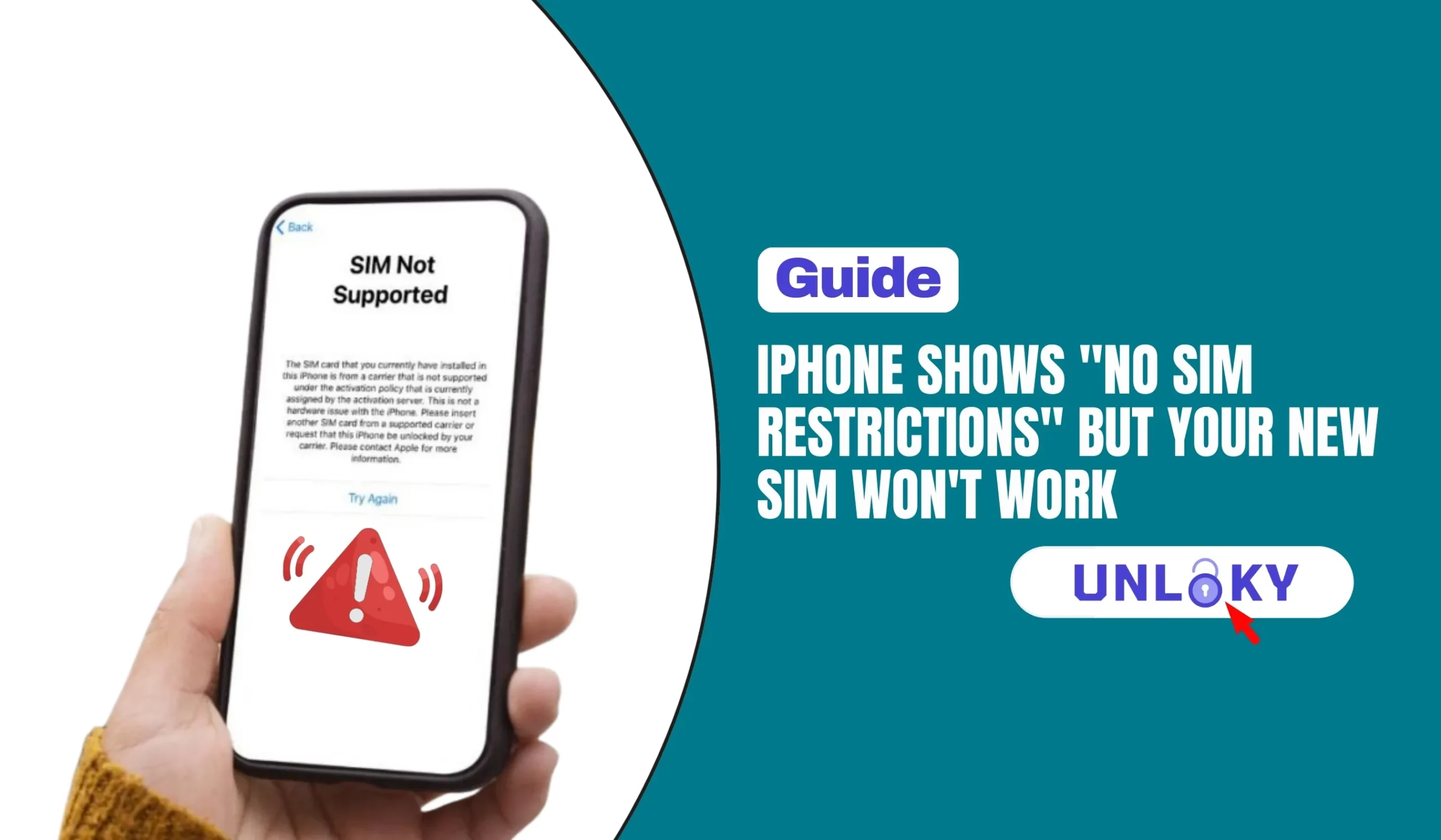
| “SIM Not Supported” | eSIM conflict or SIM not active | Medium | Remove old eSIM profiles, verify SIM is active |
| “SIM Not Allowed” | Carrier-side block despite unlock showing | Carrier help | Call carrier, provide IMEI, request re-provisioning |
| “Invalid SIM” | Damaged SIM, dirty contacts, or wrong tray | Easy | Clean, reseat, or replace SIM card |
| Calls work but iMessage won’t activate | iMessage/FaceTime activation loop | Medium | Toggle iMessage off → wait → toggle back on |
| “Activating…” stuck for hours | eSIM provisioning server delay | Medium | Delete profile, get fresh QR code, retry |
| Phone shows wrong carrier name | Old carrier settings cached | Easy | Settings → General → About (triggers update) |
Step-by-Step Fixes That Actually Work
Work through these in order. Each one addresses a different layer of the problem, and most people get their SIM working within the first three steps.
This sounds basic, but it forces your iPhone to drop its current network registration and reconnect from scratch. Around 30% of “SIM not working” issues resolve right here.
Turn on Airplane Mode. Wait a full 15 seconds (not 5 — give the radios time to fully power down). Turn it off. If that doesn’t work, do a full restart: hold Side Button + Volume Down until the power slider appears, slide to power off, wait 30 seconds, then power back on.
Use the SIM ejector tool (or a paperclip) to pop out the tray. Check the SIM card for scratches on the gold contacts, make sure there’s no lint or dust in the tray or slot, and verify the SIM is the correct size (Nano-SIM for all modern iPhones). Place it back in, making sure the tray clicks flush — no wobble.
Heads up: Never use a SIM tray from a different iPhone model. They look identical but vary in thickness by fractions of a millimeter — enough to cause read errors.
Your iPhone needs carrier-specific configuration files to communicate properly with each network. When you switch carriers, these files need to update.
Settings → General → About
Just opening this screen triggers a check. If an update is available, you’ll see a popup saying “Carrier Settings Update available.” Tap Update immediately. This is one of the most overlooked fixes — and it solves more problems than people expect.
Call your carrier (or visit their store) and ask them to confirm three things: Is the SIM card active on your system? Is the IMEI registered and provisioned? Are there any blocks or holds on the account?
Have your IMEI ready before calling — find it under:
Settings → General → About → IMEI
Carriers sometimes take up to 24 hours to complete provisioning, especially when you’re porting a number from another provider. If you just bought the SIM, this is the single most likely fix.
This is the nuclear option for connectivity problems. It wipes all saved Wi-Fi passwords, VPN configurations, APN settings, and Bluetooth pairings — then rebuilds everything from scratch.
Settings → General → Transfer or Reset iPhone → Reset → Reset Network Settings
After the reset, your phone reboots. Give it 2–3 minutes to reconnect and pull fresh carrier configuration. You’ll need to rejoin your Wi-Fi networks manually.
Apple regularly patches eSIM bugs, carrier compatibility issues, and network stack problems in iOS updates. If you’re running anything older than the latest release, update first.
Settings → General → Software Update
This is especially important if you recently switched from an Android phone or if the iPhone was sitting unused for months — outdated firmware can cause all sorts of SIM recognition issues.
The eSIM / Physical SIM Mismatch Trap
This is the issue that trips up more people than any other in 2025–2026 — and it makes total sense why. Dual-SIM iPhones are incredibly common now, and the way iOS juggles two lines is not always intuitive.
Here’s What Typically Goes Wrong
You had Carrier A set up as an eSIM. You switch to Carrier B with a new physical SIM. The physical SIM goes in, and your iPhone sees it, but it assigns all data traffic to the old eSIM line by default. You end up with a working SIM that can’t actually do anything because the phone’s routing is still pointed at the wrong line.
The fix: Go to Settings → Cellular and check which line is set as the “Default Voice Line” and which one is handling “Cellular Data.” Make sure your new SIM is selected for both (or at least for data). If you’re done with the old eSIM, delete it entirely:
Settings → Cellular → [Old eSIM Line] → Delete eSIM
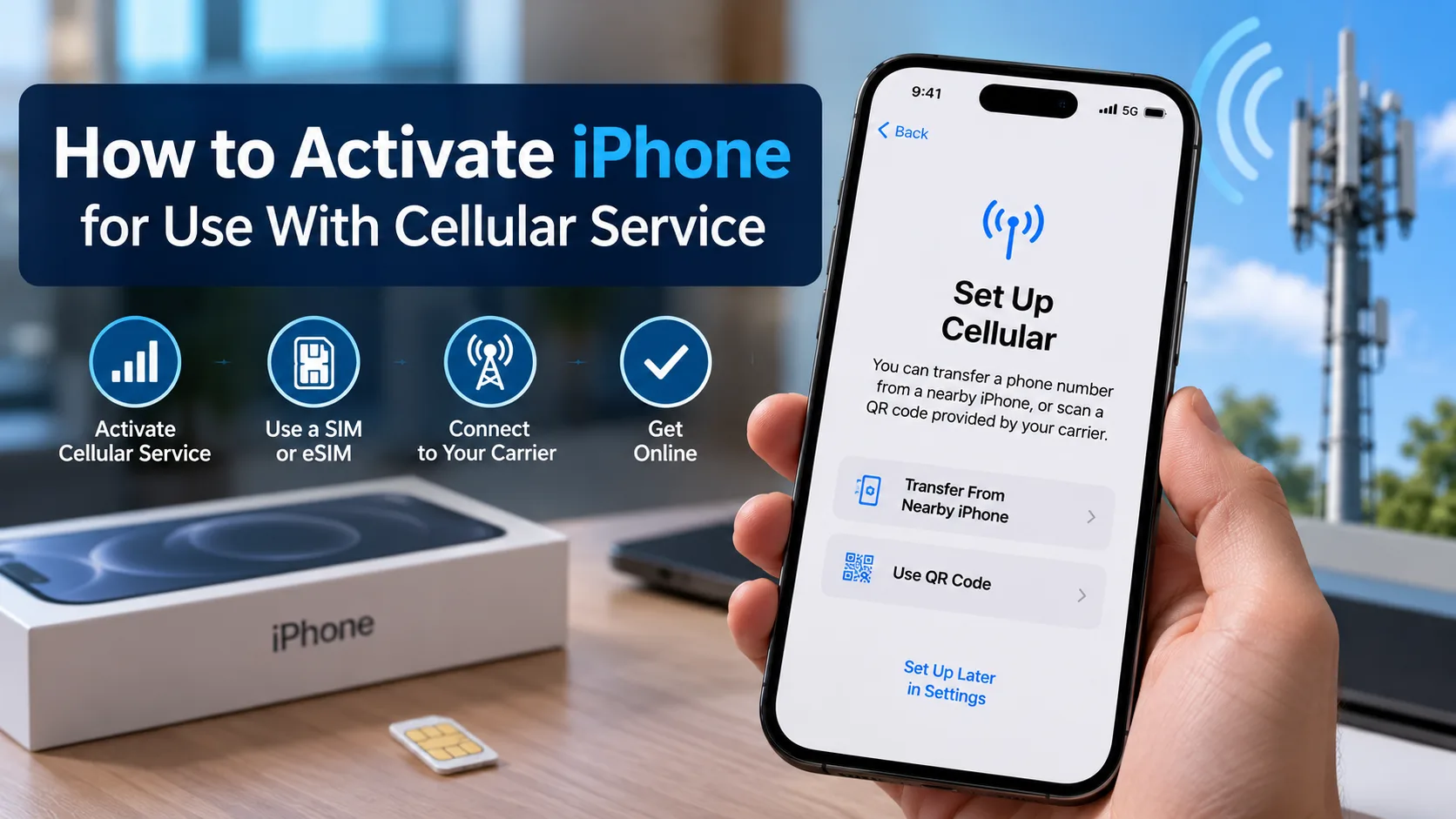
US iPhone 16 users: Your phone has no SIM tray. It uses two eSIMs exclusively. If someone gave you a physical SIM card to use, it literally won’t fit. You’ll need an eSIM transfer or a carrier-issued QR code instead.
The “Activating…” Freeze
When setting up a new eSIM via QR code, the process sometimes freezes at “Activating…” for hours. In most cases, this happens because the old eSIM profile is still lingering, or because you scanned an expired QR code. Each QR code is single-use and time-bound — typically valid for 10 to 30 minutes after generation. If it’s been longer, ask your carrier for a fresh code.
Another common cause: VPN interference. If you have a VPN running during eSIM activation, it can block the secure communication between your iPhone and the carrier’s provisioning servers. Turn off your VPN before scanning the QR code, and keep it off until the eSIM shows as active.
APN Settings — The Hidden Data Killer
Here’s a scenario that baffles people: you insert the SIM, the carrier name shows up in the status bar, you have full signal bars… but absolutely no data works. No browsing, no apps, nothing. Calls might work fine, but the internet is dead.
Nine times out of ten, this is an APN (Access Point Name) problem. The APN is basically the login credentials your phone uses to access the carrier’s mobile data network. Without the right APN, your phone can connect to the cell tower for voice — but can’t reach the internet.
How to Check & Fix APN Settings
Settings → Cellular → Cellular Data Network
If this screen is empty, or if you see outdated settings from a previous carrier, that’s the problem. You’ll need to enter the correct APN values for your new carrier. These are usually available on the carrier’s support website — search for “[carrier name] APN settings iPhone” for the exact values.
Common APN fields you’ll need to fill in: APN (the main field — this is the critical one), Username (often left blank), Password (often left blank), and MMS settings (for picture messaging). After entering the correct values, toggle Airplane Mode on and off to force the connection.
Can’t see “Cellular Data Network” at all? Some carriers lock this screen via their carrier profile. A network settings reset (Fix 05 above) often brings it back. If not, your carrier may need to push the correct settings to your phone remotely.
Popular Carrier APN Quick Reference
| Carrier | APN | Notes |
|---|---|---|
| AT&T | broadband | Auto-configured on most iPhones |
| T-Mobile | fast.t-mobile.com | May need manual entry on used phones |
| Verizon | vzwinternet | Usually auto-pushed after SIM insert |
| Cricket | ndo | Runs on AT&T network |
| Mint Mobile | Wholesale | T-Mobile MVNO — case sensitive |
| Boost Mobile | boostmobile.com | Requires MMS proxy for picture messaging |
| Visible | vsblinternet | eSIM-first carrier, Verizon network |
iMessage & Activation Pitfalls
You’ve got the SIM working, calls go through, mobile data is running — but iMessage shows “Waiting for activation” and FaceTime won’t connect. Or worse: iMessage activation seems to cause the entire SIM connection to become unstable.
This is more common than you’d think, especially when porting a number between carriers. Here’s why it happens: when you activate a new SIM, Apple’s servers try to send an invisible SMS to verify your number for iMessage and FaceTime. If your new carrier hasn’t fully provisioned SMS sending, or if there’s a delay in the number port, that verification SMS either fails to send or gets routed to the old carrier.
How to Break the Activation Loop
First, go to Settings → Messages and toggle iMessage OFF. Then go to Settings → FaceTime and toggle that off too. Wait a full 60 seconds. Now turn them both back on. This forces a fresh activation attempt.
If that doesn’t work, you might be hitting a deeper provisioning issue. Contact your carrier and specifically ask: “Is short-code SMS enabled on my line?” Some new lines or MVNO plans don’t have short-code SMS activated by default, and that’s the channel Apple uses for iMessage verification.
Pro tip: If you recently ported your number and iMessage won’t activate, just give it 24 hours. Number ports can take up to a full business day to fully complete on both the old and new carrier’s systems. Trying repeatedly during this window can actually make the delay worse.
When to Contact Your Carrier vs. Apple
Knowing who to call saves you a lot of frustration. Here’s a simple rule of thumb:
SIM won’t activate, “No Service” after 24 hours, you need APN settings, number port is stuck, account provisioning issues, “SIM Not Allowed” error, or your plan doesn’t include certain features like data or SMS.
SIM tray is physically damaged, multiple SIM cards fail in the same iPhone, “No SIM” error with every card you try, eSIM deletion or management isn’t working in Settings, or the device has hardware damage (water, drop).
When calling your carrier, have these ready: your IMEI (Settings → General → About), the EID if it involves an eSIM (same screen, scroll down), your account PIN or last four of your SSN, and the exact error message showing on your screen. Asking the carrier to “refresh provisioning” or “resync the SIM profile” often resolves backend issues within minutes.
This usually means the SIM card itself isn’t active, or the carrier hasn’t finished provisioning your line. “No SIM restrictions” only confirms the phone’s lock status — it doesn’t verify the SIM card’s status. Contact your carrier and ask them to verify the SIM is active and your IMEI is registered on their system. If the SIM was included in a new package, it may need online activation first through the carrier’s website or app.
Yes, absolutely. An unlocked iPhone can reject a SIM card for reasons that have nothing to do with the lock status. The SIM could be deactivated, damaged, incompatible with the phone’s supported network bands, or improperly provisioned on the carrier’s end. Even a perfectly unlocked iPhone needs a properly activated, compatible SIM to function.
Almost certainly not a hardware issue. Signal bars with no data is the classic symptom of missing or incorrect APN settings. Go to Settings → Cellular → Cellular Data Network and enter the correct APN for your carrier. If that screen isn’t visible, try resetting network settings first. This resolves the issue the vast majority of the time.
It can, but it’s overkill for most SIM issues and should be a last resort. A network settings reset is far less disruptive and resolves most software-related SIM problems. Save the factory reset for situations where literally nothing else has worked and you’ve already confirmed with your carrier that the SIM and account are properly set up on their end.
No. Your iPhone’s unlock status is tied to the device’s IMEI and Apple’s activation servers — not to any particular SIM or eSIM. Deleting an eSIM, adding a new one, or swapping physical SIMs doesn’t change whether the phone shows “No SIM restrictions.” Once unlocked, it stays unlocked permanently (unless you enter a new carrier financing agreement that includes a lock).
Number ports typically complete within 2–4 hours, but can take up to 24 business hours in some cases. During this transition, you might experience intermittent service or failed activation attempts. If it’s been more than 24 hours, contact the new carrier (not the old one) and ask for a port status update. They can escalate it if there’s a backend hang-up.
Yes — this is exactly what Dual SIM with eSIM is designed for, and it works great when set up correctly. You can assign one line for voice/texts and the other for data. Just make sure you’ve configured the correct “Default Voice Line” and “Cellular Data” assignments under Settings → Cellular. Both carriers need to support Dual SIM, and your iPhone must be unlocked (or both plans from the same carrier).
It’s possible. A phone can be IMEI-blacklisted (due to being reported lost or stolen) while still showing “No SIM restrictions” in Settings. The carrier lock status and the IMEI blacklist are two separate systems. Check your IMEI at your carrier’s website or use a free IMEI checker online. If the IMEI is blacklisted, no SIM from any carrier will work on it, and unfortunately there’s no self-service fix for that.