

Seeing “SIM card is not from Verizon Wireless” pop up on your screen is frustrating. It usually shows up right after you insert a new SIM or try to activate eSIM. The message feels vague, but the cause is almost always simple: your phone is still carrier-locked to Verizon, your line isn’t set up correctly yet, or your device/account needs a quick settings refresh.
This guide explains what that message really means, how to fix it fast, and how to avoid it next time—whether you’re using an iPhone or Android (Samsung Galaxy, Google Pixel, Motorola, etc.). We’ll also cover eSIM, used phones, blacklist checks, and real-world tips that work.
Key takeaways
- The error means your phone is either still locked to Verizon or your line/profile needs a quick fix.
- Verizon phones auto-unlock after 60 days unless flagged for fraud/theft—no code required.
- iPhone users should accept Carrier Settings Updates; Android users should update system and avoid manual APN changes unless instructed.
- For eSIM on Verizon, ensure the device is unlocked first; allow up to 24 hours after unlocking for activation to succeed.
- Buying used? Always run the IMEI through CTIA’s Stolen Phone Checker before you pay.
What the “SIM card is not from Verizon Wireless” message actually means
Most of the time this message appears on Samsung devices and other Android phones that were originally sold by Verizon. It also shows up when you insert a non-Verizon SIM into a Verizon-locked phone. Here’s the plain-English version:
- If your phone is still locked to Verizon: It will only accept a Verizon SIM (or Verizon-based MVNO SIM) until it’s unlocked. Verizon locks new phones for 60 days. After that, they automatically unlock them as long as the device wasn’t flagged for fraud or theft.
- If your phone is already unlocked but still shows the error: You might be dealing with a line provisioning issue, a pending carrier settings update, an APN/profile mismatch, or a temporary device glitch. We’ll fix those below.
- If you bought the phone second-hand: The device might be locked, still within the 60-day window, or even blacklisted (reported lost or stolen). You can check blacklist status for free using CTIA’s Stolen Phone Checker.
📖 Also Read: How to Unlock a Total Wireless Phone (iPhone, Android)
Quick checklist: identify your situation
- Are you inserting a Verizon (or Verizon MVNO) SIM?
If yes, the message may be a provisioning or settings issue. If no, and your phone is still locked, the phone will reject other carriers until it unlocks after 60 days. - Has it been at least 60 days since activation/purchase?
Verizon auto-unlocks after the 60-day lock, unless the phone is flagged. If it’s been less, you’ll need to wait out the window or contact Verizon in special cases (e.g., military deployment). - Are you trying to use eSIM?
eSIM activation also requires the device to be unlocked if you’re moving from a different carrier. Verizon’s own support notes this. - Did you buy used?
Run the IMEI through CTIA’s Stolen Phone Checker to rule out blacklist blocks.
The fastest fixes (do these in order)
1) Confirm the lock status and the 60-day rule
- If you purchased from Verizon or an authorized retailer, your phone is locked for 60 days from purchase or paid activation. After 60 days of normal use, the lock is removed automatically—no code required. If your device was marked lost/stolen or involved in fraud, it won’t unlock.
What to do:
- Check when you activated or purchased the device.
- If you’re still within 60 days, use a Verizon SIM for now; other carriers won’t work until the auto-unlock date.
- If it’s past 60 days and the phone isn’t unlocking, call Verizon support and ask them to verify the unlock status on their side (sometimes a network refresh is needed).
2) Power-cycle and reseat the SIM
- Turn the phone off.
- Remove the SIM tray, wipe any dust, and reinsert the SIM.
- Turn the phone back on.
This simple step forces a fresh network handshake and can clear the message if it’s a minor glitch.
3) Update carrier settings (iPhone) or carrier/config profiles (Android)
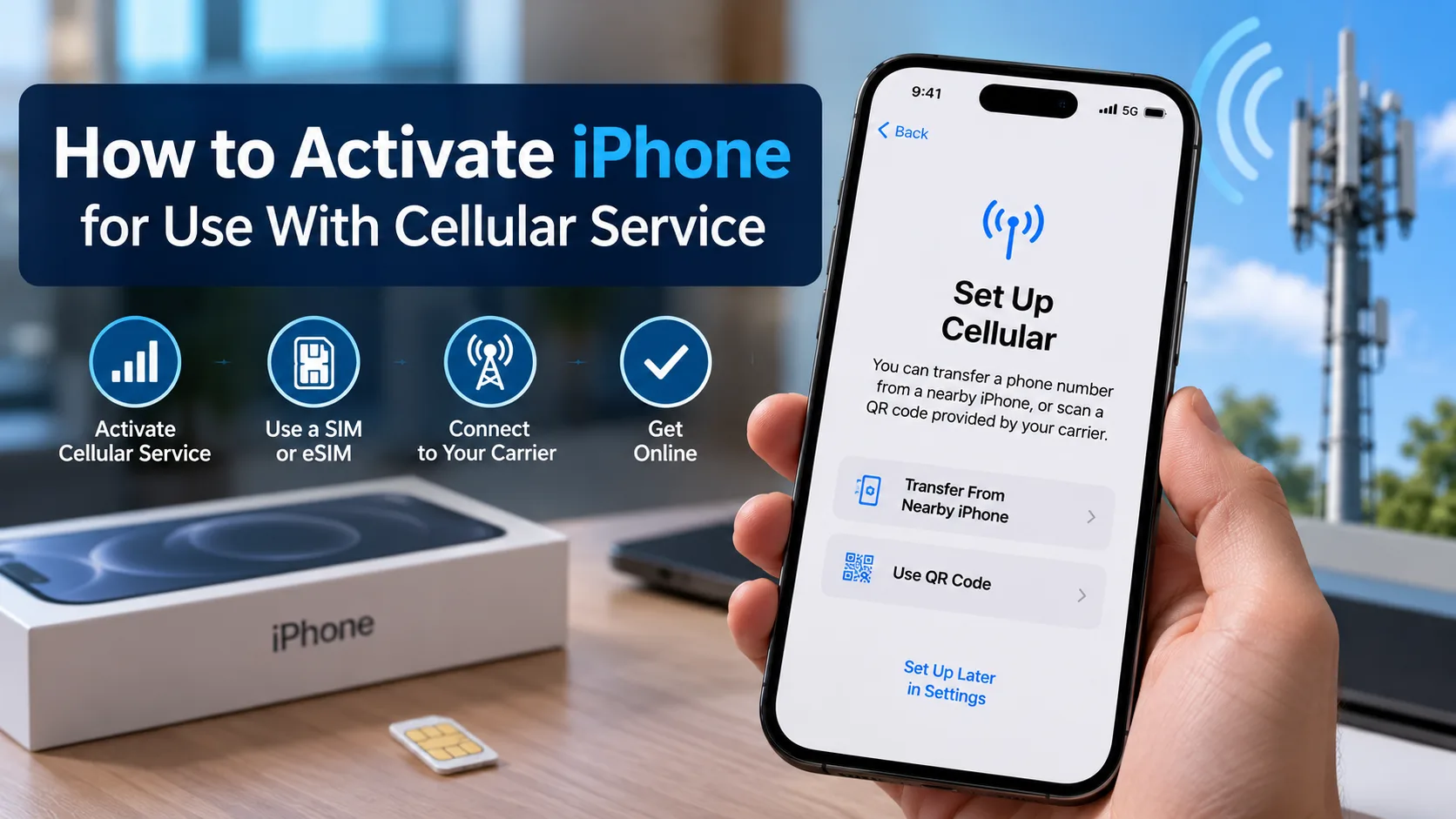
- iPhone: Connect to Wi-Fi, go to Settings > General > About and wait a few seconds. If a carrier update is available, a prompt will appear—tap Update. This helps iPhone learn Verizon’s latest network parameters.
- Android (Samsung/Pixel/Moto): Make sure you’re on the latest software. Go to Settings > About phone > Software update. If your carrier supports downloadable profiles, accept any prompts after inserting the SIM.
4) Reset network settings (only if needed)
If you still see the error after steps 1–3, reset network settings.
- iPhone: Settings > General > Transfer or Reset iPhone > Reset > Reset Network Settings (this clears Wi-Fi passwords, VPN, APN, and cellular settings; you’ll re-enter Wi-Fi later).
- Android: Settings > System > Reset options > Reset Wi-Fi, mobile & Bluetooth (path varies by brand).
After reboot, reinsert your Verizon SIM and try activation again.
5) Fix APN/profile mismatches (mainly Android and MVNO lines)
Most Verizon-branded lines auto-configure APN. If you’re using a Verizon MVNO (e.g., Visible, US Mobile on Verizon core, etc.), confirm the APN your provider requires and apply it if manual entry is allowed. If your line is Verizon-postpaid/prepaid, avoid editing APN unless support tells you to.
6) Activate or move your line properly (physical SIM or eSIM)
If you upgraded phones or are moving your number, you may need to formally “switch” your line to the new device:
- From your Verizon account, go to My devices > Activate or Switch device and follow prompts.
- For eSIM, follow Verizon’s eSIM activation instructions, note that any non-Verizon carrier lock must be cleared first, and allow up to 24 hours after unlocking before you activate on Verizon.
7) Check blacklist status if you bought used
A phone reported lost or stolen will be blocked from activation. Use CTIA’s Stolen Phone Checker to check the IMEI. If it’s blacklisted, return the phone to the seller or open a dispute with your marketplace.
📖 Also Read: How to Get a Vodafone Network Unlock Code for Free?
iPhone-specific tips
Use the original Verizon SIM to complete first-time activation
If the phone is Verizon-locked and you’re still within 60 days, you must activate with Verizon (or a Verizon MVNO) first. After 60 days, the phone unlocks automatically.
Watch for the “Carrier Settings Update” prompt
If you insert a Verizon SIM or add a Verizon eSIM and get a popup, accept it. That small file makes your iPhone talk to Verizon correctly—skipping it can trigger errors like the one you’re seeing. You can also manually check under Settings > General > About.
Moving from another carrier to Verizon with eSIM
Your iPhone must be unlocked from the old carrier before Verizon can activate your eSIM. Verizon says it can take up to 24 hours after unlocking before activation succeeds—so don’t panic if it doesn’t work immediately.
Android-specific tips (Samsung, Pixel, Motorola)
Samsung phones and the exact message
Samsung devices often display the literal string “SIM card is not from Verizon Wireless” when a non-Verizon SIM is inserted into a Verizon-locked phone. If you’re within the 60-day window, that behavior is expected. Past 60 days, contact Verizon to verify the auto-unlock happened and to refresh provisioning if needed.
Device-unlock vs. FRP/Activation Lock
Don’t confuse carrier lock with Google FRP or Samsung account lock. Carrier lock controls which networks you can use; FRP and Samsung account protect the device itself. You’ll fix the SIM error by resolving carrier lock or line provisioning—not by bypassing account locks.
APN and network mode
Leave APN on automatic for Verizon lines. For network mode, let the phone default (usually 5G/LTE/Auto). Avoid forcing 2G/3G, which Verizon no longer uses for voice/data.
📖 Also Read: How Much Does It Cost to Unlock a Phone (iPhone/Android) from USA/UK Carriers
Special situations and how to handle them
You’re past 60 days but still locked
- Verify the exact activation or purchase date.
- Contact Verizon and ask them to check the device’s unlock state and IMEI status, then push an unlock if necessary. Their published policy is automatic after 60 days (unless fraud/theft).
You’re moving to a non-Verizon carrier (AT&T, T-Mobile, international)
- Wait for the 60-day auto-unlock (or call if you qualify for an exception, like military deployment).
- After the device is unlocked, insert the new carrier’s SIM or eSIM, accept any carrier settings updates, and complete setup. On iPhone, check Settings > General > About after you insert the new SIM.
You’re using a Verizon MVNO (Visible, US Mobile, etc.)
- The phone can remain locked to Verizon and still work with a Verizon MVNO because the underlying network is Verizon. If you still get the message, check your line provisioning with the MVNO and confirm APN instructions for your plan.
The phone was reported stolen or has a financing block
- If the CTIA tool shows a lost/stolen status, carriers will refuse activation. Return the device to the seller. If the IMEI is clean but still blocked, the phone may have an unpaid-balance hold with the original owner; only that account holder can resolve it.
Prevent the error before it happens
- Buy unlocked (and keep proof). If you purchase from Apple/Google/Samsung unlocked, you can usually drop in any SIM or eSIM with minimal friction.
- Know the 60-day rule. Verizon’s auto-unlock after 60 days is the rule of the road. Plan SIM swaps and port-outs after that date.
- Check IMEI before you buy used. Use CTIA’s Stolen Phone Checker to avoid blacklisted devices.
- Keep software up to date. Install carrier settings updates on iPhone and system updates on Android to prevent profile mismatches.
- Use official activation paths. On Verizon, switch devices or activate eSIM using your account portal or the official support flow to avoid half-completed activations.
Frequently asked questions
Why does my Verizon phone say “SIM card is not from Verizon Wireless” after I put in another carrier’s SIM?
Because the phone is still carrier-locked to Verizon. Verizon locks new phones for 60 days, then unlocks them automatically if the device is not flagged. Until it’s unlocked, other carriers’ SIMs won’t work.
How do I unlock my Verizon phone? Do I need a code?
No code is needed. Verizon unlocks it automatically after 60 days of paid service and ordinary use, unless it’s flagged for theft/fraud. If you’re past 60 days and still locked, contact Verizon to refresh the unlock.
Can I activate a Verizon eSIM if my phone is locked to another carrier?
No. You must unlock the device from the previous carrier first. After unlocking, Verizon notes that it can take up to 24 hours before your eSIM activation will go through.
I bought a used Verizon phone and still get the error. What now?
Check the IMEI on CTIA’s Stolen Phone Checker to make sure it isn’t blacklisted. If it is, return it. If it’s clean but still locked, it may be within the 60-day window or still financed by the original owner.
Do I need to change APN settings on Verizon?
Usually no—APN auto-configures. For Verizon MVNOs, follow your provider’s instructions if they require a specific APN. If data/ MMS fails, resetting network settings and re-inserting the SIM often fixes it.
Step-by-step playbooks
A) I’m staying with Verizon and using a Verizon SIM (or Verizon MVNO)
- Power off, reseat SIM, power on.
- Install any carrier/software updates. iPhone: Settings > General > About to fetch carrier settings. Android: Settings > Software update.
- If the message persists, reset network settings and try again.
- If you recently changed devices, go to your Verizon account and Activate or Switch device to move the line properly.
- If still stuck, call Verizon to check IMEI provisioning and unlock status (especially if you’re around day 60).
B) I’m moving from Verizon to another carrier (AT&T/T-Mobile/International)
- Confirm you’re past the 60-day lock. If not, wait for auto-unlock.
- Once unlocked, insert the new SIM or add the new eSIM.
- Accept carrier settings updates and complete activation. iPhone users should open Settings > General > About after SIM insertion.
- If data/ MMS fails, reset network settings and re-try activation with the new carrier.
C) I bought a used “Verizon” phone and it shows the error with my non-Verizon SIM
- Check the IMEI on the CTIA Stolen Phone Checker to ensure it’s not blacklisted.
- Ask the seller for the original purchase/activation date. If it’s under 60 days, the phone is likely still locked.
- If it’s over 60 days, ask Verizon to verify the unlock and push it through if needed.
When to contact Verizon
- You’re past 60 days and the device still won’t accept non-Verizon SIMs.
- You switched devices on your line but the new phone won’t activate.
- Your IMEI/ICCID pairing looks wrong in your account portal.
- You suspect a fraud or blacklist flag.
Verizon can confirm unlock status and fix provisioning on their side.
Legal and safety note
Avoid any “unlocking tools,” secret codes, or firmware hacks that promise instant results. They can brick your device, void warranties, or violate laws and carrier terms. The official Verizon method is simple and automatic after 60 days, and it’s the safest way to remove the lock.