

If you’ve ever swapped a SIM card and saw “SIM network unlock PIN,” “Invalid SIM,” or “SIM not supported,” you just ran into a SIM-lock. This guide explains what SIM-lock is, how it works, how to tell if your phone is locked, and the right (and safe) ways to unlock it. We’ll keep things simple, use clear steps when they help, and add practical tips for travel, switching carriers, or moving to a cheaper MVNO plan.
Key Takeaways
- SIM-lock vs SIM PIN/PUK: A SIM-lock ties the phone to one carrier; a SIM PIN/PUK protects the SIM card itself—totally different problems and fixes.
- How to unlock Request a network unlock from the original carrier (usually after payoff/eligibility). Avoid guessing codes or shady “bypass” tools.
- How to check: iPhone → Settings > General > About > Carrier Lock = “No SIM restrictions,” or insert another carrier’s SIM/eSIM to test.
- Error prompts decoded: “SIM network unlock PIN” = ask carrier for NCK (don’t guess). “Enter PUK” = SIM security; get the PUK from your carrier.
- After unlocking You still need compatible LTE/5G bands and correct APN settings—unlocking doesn’t add hardware bands or fix blacklist issues.
The simple definition
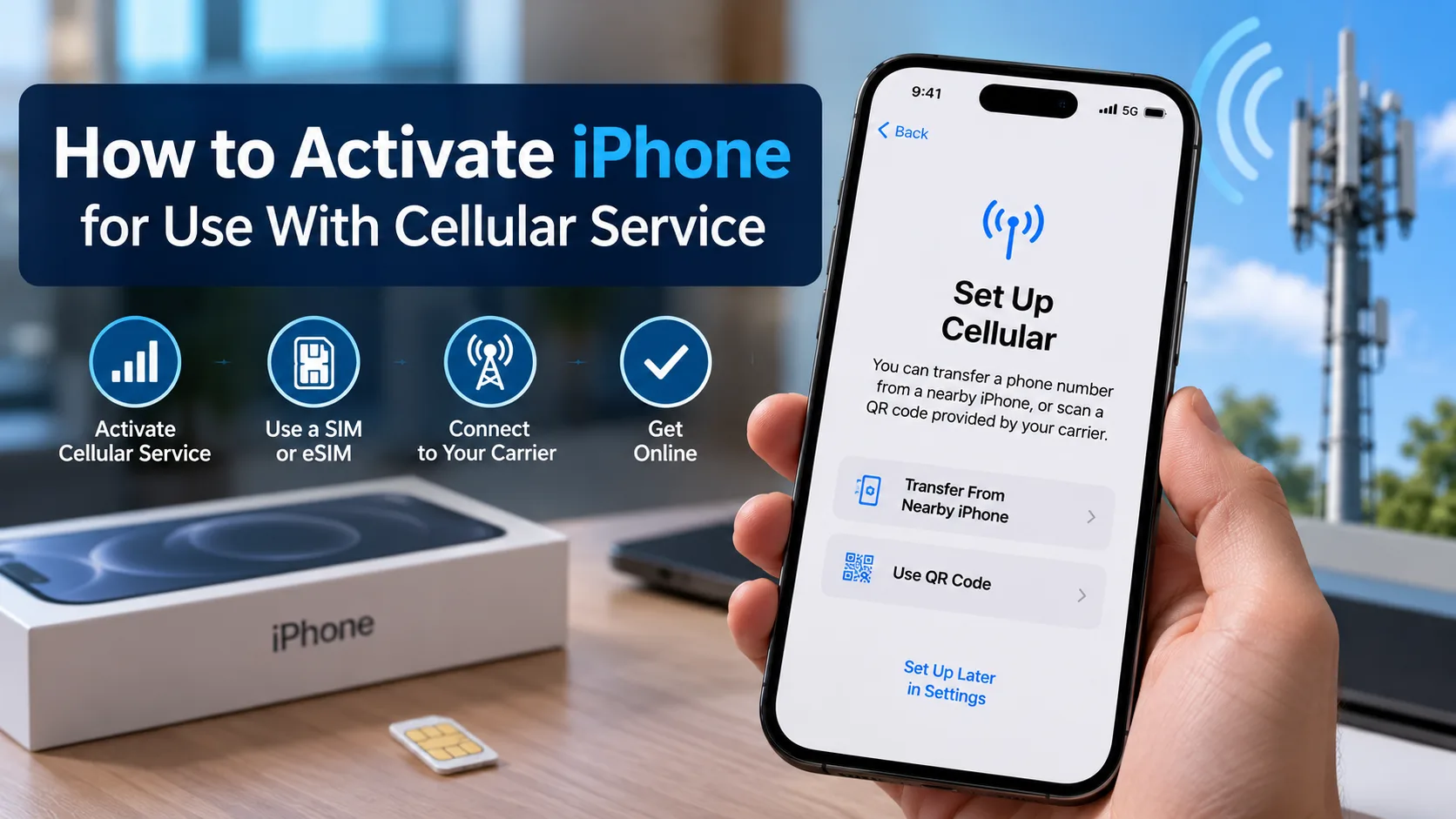
A SIM-lock (also called carrier lock, network lock, or subsidy lock) is a restriction placed on a phone so it works only with one carrier or group of carriers. When a phone is unlocked, you can use it with compatible SIMs or eSIMs from other carriers. On iPhone, you can quickly check this in Settings → General → About; if you see “No SIM restrictions” next to Carrier Lock, your phone is unlocked.
SIM-lock vs. SIM PIN/PUK: they are not the same
People often mix up two very different things:
Carrier (network) lock limits which carrier’s SIM/eSIM you can use. That’s what we mean by SIM-lock in this guide.
SIM PIN/PUK is a security feature on the SIM card itself. If you enable a SIM PIN and enter it wrong multiple times, your SIM becomes locked and asks for a PUK (Personal Unlocking Key) from your carrier to unblock the SIM. This is about SIM security, not carrier restrictions. If you enter the PUK wrong too many times, the SIM permanently disables and must be replaced.
Why phones get locked
Carriers lock phones to:
- Protect device subsidies or financing (to make sure the device stays on their network while you pay it off).
- Cut fraud (new devices flipped for cash).
- Keep customers during promotions or minimum-use periods.
The lock isn’t about changing the radio hardware; unlocking doesn’t add new bands or magically make a CDMA-only phone speak GSM. It only removes policy restrictions so a compatible SIM/eSIM can work.
📖 Also Read: Top 5 Cheap Unlocked Cell Phones You Can Buy Today
Quick ways to tell if your phone is locked
1) The most reliable test: try another carrier’s SIM
Power off, insert a SIM from a different carrier, then power on. If you can place a call or use data, you’re likely unlocked. If you see prompts like “SIM network unlock PIN” or “SIM not supported,” the device is still locked. This real-world test is more reliable than many third-party “IMEI checker” websites.
2) iPhone: look for “No SIM restrictions”
Go to Settings → General → About. If Carrier Lock says “No SIM restrictions,” you’re good. If it lists a carrier or you see an error after inserting another SIM, it’s locked.
3) Android: check network operators or watch for prompts
On many Android phones you can open Settings → Connections (or Network) → Mobile networks → Network operators and try to scan/select other carriers. If the phone refuses other networks or shows “SIM network unlock PIN,” it’s likely locked.
Tip: If your screen is asking for a SIM PIN/PUK (not “network unlock”), that’s a SIM security prompt, not a carrier-unlock prompt. Contact your carrier for the PUK if you forgot your SIM PIN.
Types of locks you might see
Carrier / Network lock (the common one)
This is the normal SIM-lock: your phone accepts only SIMs/eSIMs from one carrier or a small set of carriers.
Region lock (less common but real on some models)
Some phones (often certain Samsung models in specific markets) have regional restrictions intended to control cross-border gray-market sales. The device may need to be first activated or used for a short time in the “home” region before it works elsewhere. Policies have evolved over the years, but the idea is the same: region before global use.
SIM security lock (PIN/PUK)
Again, this is not a carrier lock. It only protects the SIM or eSIM profile. If you fail the PIN too many times, you’ll need the PUK from your carrier (and too many bad PUK attempts permanently kill that SIM).
📖 Also Read: How to Unlock Samsung Galaxy S23 Ultra for Any Carrier
Code-based lock counters (NCK/MCK on many Androids)
Many Android phones (especially Samsung) use numeric codes behind the scenes. NCK (Network Control Key) removes the carrier lock. If the wrong code is entered too many times, the phone can demand an MCK (sometimes called “Master Code Key”) to reset the counter—usually provided via the original carrier/OEM when the device is eligible. Don’t guess these codes; you can hard-lock the device.
Are SIM-locks legal? What U.S. rules say (with dates for clarity)
In the U.S., unlocking is supported by policy and widely practiced, but eligibility rules apply.
February 2014–February 2015: The wireless industry (through CTIA’s Consumer Code) adopted a set of unlocking commitments: carriers will unlock postpaid devices once contract/financing obligations are met and accounts are in good standing, and unlock prepaid devices no later than one year (with reasonable time/usage conditions). Carriers must disclose their unlock policies and notify customers when eligible.
Today (as of August 31, 2025): The FCC’s guidance still points consumers to those CTIA commitments and explains that participating carriers will unlock postpaid phones when requirements are met, and prepaid after a reasonable period (often up to a year). Devices reported lost or stolen or associated with fraud are not eligible.
Recent policy moves: In 2024, the FCC proposed a rule that would require all providers to unlock devices 60 days after activation (an NPRM—rulemaking proposal—was opened). In 2025, Verizon asked the FCC to roll back its existing 60-day unlock requirement, arguing it enables fraud, even as the FCC weighs a broader 60-day standard for everyone. These are ongoing policy discussions; watch the official FCC docket or your carrier’s unlock page for changes.
Bottom line: unlocking is clearly allowed and supported in the U.S., but the when and how still depend on carrier policies and any new FCC rules.
How unlocking actually works (behind the scenes)
iPhone: activation policy on Apple’s servers
On iPhone, the “lock” is an activation policy tied to your device’s IMEI on Apple’s servers. When your carrier approves an unlock, Apple updates that policy. After a restart or SIM/eSIM change, the device checks in and—if the policy is set to unlocked—shows “No SIM restrictions.”
Android: codes or over-the-air app requests
Many Androids accept an NCK (Network Control Key) when you insert a non-accepted SIM. If someone previously entered too many wrong codes, the phone can ask for an MCK to reset the counter. T-Mobile (and some other carriers) perform unlocks over the air through a Device Unlock option in Settings or a carrier app that talks to their servers and removes the lock remotely.
Tip: On modern T-Mobile Androids, look for Settings → Connections → More connection settings → Network Unlock → Permanent Unlock (wording varies by brand). On Google Pixel devices, T-Mobile provides a Device Unlock (Pixel) app.
📖 Also Read: How to Unlock Samsung Galaxy S22 Ultra for Any Carrier
The right way to unlock your phone (step-by-step)
Step 1: Confirm lock status
Use the quick tests above. On iPhone, check for “No SIM restrictions.” On Android, insert another SIM or scan network operators.
Step 2: Check eligibility
Visit your carrier’s unlock page or support center to review eligibility (paid-off, account in good standing, not reported lost/stolen). The FCC’s guidance outlines these common requirements and the CTIA commitments.
Step 3: Request the unlock from the original carrier
- iPhone: contact your carrier to submit the unlock; once processed, restart and you should see “No SIM restrictions.”
- Android: use the carrier’s Network Unlock feature/app if available (e.g., T-Mobile), or request a code. Do not guess codes; too many bad attempts can trigger MCK requirements.
Step 4: Finish and test
Power cycle the phone, insert the new SIM/eSIM, and place a test call or browse. If you need APN settings for data/MMS, your new carrier or MVNO will provide them. (Unlocked ≠ auto-configured for every network.)
Step 5: If you see a PUK prompt, stop and call your carrier
A PUK prompt is for SIM security, not a carrier unlock. Don’t keep guessing; too many wrong PUK attempts permanently disable the SIM.
Special situations you might face
Prepaid phones and minimum-use windows
Prepaid devices often have a minimum time-on-network (historically up to one year) before they’re eligible. Policies vary by brand; always check your carrier’s page for the current rules.
Lost/stolen or fraud-flagged devices
Carriers will not unlock devices reported lost/stolen or suspected of fraud until those flags are cleared. This protects consumers and limits black-market activity.
Financed or business-owned phones
Phones on an installment plan or owned by a company may stay locked until the balance is paid or the account holder approves the unlock.
Region-locked imports
If you imported a phone with a region lock, follow the maker’s instructions to enable global use (often initial activation or a short call period in the home region). If in doubt, check the manufacturer’s regional support page for your exact model.
eSIM, Dual-SIM, and how locks apply
eSIM profiles can be locked by policy just like physical SIMs. Unlocking your device removes the carrier restriction so you can add a new eSIM from another provider. With Dual-SIM phones, the device unlock usually applies across both lines (it’s one device policy), but some carrier features can still be tied to a specific line. Always test both lines after an unlock to be sure.
For travelers: why unlocking matters
If you travel, an unlocked phone saves money and hassle:
- You can pop in a local SIM or download a local eSIM for cheap data and calls.
- You can switch to an international eSIM before your flight.
- Remember: unlocking doesn’t add missing 4G/5G bands. Check your phone’s band support and roaming agreements first.
Common messages and what they usually mean
- “SIM not supported” / “Invalid SIM” (iPhone): The phone is still locked to another carrier or hasn’t refreshed its activation status. After your carrier confirms unlock, restart and update carrier settings, or insert the new SIM again.
- “SIM network unlock PIN” (Android): The device is carrier-locked and wants the NCK from the original carrier. Don’t guess. Too many wrong tries can require an MCK from the OEM/carrier.
- “Enter PUK”: You (or someone) entered the SIM PIN wrong too many times. Retrieve the PUK from your carrier portal/support and enter it carefully. Ten wrong PUK tries can kill the SIM.
When third-party unlocking makes sense (and when it doesn’t)
There are many IMEI-based “unlock” services online. Some are legitimate resellers who forward your request to carrier systems; others are risky or flat-out scams. The safest and cleanest route is always through the original carrier or OEM-approved process. If you must use a third party:
- Avoid anyone asking to install software on your PC/phone.
- Avoid sites promising to “bypass” blacklist checks.
- Pay with a method that offers buyer protection.
- If you’re still financing a phone, understand that many carriers won’t unlock it until it’s paid off per policy.
Troubleshooting after a successful unlock
If your unlock finished but service doesn’t work with the new carrier:
- Restart after inserting the new SIM or activating the new eSIM.
- Update carrier settings (iPhone prompts in About).
- Add APN/MMS settings if mobile data/MMS fails (get these from your new carrier’s support page).
- Check band support and network compatibility (e.g., does your phone support the carrier’s LTE/5G bands?).
- If Android still shows a lock prompt, confirm with the original carrier that the unlock is complete and ask about NCK/MCK if needed.
FAQs in plain language
Is unlocking legal?
Yes. U.S. carriers participate in the CTIA unlocking commitments, and the FCC supports consumer unlocking under those terms (account in good standing, obligations met, etc.). Policy work continues on standardizing timelines (e.g., a proposed 60-day rule).
How long do I have to wait?
It varies. Many postpaid devices unlock once obligations are met; prepaid often have a time-on-network window (historically up to a year). Always check your carrier’s current page.
Does unlocking give me more 5G bands?
No. Unlocking removes policy restrictions, not hardware limits. You still need a device that supports the new carrier’s bands.
What’s the difference between “SIM locked” and SIM PIN?
“SIM locked” usually means carrier-locked (network restriction). A SIM PIN/PUK is a security feature of the SIM card itself. Different problems, different fixes.
What if my phone asks for MCK?
That means someone entered the wrong network unlock code too many times. You’ll need the MCK from the carrier/OEM to reset the counter—don’t guess.
Can I unlock with an app on T-Mobile?
Many T-Mobile Android phones can be unlocked via Network Unlock in Settings or with the Device Unlock app workflow when eligible.
One-page checklist
- Confirm status: iPhone → “No SIM restrictions”; Android → insert other SIM.
- Read your carrier’s unlock policy and check eligibility.
- Request unlock: carrier support, portal, or Network Unlock option.
- Restart, insert new SIM/eSIM, test data and calls.
- If asked for PUK, call your carrier (SIM security). If asked for NCK/MCK, work with the original carrier/OEM.
Final thoughts
A SIM-lock isn’t scary once you know what it is. It’s just a switch that carriers control to protect financing, manage fraud, and keep promos fair. When your phone is eligible, unlocking through your carrier is straightforward. And once unlocked, you’re free to choose the plan that fits your life—an MVNO to save money, a global eSIM for travel, or a different network for better coverage at home.