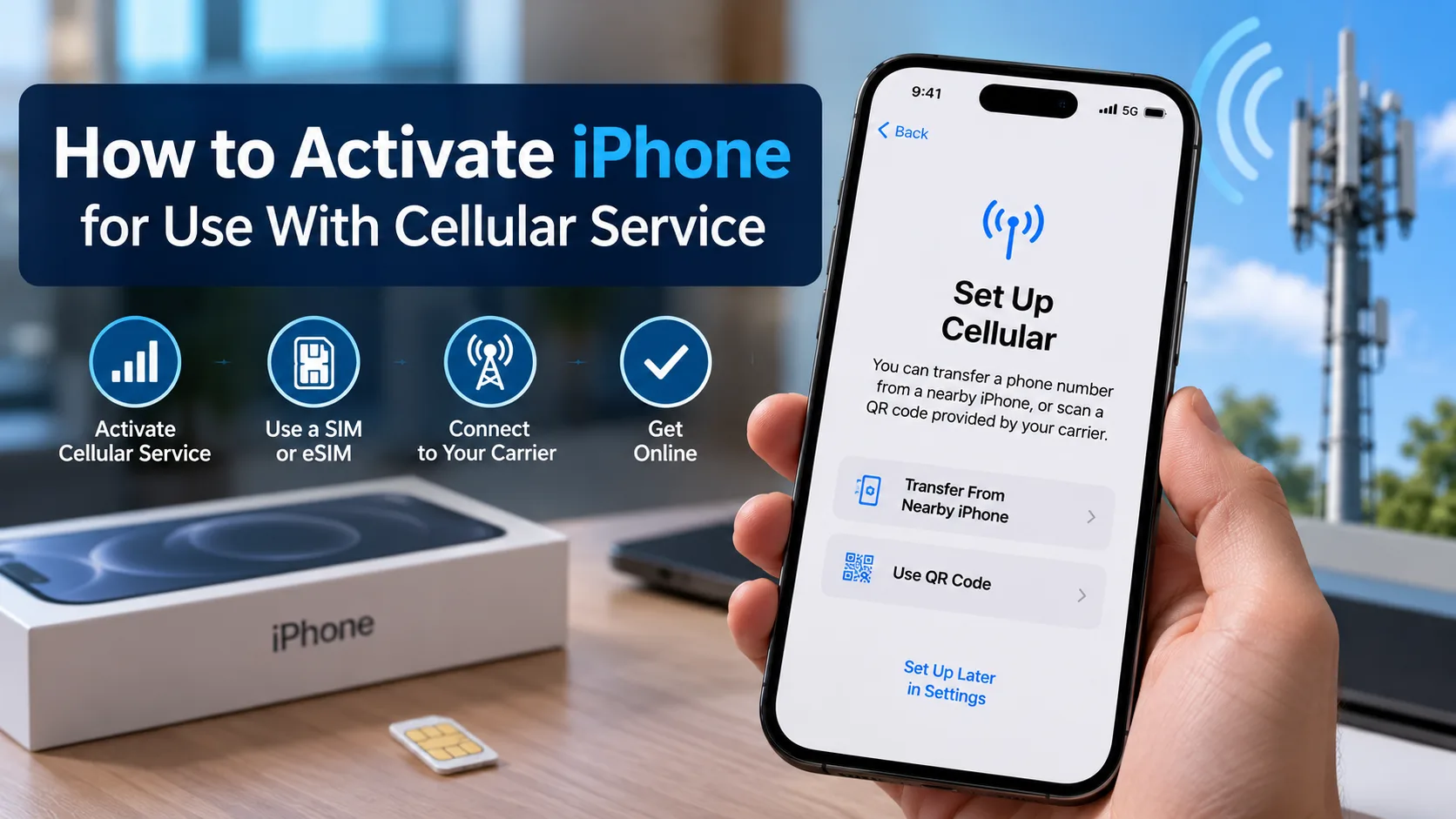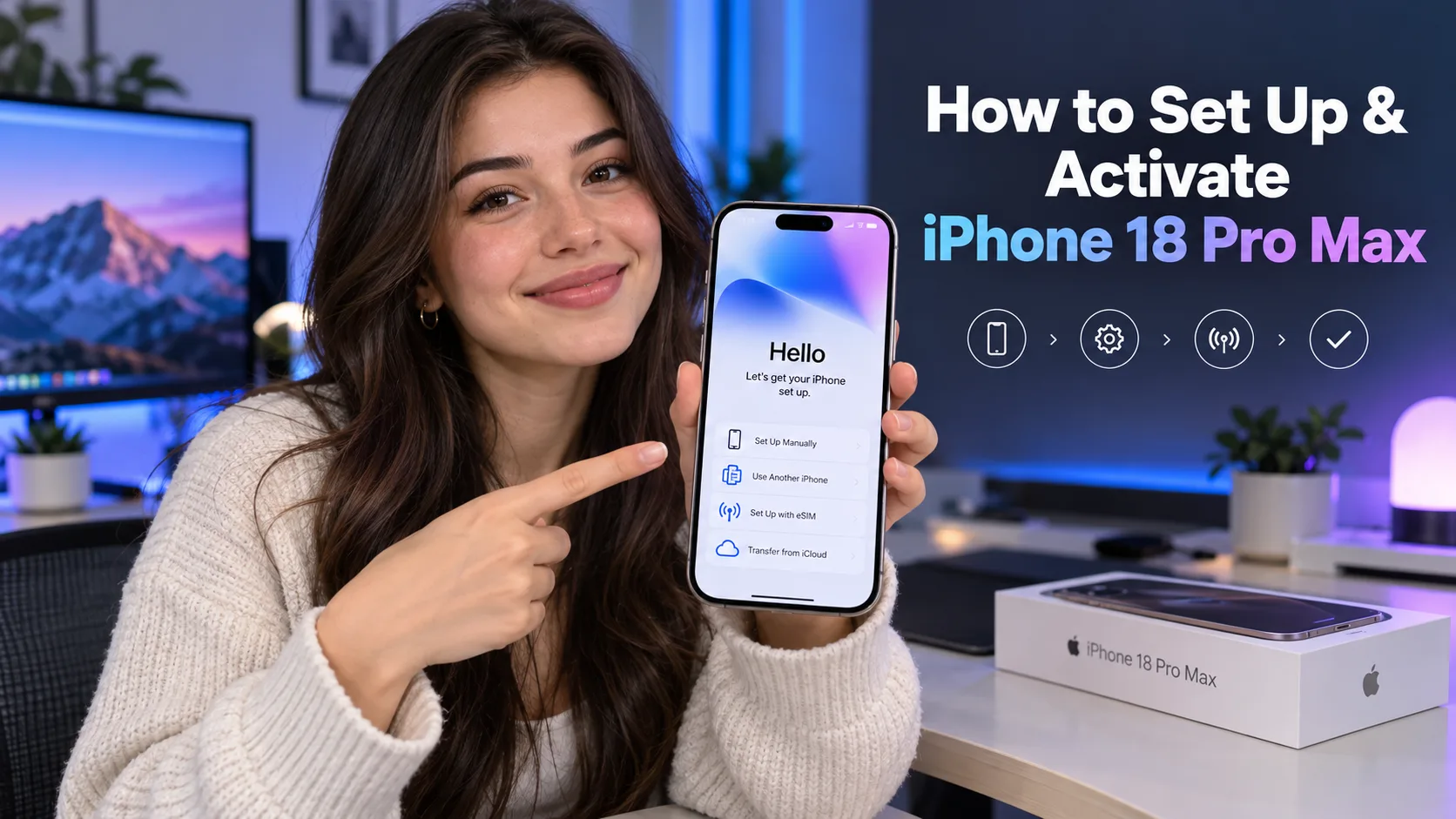

Unlocking an iPhone for international travel usually costs $0 with major U.S. carriers once you meet their rules (phone paid off, active for a set period, account in good standing). Some prepaid brands may charge if you don’t meet criteria, but AT&T, Verizon, and T-Mobile unlock at no charge when eligible. iPhones bought directly from Apple are typically unlocked; you can confirm in Settings → General → About → Carrier Lock (look for “No SIM restrictions”).
To unlock, check your carrier’s policy page or app, then submit an unlock request (they handle it remotely). Processing can be instant or take up to 1–2 business days watch for a confirmation SMS/email and reboot if needed. If your phone is financed, you may need to pay the balance first.
If you need service right away or don’t want to unlock, use your carrier’s international day pass (often around $10–$12/day) for talk, text, and data. For longer trips, an eSIM (local or regional plan) on iPhones from 2018 onward is usually cheaper install it over Wi-Fi before you fly and set it as your data line abroad.
What “Unlocked iPhone” Means (and Why Travelers Care)
An iPhone is locked when your current carrier restricts it to their network. An unlocked iPhone lets you pop in another carrier’s physical SIM or add a foreign eSIM and use local data plans while you travel. You can check your status in seconds: Settings → General → About → Carrier Lock. If you see “No SIM restrictions,” your iPhone is already unlocked. Apple can’t unlock your phone—only your carrier can—so you’ll request it from them if needed.
If you plan to use a local SIM or travel eSIM abroad (often the cheapest route), you need an unlocked iPhone. If you’ll only use your home carrier’s international day pass, unlocking isn’t required—but day passes can get pricey over a long trip. We’ll compare those costs below. Apple’s own travel guidance confirms you can roam with your carrier or add eSIMs for local service.
The Short Answer: How Much Does It Cost to Unlock an iPhone?
For most U.S. customers, unlocking costs $0 if you meet your carrier’s rules (time on network, good standing, paid-off device). Each carrier has its own timeline and process:
- Verizon: Phones are locked for 60 days after activation. After that, Verizon unlocks automatically if the device isn’t flagged for fraud or theft. No fee.
- AT&T: Use the Device Unlock portal. Devices must be paid off and meet account rules; many eligible Apple/Google devices unlock automatically on active accounts. No fee.
- T-Mobile: Unlock is free of charge once eligible. Postpaid iPhones typically require 40 days of active service and payoff of any financing; prepaid rules differ (often 365 days or sufficient refills).
There’s also a national baseline: under industry commitments recognized by the FCC, carriers must post unlocking policies and unlock eligible devices (with specific timelines for prepaid). Military deployments qualify for early unlocking.
📖 Also Read: How to Unlock Mint Mobile Phone & SIM
Carrier-by-Carrier: What to Expect (Timing, Steps, and Gotchas)
Verizon (Postpaid & Prepaid)
Verizon locks new phones for 60 days from paid activation. After that, unlocking happens automatically if the device hasn’t been reported lost, stolen, or fraudulent. You don’t need to call; there’s no charge. If your phone didn’t unlock right at 60 days, contact support to fix the flag on the account.
Verizon travel pricing (for cost comparisons later): TravelPass is $12/day in 210+ countries (and $6/day in Canada/Mexico). Some unlimited plans offer a TravelPass Days perk to reduce costs.
AT&T
Use the AT&T Device Unlock site to submit and track requests; you’ll need your IMEI and may need to confirm the device is paid off and not active on another account. AT&T notes that eligible Apple/Google devices on active accounts may unlock automatically. International roaming is easy but can get expensive on International Day Pass (more below).
AT&T Day Pass pricing: $12/day on land (and $20/day for land + sea on cruises). Often, additional lines are discounted when used the same day.
T-Mobile (Including Legacy Sprint Devices)
T-Mobile’s policy is traveler-friendly once you qualify. Postpaid: typically 40 days active and payoff of any financing. Prepaid: usually 365 days since activation or $100+ in refills; other conditions apply. T-Mobile unlocks free of charge and performs remote (over-the-air) unlocks when possible. Military deployments can request early unlocking.
T-Mobile’s travel options include generous high-speed data allotments on select plans in 215+ countries, plus International Pass add-ons like $5 for 1 day (512 MB) or $35 for 10 days (5 GB) with unlimited calling.
📖 Also Read: What is the Network Unlock Code for Verizon?
Real-World Costs for International Use (Unlocked vs. Roaming Passes)
You have three common ways to stay connected overseas:
- Home-carrier day passes (fast and familiar, can be costly over time)
- Local eSIM or physical SIM (usually cheapest per GB)
- Pay-as-you-go roaming (rarely the best value)
Here’s how the math looks in 2025:
- Verizon TravelPass: $12/day abroad (Canada/Mexico $6/day). Ten days in Europe = $120 before taxes/fees.
- AT&T Day Pass: $12/day on land. Ten days = $120 (cruises are $20/day).
- T-Mobile International Pass: $35 for 10 days/5 GB (or $5 for 1 day/512 MB). Ten days = $35 if 5 GB is enough.
- Travel eSIMs (third-party): Popular providers (Airalo, Ubigi, Nomad, Holafly, etc.) often beat day-pass pricing for data especially on trips longer than a few days—but exact prices vary by country and data bucket. Industry roundups from major outlets in 2025 consistently show strong value for eSIMs if you’re comfortable with setup.
Bottom line: If your trip is short (1–3 days), a day pass can be fine for convenience. For week-long or longer trips, an unlocked iPhone + local eSIM usually cuts your bill dramatically—often less than half of what day passes cost.
Step-by-Step: Unlock + Set Up for the Lowest Travel Cost
2–4 Weeks Before You Fly
- Check your lock status: Settings → General → About → Carrier Lock. If it says “No SIM restrictions,” you’re good. If not, contact your carrier to unlock. Apple can’t do it for you.
- Verify eligibility: Paid off? Enough days on network? Good account standing? (See the carrier sections above for specifics.)
- Decide on your travel plan: Day pass vs. local eSIM. Skim your carrier’s pricing and a reputable eSIM provider or two.
1 Week Before Departure
- Add your eSIM at home on Wi-Fi (recommended). Label it “Japan eSIM,” “EU eSIM,” etc. Apple’s support guides walk through eSIM setup and travel settings.
- Plan your line behavior: If using a travel eSIM for data, consider disabling Data Roaming on your primary line to avoid surprise charges. Keep your home line active for calls/SMS if needed.
Day of Travel
- Turn on the travel eSIM when you land.
- Keep iMessage/FaceTime working: They’ll usually follow your Apple ID, but test with Wi-Fi first.
- Call/SMS codes (2FA): If you disable roaming on your home line, remember you might miss SMS codes. You can temporarily enable roaming or move 2FA to app-based codes/email.
When You Return
- Toggle back to your primary data line.
- Remove the eSIM or leave it stored for future trips (iPhone can store multiple eSIMs).
📖 Also Read: Unlock Your iPhone from Carrier—Quick U.S. Guide
Special Cases That Affect “Unlock Cost”
1) Financed or Installment Phones
If your iPhone is still on a payment plan, the real “cost to unlock” may be the remaining balance you must pay to meet eligibility. That’s not an unlock fee—it’s paying off the phone so your carrier can unlock it under their rules. (Each carrier’s policy ties unlocking to payoff and account standing.)
2) Corporate / Employer-Owned Devices
Many company phones are intentionally locked or managed and can’t be unlocked without employer approval. In that case, compare your employer’s international options, carry a separate travel phone, or run your travel eSIM on a personal unlocked iPhone.
3) Prepaid Accounts
Prepaid rules can be stricter. For example, T-Mobile prepaid often expects 365 days since activation or sufficient refills before unlocking. If you’re prepaid and traveling soon, plan ahead.
4) Military Deployment
U.S. carriers must unlock on request for eligible deployed military personnel with verification. It’s $0 when you qualify.
Will Apple Ever Charge Me to Unlock?
No. Apple doesn’t handle carrier unlocking at all. Only your carrier can unlock, and the process is free once you satisfy their conditions. To finish an unlock, Apple explains the quick steps (swap SIM, or back up/erase/restore if you don’t have another SIM handy).
Roaming Pass vs. eSIM: Quick Cost Comparisons
Let’s compare typical trips. Numbers below use official carrier prices and common eSIM data buckets seen in 2025 roundups; actual eSIM prices vary by country and gigabytes.
Example A: 10 Days in Europe (moderate data: maps, rides, socials)
- Verizon TravelPass: $12 × 10 = $120.
- AT&T Day Pass: $12 × 10 = $120.
- T-Mobile International Pass: $35 (10 days / 5 GB) if 5 GB is enough.
- Travel eSIM (third-party): Often cheaper than $120 for 5–10 GB, depending on country/region.
Takeaway: If your iPhone is unlocked, a local or regional eSIM frequently saves $50–$90+ versus day passes on a trip like this.
Example B: 14 Days in Japan (light user: email, maps, light socials)
- AT&T Day Pass: $12 × 14 = $168.
- Verizon TravelPass: $12 × 14 = $168.
- T-Mobile International Pass: You might chain one 10-day/5 GB ($35) + four 1-day passes ($5×4=$20) = $55 total, if 5 GB + a few top-ups cover you.
- Travel eSIM: Again, typically well under $168 for modest data.
Common Questions (Fast Answers)
Does the iPhone need to be unlocked for international use?
Not if you’ll use your home carrier’s roaming/day pass. Yes if you want a local SIM or eSIM from the country you’re visiting. Check in Settings → General → About → Carrier Lock; “No SIM restrictions” means you’re unlocked.
How much do they charge to unlock an iPhone?
Major U.S. carriers typically charge $0 once you meet their rules (paid off, active for a set period, good standing). Apple doesn’t unlock phones—your carrier does. Some prepaid brands may charge if you don’t meet eligibility.
How do I prepare my iPhone for international travel?
Update iOS, back up your phone, and check unlock status. Decide on roaming vs. local eSIM, install any eSIMs on Wi-Fi before flying, label lines (e.g., “Travel Data”), turn off data roaming on your home line if you’ll use a travel eSIM, and enable Wi-Fi Calling.
How can I use my iPhone while traveling internationally?
Three easy ways: (1) your carrier’s day pass; (2) a local SIM/eSIM for cheaper data; (3) Wi-Fi only (airplane mode + Wi-Fi). With Dual SIM, keep your home number active for calls/SMS and set the travel line for data.
How can I use my iPhone internationally without charges?
Put the phone in airplane mode, leave Wi-Fi on, and keep Data Roaming off. Use Wi-Fi Calling, offline maps, and download media before you go. Verify with your carrier that Wi-Fi Calling won’t trigger roaming on your plan.
How much is an eSIM?
Prices vary by country and data size, but typical tourist plans run about $4–$10 for ~1 GB (7 days) and $15–$30 for ~5–10 GB (7–30 days). Regional passes (e.g., across Europe) usually cost a bit more but can still beat day-pass pricing for longer trips.