
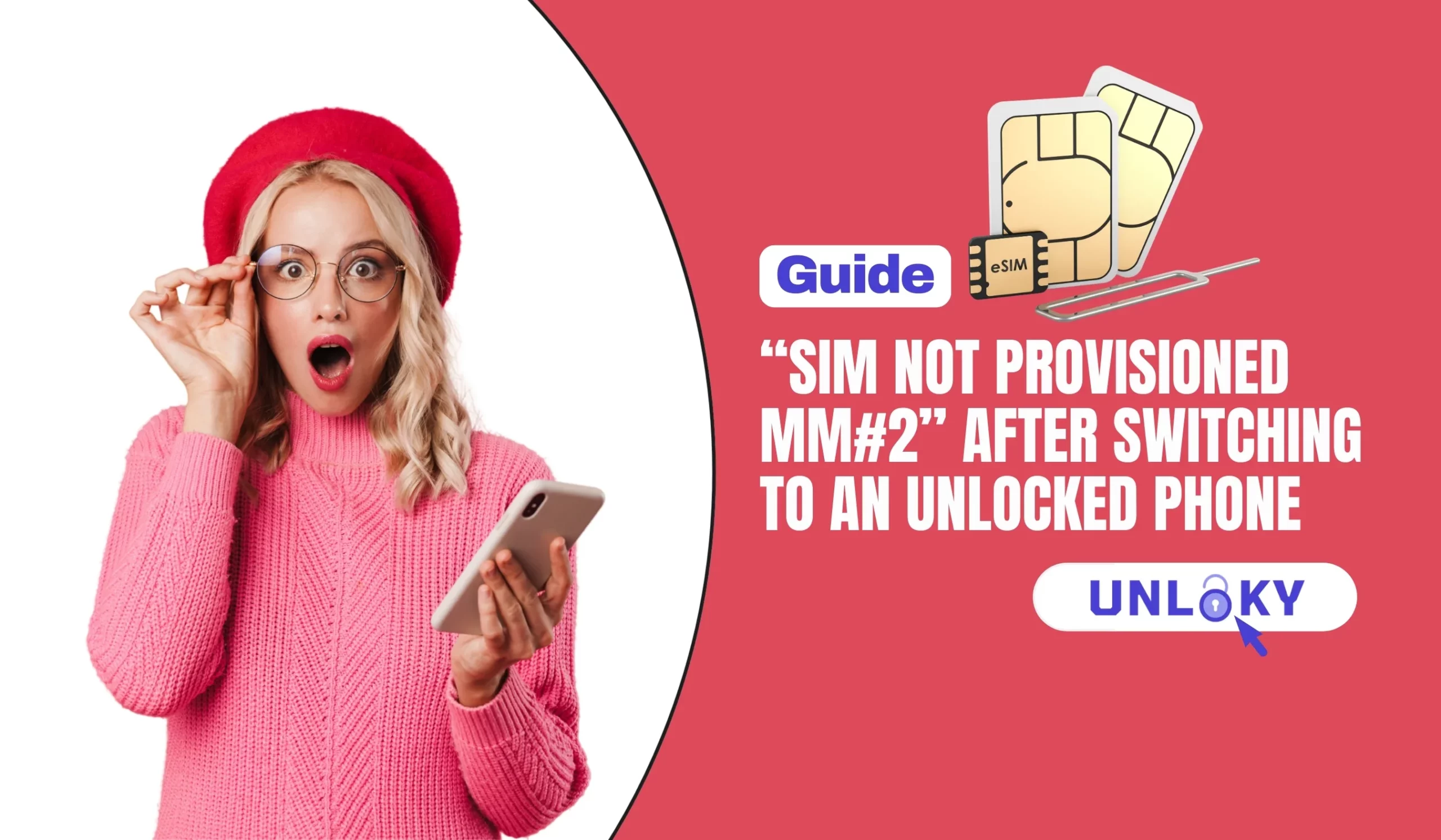
Swapped your SIM into a new unlocked phone and now you’re staring at this cryptic error? You’re not stuck. Here’s the exact step-by-step ladder to get your service back — no fluff, no runaround.
TL;DR — Quick Answer
The “SIM Not Provisioned MM#2” error means your carrier hasn’t finished linking your SIM to its network. It happens most often when you move your SIM to a new unlocked phone or when a brand-new SIM hasn’t been activated yet. Run through these steps in order:
What “SIM Not Provisioned MM#2” Actually Means
Let’s clear this up right away — this error isn’t telling you your phone is broken or your SIM is dead. The word “provisioned” is a telecom term that basically means “set up and authorized.” When your phone shows this message, it’s saying your SIM card hasn’t been properly linked to your carrier’s network so it can send and receive calls, texts, and data.
Think about it like this: activation means your carrier knows your SIM exists and your billing is good. Provisioning is the step where the network actually pushes the right technical settings — like APN configurations and security credentials — to your device so it can talk to cell towers. The account might be active, but the “pipe” between your phone and the towers isn’t fully connected yet.
The “MM#2” part refers to a specific error code from the network’s Mobility Management layer. It’s the system that handles authentication between your SIM and the carrier. When that handshake fails, you get this message — and your phone drops to emergency-calls-only mode.
The “SIM Not Provisioned MM#2” error is different from a “SIM Not Valid” or “SIM Lock” message. Those mean your phone is carrier-locked and won’t accept a SIM from another provider. The provisioning error, on the other hand, means the SIM simply hasn’t been authenticated on the network — even if the phone itself is fully unlocked.
Why This Happens When You Switch to an Unlocked Phone
Moving your SIM into a new unlocked phone should be seamless — and most of the time, it is. But certain conditions can trigger this provisioning failure. Here are the real reasons it happens:
A brand-new SIM card needs to be activated by your carrier before it’ll work. Some carriers auto-activate within 24 hours, others need you to call or go online.
If you’re transferring your number from one carrier to another, the porting process can take a few hours. During that window, this error will show up.
Sometimes your carrier’s provisioning servers are just temporarily overloaded or down. The SIM is fine — the backend just hasn’t caught up.
Sometimes your carrier’s provisioning servers are just temporarily overloaded or down. The SIM is fine — the backend just hasn’t caught up.
Other less common causes include a suspended or deactivated account (usually a billing issue), using a SIM from a carrier that doesn’t have coverage in your area, or even a phone software bug after a recent OS update that disrupts the modem firmware.
Step-by-Step Fix Ladder
Work through these in order. Most people get it fixed within the first three steps. Only escalate to the carrier if the simple stuff doesn’t work.
This is the quickest reset you can try. Turning Airplane Mode on kills all radio connections. Turning it back off forces your phone to reconnect fresh to the carrier network — kind of like a mini network reboot without restarting the whole device.
On Android: Swipe down twice from the top to open Quick Settings → tap the airplane icon → wait 30 seconds → tap it again. On iPhone: Open Control Center → tap the airplane icon → wait → tap again.
If Airplane Mode didn’t do it, do a full restart. This clears out temporary glitches in the modem firmware and forces a complete re-registration on the network when the phone boots back up.
Android: Hold the Power button (or Power + Volume Up on newer phones) → tap Restart. iPhone: Hold Side + Volume → slide to power off → wait 10 seconds → hold Side to turn back on.
Power off the phone completely. Use a SIM ejector tool (or a straightened paperclip) to pop out the tray. Take the SIM out and gently wipe the gold contacts with a dry, soft cloth. Check for any visible scratches, cracks, or bent edges. Place the SIM back in correctly — there’s usually a tiny diagram on the tray or near the slot showing the right orientation — and push the tray back in firmly.
Android users: Open the Google Play Store, search for “Carrier Services,” and make sure it’s updated to the latest version. This app manages the background communication between your device and the carrier network. An outdated version can block provisioning.
iPhone users: Go to Settings → General → About. If a carrier settings update is available, you’ll see a popup prompt. Tap Update. This pushes the latest APN and network configuration from your carrier to your phone.
This wipes out all saved Wi-Fi passwords, Bluetooth pairings, VPN configs, and cellular settings — then rebuilds them from scratch. It’s a more thorough reset that often fixes provisioning errors caused by corrupted network configs.
Android: Settings → General Management → Reset → Reset Mobile Network Settings → confirm. iPhone: Settings → General → Transfer or Reset → Reset → Reset Network Settings.
Before calling the carrier, do a quick diagnostic. Pop your SIM into another phone (borrow one if you have to). If the other phone works fine with your SIM, the issue is likely with your phone’s modem or SIM slot hardware. If the other phone shows the same error, the problem is definitely with the SIM or your carrier account.
If you’ve run through all the steps above and the error persists, call your carrier’s customer support. Tell them exactly what’s happening — that you’re seeing a “SIM Not Provisioned MM#2” error after switching to a new unlocked phone. They can check on their end whether the SIM is properly activated, whether there’s a backend provisioning hold, or whether the IMEI of your new phone needs to be registered in their system.
Some carriers can re-provision the SIM remotely with a single push from their end. It often takes less than five minutes once you reach the right department.
If the carrier confirms the SIM is faulty or just can’t be re-provisioned, it’s time for a replacement. Head to your carrier’s store and they’ll swap you out with a new SIM on the spot. They’ll transfer your number and plan over — usually takes about 15 minutes. Keep in mind that SIM cards do wear out over time, especially if they’ve been swapped between devices a lot.
Quick Comparison — Fixes at a Glance
Pick the fix that matches your situation
| Fix | Time | Difficulty | When It Helps |
|---|---|---|---|
| Toggle Airplane Mode | 30 sec | Easy | Temporary network glitch, carrier server delays |
| Restart Phone | 1–2 min | Easy | Modem firmware stuck, failed registration attempt |
| Reseat / Clean SIM | 3–5 min | Easy | Loose fit, dirty contacts, switched to a new phone |
| Update Carrier Services | 2–3 min | Easy | Outdated carrier app blocking provisioning on Android |
| Reset Network Settings | 3–5 min | Medium | Corrupted APN or network configs after phone switch |
| Test SIM in Other Phone | 5 min | Easy | Diagnosing whether it’s a SIM or device issue |
| Contact Carrier | 15–30 min | Medium | SIM needs remote re-provisioning or account fix |
| SIM Card Replacement | 30+ min | Store Visit | Physically damaged SIM or carrier-level SIM failure |
Carrier-Specific Notes
Each carrier handles SIM activation and provisioning slightly differently. Here’s what you should know for the big names:
AT&T usually auto-provisions within a few hours. If it doesn’t kick in, you can call 611 from another phone or visit att.com/activations to manually push the activation. Have your SIM’s ICCID number ready (printed on the SIM card itself).
T-Mobile is generally faster with provisioning and tends to recognize unlocked devices quickly. If the error persists, dial 611 or use the T-Mobile app under Account → SIM Management. They can re-push the provisioning signal remotely.
Verizon requires the IMEI of your new phone to be registered before the SIM will work. Log in to your Verizon account online, go to Manage Devices, and update the IMEI. Or call them and have an agent register it. This is the most common reason for this error on Verizon.
MVNOs ride on the big carriers’ networks but handle provisioning through their own systems, which can be slower. Always activate through the MVNO’s app or website first. If the error comes up, contact their support — not the parent carrier’s.
When It’s Time to Replace Your SIM
Not every “SIM Not Provisioned” error can be fixed with a restart or a phone call. There are some clear signals that your physical SIM card is done and needs to be swapped:
Your SIM has visible scratches or cracks on the gold contacts. It works intermittently — sometimes fine, sometimes throws the error. The same SIM fails in multiple phones. Your carrier confirms on their end that the SIM is “inactive” or “deregistered” and can’t be re-provisioned remotely. Or the card is several years old and has been swapped between many devices.
Getting a replacement is usually free or costs just a few dollars at most carrier stores. They’ll migrate your number and plan in about 15 minutes. If you want to future-proof, ask about switching to an eSIM at the same time — it eliminates physical card issues entirely.
It means your SIM card hasn’t been fully set up or authorized by your carrier to connect to its network. Your carrier’s system doesn’t recognize the SIM as active, so your phone drops to emergency-calls-only mode. It’s a network authentication failure — not a sign that your phone is broken.
Not necessarily. The “SIM Not Provisioned” error is about the SIM card’s registration on the network, not about your phone’s lock status. A carrier-locked phone would typically show a “SIM Not Valid” or “SIM Not Accepted” message instead. That said, if you’re trying to use a SIM from a different carrier on a locked phone, you could see provisioning errors too — so it’s worth verifying your unlock status just in case.
No. When you get a replacement SIM from your carrier, they transfer your existing phone number and plan to the new card. Your number stays the same. Just make sure you do the replacement through your carrier (in-store or over the phone) so they properly link everything.
If it’s a brand-new SIM, give it up to 24 hours for auto-provisioning. If you’ve had the SIM working before and it suddenly shows this error on a new phone, try the self-service fixes (airplane mode, restart, reseat) first — that takes about 10 minutes. If those don’t work, go ahead and call. There’s no point waiting days for something the carrier can often fix in under five minutes on their end.
In rare cases, yes — if the issue is caused by deeply corrupted system software interfering with the modem. But a factory reset should be a last resort, not a first move. Try resetting just the network settings first (which doesn’t erase your apps or data). If that doesn’t help, and you’ve ruled out SIM-side issues, then a full factory reset might be worth considering. Back up your data before you do it.
The “SIM 2” part just tells you which slot is affected. Try moving the SIM to the other slot first. If it works there, the second slot may have a hardware issue. If the error follows the SIM to both slots, the problem is with the SIM or your carrier account — run through the same fix ladder above.
It happens on both. Android tends to show the exact “SIM Not Provisioned MM#2” wording more frequently, while iPhones sometimes display it as “SIM Not Provisioned” or “No SIM” or “SIM Failure.” The underlying cause and the fixes are the same regardless of platform.
Yes. The error only blocks cellular services — calls, texts, and mobile data. Wi-Fi, Bluetooth, and all your apps work normally. You can also make emergency calls (911 in the US). So you’re not completely cut off — just disconnected from your carrier’s network until the SIM gets provisioned.
The information in this guide is provided for educational and troubleshooting purposes only. Carrier policies, activation procedures, and provisioning processes vary by provider and region. Always refer to your carrier’s official support channels for the most accurate and up-to-date instructions. We are not affiliated with any carrier or phone manufacturer mentioned in this article.