
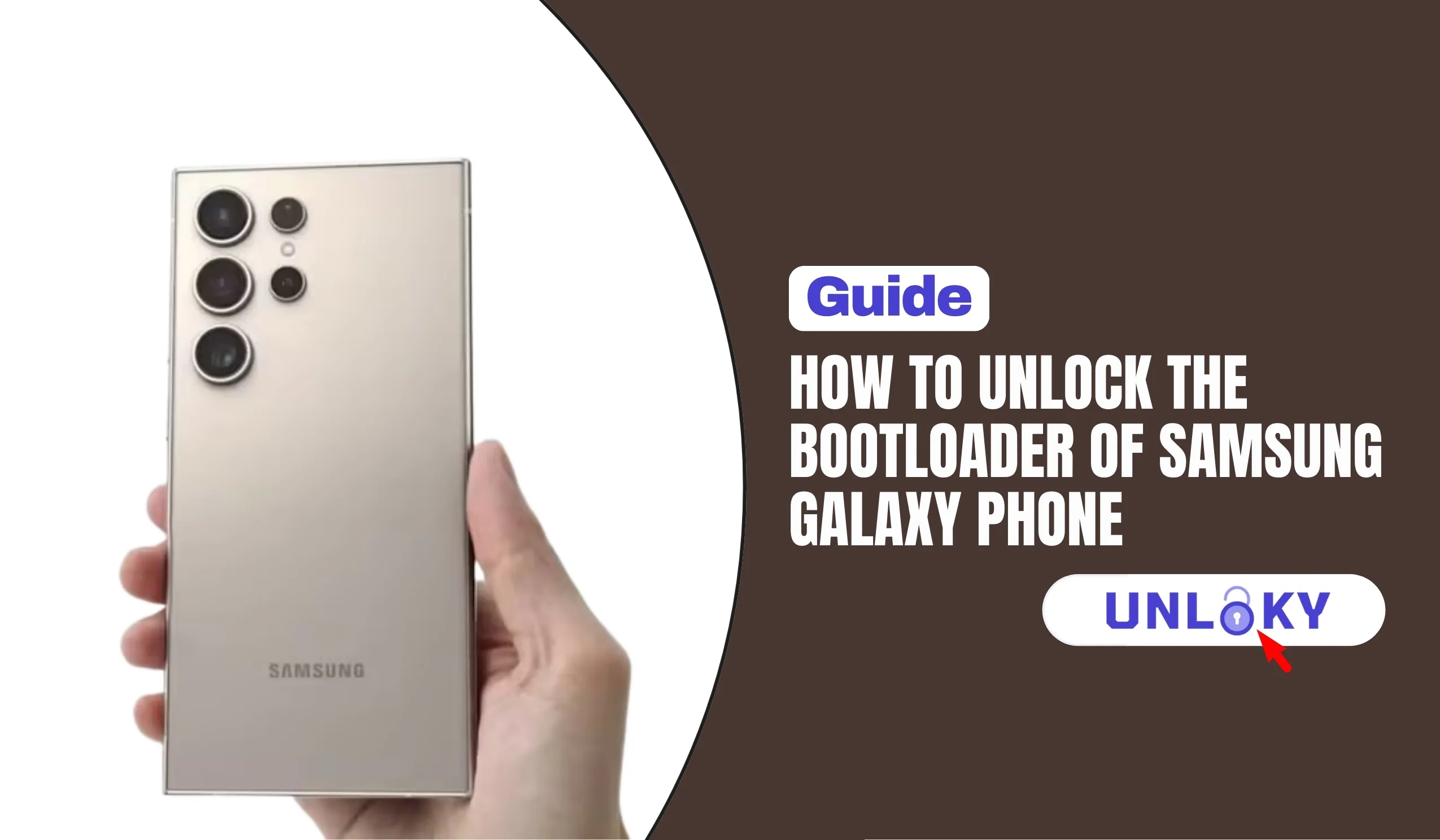
If you have ever searched for how to unlock the bootloader of Samsung Galaxy, you probably want more control over your phone. Maybe you want to root it. Maybe you want to install a custom ROM. Or maybe you simply want to explore what your device can really do.
Unlocking the bootloader is the first big step. But it is also a serious step. It can erase your data. It may void your warranty. And if done the wrong way, it can cause problems.
In this guide, I will explain everything in simple words. You will learn what a bootloader is, why people unlock it, the risks involved, and the exact steps to unlock the bootloader on most Samsung Galaxy phones.
Let’s start from the basics.
It depends on your device and software version. If your Samsung Galaxy runs One UI 7.x or below and is an international (non-US) model, you can still unlock the bootloader through Developer Options → OEM Unlocking. However, Samsung has removed bootloader unlocking entirely from One UI 8 (released mid-2025), which means newer devices like the Galaxy Z Fold 7, Z Flip 7, and devices updated to One UI 8 can no longer be unlocked — no matter what region you’re in. US carrier models have been locked for years already.
What Is a Bootloader & Why Would You Unlock It?
Think of the bootloader as the “gatekeeper” of your Samsung phone. It’s the very first piece of software that runs when you power on your device. Its job is simple: verify that the operating system is legitimate, then load it into memory so your phone can start up properly.
By default, Samsung locks this bootloader down. That means your phone will only boot Samsung’s official firmware — nothing else. Unlocking the bootloader removes this restriction, giving you the freedom to install custom operating systems, gain root (administrator) access, and modify your phone at the deepest software level.
Run alternative Android versions like LineageOS, Pixel Experience, or crDroid on your Samsung device.
Gain full admin control over your device using tools like Magisk. Remove bloatware, tweak system settings, and more.
Install custom kernels for better battery life, improved performance, or advanced CPU/GPU tuning.
Keep your phone alive with community updates long after Samsung drops official support.
Things to Know Before You Start
Unlocking the bootloader triggers a full factory reset. All your photos, apps, messages, and settings will be wiped. Back up everything first — there’s no way around this.
Samsung devices have a hardware-level “Knox counter” (often called an e-fuse). Once you unlock the bootloader, this counter trips from 0x0 to 0x1 — permanently. You cannot reverse it, even if you re-lock the bootloader later. Samsung and carriers can detect this, and your warranty claim will likely be denied.
One UI 8 Update: What Changed in 2025?
This is the biggest shake-up in Samsung’s bootloader history. In July 2025, when Samsung launched One UI 8 (based on Android 16), the community discovered that the “OEM Unlocking” toggle had quietly vanished from Developer Options.
After digging into the firmware code, developers on XDA Forums found something even worse: Samsung didn’t just hide the toggle — they stripped out all the bootloader unlock code entirely. The firmware now sets androidboot.other.locked=1 for every region, and the actual unlock logic has been removed during compilation.
Here’s What This Means in Practice:
Devices shipped with One UI 8 — like the Galaxy Z Fold 7 and Z Flip 7 — cannot have their bootloaders unlocked at all. Devices that update to One UI 8, including the Galaxy S25 series, S24 series, and others, will also lose this ability. There are even reports of already-unlocked bootloaders getting automatically re-locked after updating to One UI 8 internal builds.
The likely reason? A combination of security hardening and compliance with EU Directive 2014/53/EU, which places new cybersecurity requirements on device manufacturers selling in Europe.
Because the unlock code is completely removed from the bootloader binary, there’s no way to brute-force it open. The only way bootloader unlocking returns is if Samsung adds the code back in a future update — which, honestly, seems unlikely.
Bootloader Unlock: Complete Comparison
Not all Samsung Galaxy phones are treated equally. Here’s a clear breakdown of which devices can and can’t have their bootloaders unlocked, based on region, carrier, and software version.
| Device / Scenario | OEM Unlock Available? | Bootloader Unlockable? | Notes |
|---|---|---|---|
| International Model (Pre-One UI 8) | Yes | Yes | Full support. Works via OEM Unlock toggle. |
| International Model (One UI 8+) | Removed | No | Toggle removed, unlock code stripped from firmware. |
| US Carrier Model (Any) | No | No | Locked since 2015+. No known workaround. |
| US Unlocked Model (Pre-One UI 8) | No | No | US firmware blocks OEM unlock regardless. |
| Galaxy Z Fold 7 / Z Flip 7 | Removed | No | Ships with One UI 8. Confirmed locked globally. |
| Galaxy S25 Series (One UI 8 Beta) | Removed | No | Beta builds confirm toggle removal. |
| Galaxy S24/S23 (One UI 7 or below) | Yes* | Yes* | *International models only. Will lose this if updated to One UI 8. |
| Google Pixel (for comparison) | Yes | Yes | Still fully supported with fastboot. |
| OnePlus / Nothing (for comparison) | Yes | Yes | Still supported on most models. |
Method 1: OEM Unlock (Without PC)
This is the simplest and most reliable way to unlock the bootloader on a supported Samsung Galaxy device. No computer needed — you do everything directly on the phone.
International Samsung Galaxy phones running One UI 7.x or earlier (Android 15 or earlier). Does NOT work on US carrier/unlocked models or any device running One UI 8.
📱Step-by-Step: OEM Unlock on Samsung Galaxy
Difficulty: Easy · Time: ~10 minutes · No PC required
Step 1: Enable Developer Options: Go to Settings → About Phone → Software Information. Tap on “Build Number” exactly 7 times. You’ll see a toast message saying “You are now a developer!”
Step 2: Enable OEM Unlocking: Go back to Settings → Developer Options. Scroll down and find “OEM Unlocking”. Toggle it on. You may be asked to enter your PIN/password to confirm. If this toggle is missing or grayed out, your device doesn’t support bootloader unlocking.
Step 3: Note about the 7-day waiting period: On some devices, the OEM Unlocking toggle may be grayed out for up to 7 days after you first set up a Google account or Samsung account. This is a security measure. Just wait it out and try again.
Step 4: Power off your phone completely. Wait a few seconds to make sure it’s fully off.
Step 5: Enter Download Mode: Press and hold Volume Up + Volume Down simultaneously, then connect the USB cable to your PC (or charger). You’ll see a warning screen. Press Volume Up to continue to Download Mode.
Step 6: Unlock the bootloader: On the warning/bootloader screen, long-press the Volume Up button to unlock the bootloader. Your phone will display a confirmation message. The device will factory reset and reboot.
Step 7: Complete initial setup WITH internet: This is critical. After the reboot, go through the initial setup wizard and connect to Wi-Fi or mobile data. This step disables Samsung’s VaultKeeper service, which would otherwise re-lock your bootloader. More on this below.
Method 2: Using ADB & Odin (With PC)
If you prefer using a computer, or if you’re already planning to flash custom firmware, this method combines ADB commands with Samsung’s Download Mode. Keep in mind that Samsung doesn’t use standard Android Fastboot — they use their own proprietary system called Download Mode with the Odin flashing tool.
Unlike Google Pixel or OnePlus phones, Samsung devices do not have a traditional Fastboot mode. The standard fastboot oem unlock command won’t work on most Samsung phones. Samsung uses its own Download Mode and the Odin tool for firmware flashing.
💻Step-by-Step: ADB + Download Mode Method
Difficulty: Intermediate · Time: ~20 minutes · PC required
Step 1: Install Samsung USB Drivers on your Windows PC. Download them from Samsung’s official developer site. Mac and Linux usually work without extra drivers.
Step 2: Install ADB (Android Debug Bridge) on your computer. Download the Android SDK Platform Tools from Google’s official site and extract them to a folder like C:\platform-tools.
Step 3: Enable Developer Options + OEM Unlocking + USB Debugging on your Samsung device (same as Method 1, Steps 1-2, plus enable “USB Debugging” in Developer Options).
Step 4: Connect your phone to the PC with the USB cable. Approve the USB debugging prompt on your phone if it appears.
Step 5: Open a command prompt in the platform-tools folder. Type adb devices and press Enter to verify your phone is detected. You should see your device’s serial number listed.
Step 6: Reboot into Download Mode via ADB: type adb reboot download and press Enter. Your phone will reboot into Samsung’s Download Mode.
Step 7: Unlock the bootloader: On the Download Mode warning screen, long press Volume Up to unlock the bootloader. Confirm when prompted. Your phone will wipe all data and reboot.
Step 8: Complete setup with internet (same as Method 1, Step 7) to handle VaultKeeper.
Useful ADB Commands:
adb devices # Check connected devices
adb reboot download # Boot into Download Mode
adb reboot recovery # Boot into Recovery Mode
adb reboot bootloader # Boot into Bootloader (non-Samsung)
fastboot oem unlock # Standard unlock (NOT for Samsung)
fastboot flashing unlock # Newer unlock (NOT for Samsung)
Dealing With Samsung’s VaultKeeper
Here’s something many guides skip, but it’s really important. Samsung has a service called VaultKeeper that acts as a second lock on top of OEM unlocking. After you unlock the bootloader and your phone factory resets, VaultKeeper can automatically re-lock the bootloader if you don’t handle the initial setup correctly.
The fix is straightforward: after your phone reboots post-unlock, go through the initial Android setup wizard and connect to Wi-Fi or mobile data during the process. Once connected, VaultKeeper will communicate with Samsung’s servers and update the bootloader status from “locked” to “unlocked.” This was pointed out by Magisk creator John Wu, and skipping this step has caused headaches for a lot of people.
Once VaultKeeper confirms the unlock status, you’re safe to proceed with flashing Magisk, TWRP, custom ROMs, or whatever you had in mind.
Risks & What You’ll Lose
Let’s be real about the downsides. Unlocking your bootloader isn’t a casual decision. Here’s what actually happens:
Samsung’s Knox security counter permanently trips. Any warranty or insurance claim involving software will almost certainly be denied.
Samsung Pay checks Knox integrity. Once the bootloader is unlocked, it stops working and there’s no way to bring it back on that device.
Apps using Play Integrity API (formerly SafetyNet) may refuse to work. Some banking and payment apps will detect the unlocked bootloader.
Samsung’s Secure Folder relies on Knox. It becomes permanently unavailable after bootloader unlock.
The unlocking process performs a complete factory reset. Everything not backed up externally is gone forever.
Official Samsung updates may fail, behave unpredictably, or even re-lock your bootloader if you’re not careful.
Alternatives if Bootloader Unlock Isn’t Available
If you’re stuck on a US model or a One UI 8 device and can’t unlock the bootloader, here are some options:
🔀What Are Your Options?
When Samsung won’t let you unlock
Switch to Google Pixel: Pixel phones still fully support bootloader unlocking via fastboot. If custom ROMs and rooting are important to you, this is the most straightforward path in 2026.
Consider OnePlus or Nothing: Both brands still support bootloader unlocking on most of their devices. OnePlus has a particularly strong custom ROM community.
Stay on One UI 7: If you currently have bootloader unlock capability, do not update to One UI 8. Block OTA updates and keep your current firmware to preserve the ability.
Use ADB without root: Many things people root for — like uninstalling bloatware, changing defaults, and tweaking permissions — can actually be done via ADB commands over USB without an unlocked bootloader.
Check for Sony Xperia: Sony still offers an official bootloader unlock program through their developer website for most Xperia models.
It depends on your model, region, and software version. International Samsung Galaxy phones running One UI 7.x or earlier can still unlock the bootloader through the OEM Unlocking toggle in Developer Options. However, US carrier models have been locked for years, and with One UI 8 (released mid-2025), Samsung has removed bootloader unlocking globally — even for international models. If your phone already runs One UI 8, there is currently no way to unlock the bootloader. If you’re on an older firmware version, you can still do it by enabling OEM Unlocking and booting into Download Mode.
On a supported device: Go to Settings → About Phone → Software Information and tap “Build Number” 7 times to enable Developer Options. Then go to Settings → Developer Options and toggle on “OEM Unlocking.” Power off the phone, then hold Volume Up + Volume Down and plug in a USB cable to enter Download Mode. Long-press Volume Up to unlock the bootloader. The phone will factory reset. After rebooting, complete the setup with an internet connection to disable VaultKeeper. That’s it — your bootloader is now unlocked and you can flash custom recoveries and ROMs.
There is no universal “master unlock code” for Samsung Galaxy phones. This is a common misconception. Bootloader unlocking is done through the OEM Unlock setting and Download Mode, not through a dialer code. If you’re thinking of carrier unlocking (to use your phone on different networks), that requires contacting your carrier or using an unlock service — and that’s a completely different process from bootloader unlocking. Some older Samsung phones used generic codes like *2767*3855# for factory resets, but these don’t unlock bootloaders.
If you mean carrier unlock (so you can use a different SIM card), the free way is to contact your carrier directly. Most carriers — like AT&T, T-Mobile, and Verizon — will unlock your phone for free if you’ve met their requirements (paid off the device, account in good standing, etc.). There’s no secret dialer code that magically unlocks a Samsung phone from its carrier. For bootloader unlocking, it’s free by default on supported devices — just enable OEM Unlocking in Developer Options. No code or payment needed.
The code *#7353# opens Samsung’s Quick Test Menu (also known as the hardware diagnostic menu). It’s a hidden tool used by repair technicians and service center engineers to test various hardware components on your phone — including the display, speakers, vibration motor, camera, touch screen, sensors, and LED. It’s completely safe to access and doesn’t change any settings. You just dial it like a phone number and the test menu opens. It has nothing to do with bootloader unlocking or carrier unlocking.
Dialing *#9900# on a Samsung phone opens the SysDump (System Dump) mode. This is a diagnostic tool that lets advanced users and developers access system logs, toggle various logging functions, and create system dumps for troubleshooting. It can be used to troubleshoot issues related to network connectivity, battery drain, and overall performance. One popular use is to delete old system logs that accumulate over time and take up storage space. This code is intended for advanced users — if you don’t know what the options mean, it’s best to leave them alone, as changing settings here could affect your device’s behavior.
Your trusted source for phone unlocking guides, carrier policies & device tips.
Unlocking your bootloader voids your Samsung warranty and trips the Knox security counter permanently. This guide is for educational purposes only. Proceed at your own risk. We are not responsible for any damage, data loss, or bricked devices. Always back up your data before making any modifications.