
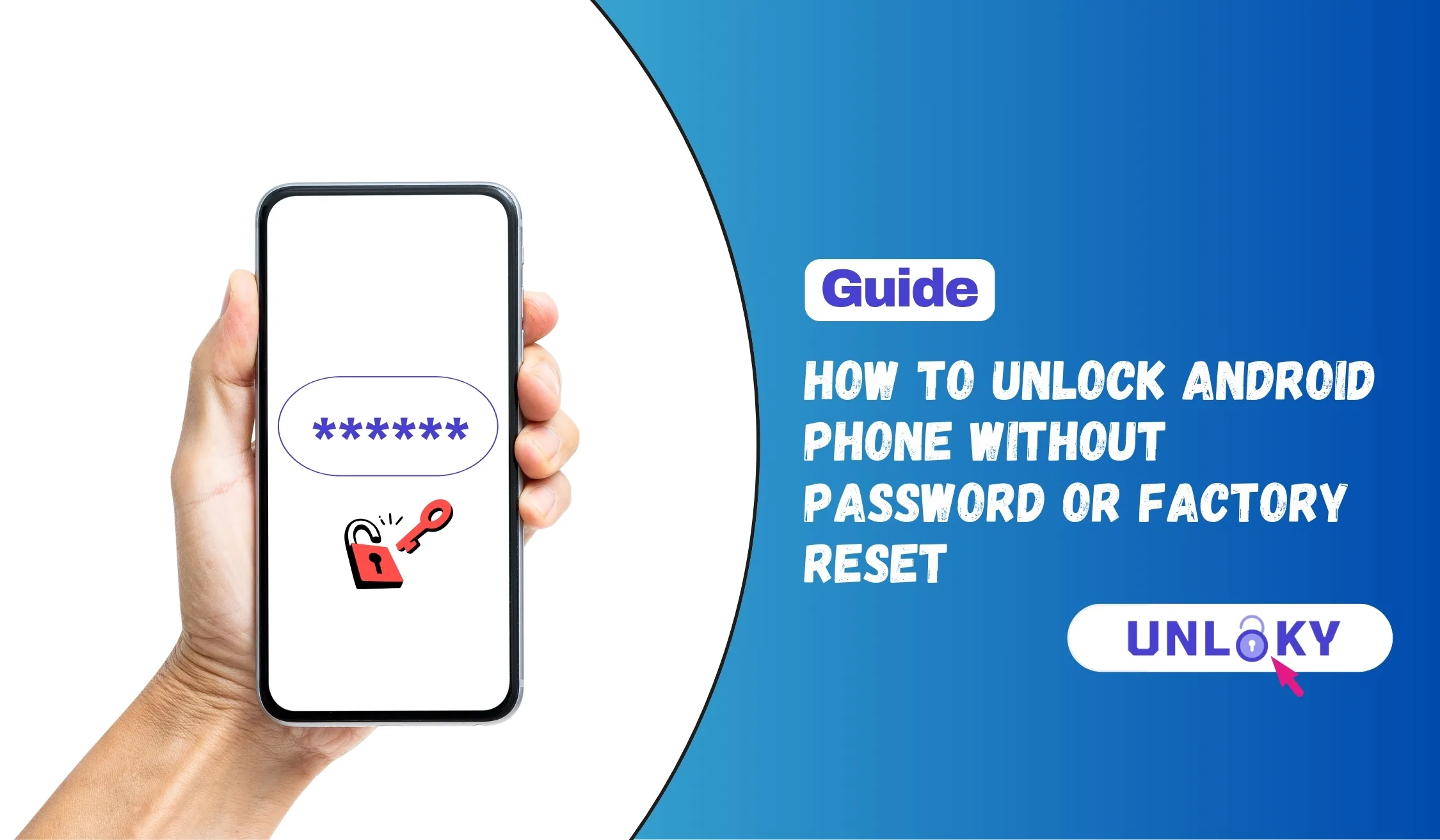
Locked out of your Android device? Don’t panic! This complete guide covers 7 proven methods to regain access without losing your precious data through a factory reset.
TL;DR – Quick Answer
The fastest way to unlock your Android without a factory reset depends on what you set up beforehand. If you enabled Google Find My Device, use it to remotely set a new lock screen password. Samsung users can tap into Find My Mobile to unlock remotely without losing data. If you configured Smart Lock (Extend Unlock), simply go to a trusted location or connect to a trusted Bluetooth device.
No prior setup? You may still bypass the lock using ADB commands (if USB debugging was enabled) or the “Forgot Pattern” option on Android 4.4 and older. As a last resort, a factory reset through Recovery Mode will get you back in—but you’ll lose local data.
Google Find My Device
Samsung Find My Mobile
Smart Lock / Extend Unlock
ADB Commands
Why This Happens (And You’re Not Alone)
Getting locked out of your Android phone is more common than you’d think. Maybe you recently changed your PIN and can’t remember it. Perhaps your kid entered the wrong pattern too many times. Or you grabbed a second-hand device without knowing the previous owner’s password.
Whatever the reason, most people immediately think a factory reset is their only option. But here’s the good news: depending on your situation, there are several ways to unlock your Android without erasing everything.
Several methods let you keep your photos, contacts, and apps intact
Most methods take just 5-15 minutes to complete successfully
Works with Samsung, Google Pixel, OnePlus, Xiaomi, and more
Method Comparison Table
Not every method works for every situation. Here’s a quick breakdown to help you find what works for your specific case:
| Method | Data Loss | Requirements | Difficulty | Android Version |
|---|---|---|---|---|
| Google Find My Device | No | Google account linked, internet on | Easy | Android 5.0+ |
| Samsung Find My Mobile | No | Samsung account set up | Easy | All Samsung |
| Smart Lock (Extend Unlock) | No | Pre-configured before lockout | Easy | Android 5.0+ |
| Forgot Pattern (Google) | No | Google account credentials | Easy | Android 4.4 or lower |
| ADB Commands | No | USB debugging enabled, computer | Medium | Android 7.1 or lower |
| Backup PIN | No | Backup PIN set during setup | Easy | All versions |
| Safe Mode (Third-Party Apps) | No | Third-party lock screen app | Easy | All versions |
| Factory Reset (Recovery Mode) | Yes | None | Medium | All versions |
Android security has improved significantly over the years. Methods that worked on older Android versions may not work on newer ones. Google has intentionally patched many bypass techniques to protect your data from unauthorized access.
7 Proven Methods to Unlock Your Android
Let’s dive into each method in detail. Start with the first applicable method for your situation and work your way down if needed.
Google Find My Device
Best for most Android users • No data loss
Android 5.0+
Remote Access
Free
Google’s Find My Device (previously Android Device Manager) is your best friend when locked out. If your phone is connected to the internet and linked to your Google account, you can remotely set a new password from any browser.
How to Use Find My Device:
Samsung Find My Mobile
Samsung Galaxy exclusive • Remote unlock
Samsung Only
No Data Loss
Free
Samsung users have an extra advantage. Samsung’s Find My Mobile service includes a “Remote Unlock” feature that removes the screen lock entirely without erasing your data—something Google’s version doesn’t offer.
How to Use Samsung Find My Mobile:
Unlike other methods, Samsung’s Remote Unlock removes all screen locks (PIN, pattern, password, biometrics) without affecting any data. It’s the cleanest solution for Samsung Galaxy owners.
Smart Lock / Extend Unlock
Automatic bypass in trusted conditions
Android 5.0+
Pre-Setup Required
Instant
Smart Lock (renamed to “Extend Unlock” on newer Android versions) automatically keeps your phone unlocked under certain trusted conditions. If you set this up before getting locked out, it might just save you without any extra steps.
Smart Lock Options That Can Help:
To access Smart Lock/Extend Unlock settings: Go to Settings > Security & Privacy > More Security Settings > Extend Unlock. Configure trusted places, devices, or on-body detection to prevent future lockouts.
Forgot Pattern / Google Account
Classic method for older devices
Android 4.4 or Lower
Google Account
No Data Loss
If you’re using an older Android device (version 4.4 KitKat or earlier), there’s a built-in “Forgot Pattern” feature. After several failed unlock attempts, you’ll get the option to sign in with your Google account to reset the lock.
How to Use Forgot Pattern:
To access Smart Lock/Extend Unlock settings: Go to Settings > Security & Privacy > More Security Settings > Extend Unlock. Configure trusted places, devices, or on-body detection to prevent future lockouts.
ADB (Android Debug Bridge)
Technical method for developers
USB Debugging Required
Computer Needed
Advanced
If USB debugging was enabled on your phone before you got locked out, you can use ADB commands to delete the password files directly. This is more technical but preserves your data.
How to Use ADB:
adb devices to verify connectionadb shell rm /data/system/gesture.key (for pattern lock)adb shell rm /data/system/password.key (for PIN/password)Safe Mode (Third-Party Lock Screens)
Bypass third-party lock apps
All Android Versions
Third-Party Apps Only
Easy
If your lock screen is from a third-party app (not the built-in Android lock), you can boot into Safe Mode. This disables all third-party apps, including the lock screen, letting you uninstall it and regain access.
How to Boot Into Safe Mode:
This method only bypasses lock screens from downloaded apps (like AppLock or Lock Screen apps from the Play Store). It will NOT bypass the native Android lock screen set through Settings.
Factory Reset via Recovery Mode
Last resort • Erases all data
All Devices
Data Loss
Always Works
If nothing else works, a factory reset through Recovery Mode will definitely get you back into your phone. The downside? Everything not backed up to the cloud will be erased. Use this as your absolute last option.
How to Factory Reset via Recovery:
After factory reset, you’ll likely face Factory Reset Protection (FRP). You’ll need to sign in with the Google account previously linked to the device. If you don’t know these credentials, the phone may remain locked.
Pro Tips to Prevent Future Lockouts
Now that you’ve (hopefully) regained access, here’s how to make sure this never happens again:
Prevention Checklist
Set up trusted places (home, office) and trusted devices (smartwatch, car)
Fingerprint and face unlock provide convenient backup access
Keep your Google and Samsung accounts signed in and updated
Enable Google Photos backup and Google One for automatic cloud saves
Store your PINs and passwords securely for reference
This is enabled by default—don’t turn it off!
Yes, in many cases! Methods like Google Find My Device, Samsung Find My Mobile, Smart Lock, and the Forgot Pattern feature (on older devices) allow you to unlock without data loss. The key is having the right features set up beforehand. If none of these options work, you may need a factory reset which will erase local data.
Find My Device may not work if: your phone is turned off, it’s not connected to internet (Wi-Fi or mobile data), the Google account isn’t signed in, or the feature was manually disabled. Make sure your phone has battery and a network connection. If it’s offline, the lock command will execute once it reconnects.
Despite what you might read online, there are no universal “secret codes” that magically unlock Android devices without data loss. Codes like *2767*3855# actually trigger a factory reset, which erases everything. Google has patched most exploits over the years to improve security. Stick to the legitimate methods outlined in this guide.
FRP is designed to prevent unauthorized use after a factory reset. If you’re the legitimate owner, you simply need to sign in with the Google account that was previously linked to the device. If you bought a used phone with FRP lock, contact the previous owner to remove their account remotely via Google account settings.
They’re the same feature! Google rebranded “Smart Lock” to “Extend Unlock” on newer Android versions (Android 14+). The functionality remains identical—keeping your phone unlocked when it’s in trusted locations, connected to trusted devices, or detecting that it’s on your body.
Using official methods like Google Find My Device, Samsung Find My Mobile, or factory reset won’t void your warranty. These are manufacturer-supported features. However, using third-party unlocking tools, rooting, or custom recovery methods could potentially affect your warranty status depending on your manufacturer’s policies.
If your phone is online and connected to Wi-Fi or mobile data, the lock command typically executes within 30 seconds to 2 minutes. Google’s servers push the new password to your device in real-time. If the phone is offline, the command will be queued and executed when connection is restored.
Final Thoughts
Getting locked out of your Android phone is stressful, but it doesn’t have to mean losing all your data. The key takeaway? Prevention is always better than cure. Take 5 minutes right now to set up Smart Lock, verify your Google and Samsung accounts are linked, and enable automatic cloud backups.
If you’re currently locked out, start with Google Find My Device or Samsung Find My Mobile—these are your best bets for preserving data. Work through the methods in order, and only resort to factory reset when absolutely necessary.
Remember: Android security has become increasingly robust over the years. While this can make unlocking more challenging, it’s ultimately protecting your personal information from unauthorized access. These security features are there for good reason.
Take a moment to set up Smart Lock, add your fingerprint, and ensure your Google account recovery options are up to date. Future you will be grateful!
Disclaimer:
The methods described in this article are intended for legitimate use by device owners who are locked out of their own phones. Using these techniques to access devices you don’t own is illegal and unethical. Always ensure you have the right to access the device before attempting any unlock method.