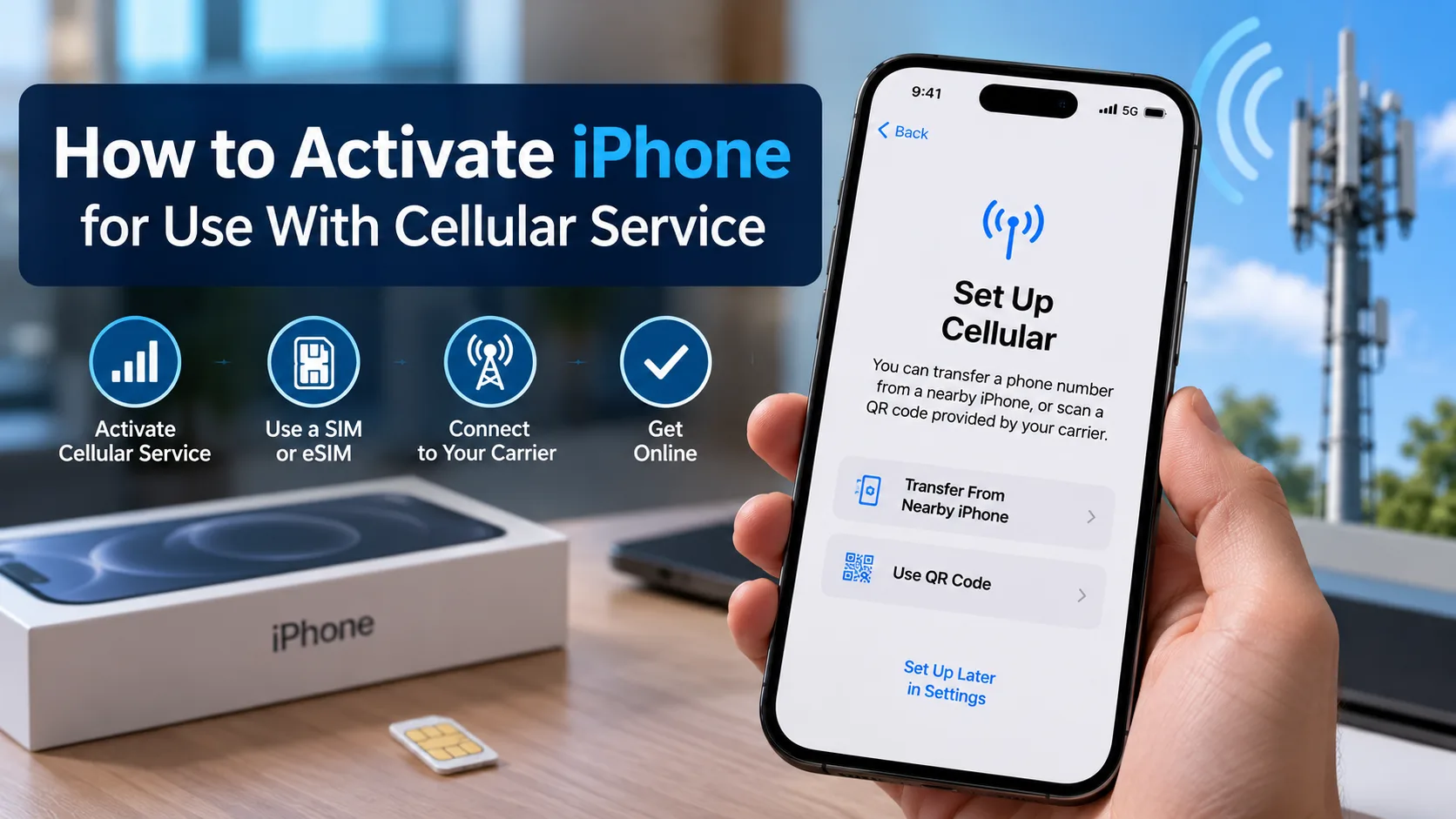


If you’ve ever popped a new SIM into your phone and saw the message “Enter network unlock code,” you’ve already met one of the most confusing parts of mobile life. Many people think it’s the same as a password, PUK, or screen PIN. It’s not. A network unlock code (often called NUC, NCK, or SIM network unlock PIN) is a one-time code that removes your carrier’s lock so your phone can use SIM or eSIM service from other carriers—at home or while traveling. In this guide, I’ll explain exactly what it is, why carriers lock phones, where the code comes from, how to get it legally, how to use it on Android and iPhone, and what to do if things go sideways.
This is written in simple, clear language without fluff. You’ll learn how to tell the difference between a network unlock and other codes like PUK, PIN, or screen passwords. You’ll also get step-by-step tips for common carriers, plus troubleshooting for Samsung “MCK” defreeze issues, iPhone “No SIM Supported,” eSIM conversions, and dual-SIM phones. By the end, you’ll know exactly how to unlock the right way.
Key Takeaways
- A network unlock code (NCK) removes the carrier lock so your phone can use SIM or eSIM from other carriers; it’s different from a PUK, SIM PIN, or screen password.
- iPhones don’t use a typed code—your carrier updates Apple’s server; on Android you usually enter an 8–16 digit NCK (and some Samsungs may also need an MCK “defreeze” if too many wrong tries were made).
- Unlocking is legal but requires eligibility: the phone must be paid off, active long enough, in good standing, and not reported lost or stolen; request the unlock with your IMEI.
- Unlocking doesn’t erase data or change your plan, but it also doesn’t add missing 4G/5G bands or guarantee features like Wi-Fi Calling—install carrier settings/APN and check device-band compatibility.
- Quick process: verify lock status → find IMEI (*#06#) → request unlock from your carrier → enter NCK (Android) or refresh activation (iPhone) → test calls, texts, data, and 5G.
First Things First — What a Network Unlock Code Really Is
A network unlock code is a one-time pass that disables your phone’s carrier lock. When a phone is “locked,” it only works with the network that sold it. After you enter the correct code (or complete an official unlock request), the lock is removed and the phone accepts other carriers’ SIM or eSIM profiles.
On Android, the code is usually an 8- or 16-digit NCK (Network Control Key). On some Samsung devices, you may also see an MCK (Master Code Key) when too many wrong tries have been made. On iPhone, you rarely type a code; instead, Apple flips your device’s activation status on Apple’s server after your carrier approves the unlock. You then restore or insert a new SIM, and it just works.
Think of it like removing a bike lock. The bike (your phone) can ride anywhere after you remove the lock. But until you unlock it, you’re stuck to one rack (your original carrier).
Why Carriers Lock Phones (and Why Unlocking Is Legal)
Carriers lock phones to protect device financing and to keep customers on their network for a minimum period. It’s normal and not a scam. The good news: unlocking is legal. If your phone is paid off and meets your carrier’s policy, you can request an unlock. Different carriers have different rules—like time limits, account standing, and “not reported lost or stolen.”
Unlocking doesn’t change your plan, wipe your data, or harm your phone. It only removes the network restriction. Once unlocked, you can:
- Use a local SIM or eSIM when you travel for cheaper data and calls.
- Switch to another carrier that offers better coverage or price.
- Resell your phone more easily and at a better price.
📖 Also Read: AT&T Unlocked Phones Made Easy: IMEI Check, Wi-Fi Calling, 5G
Network Unlock vs PUK vs PIN vs Screen Password — Don’t Mix Them Up
Lots of people confuse these. Here’s the clean version:
- Network Unlock Code (NUC/NCK/SIM Network Unlock PIN): Removes the carrier lock so the phone works with other networks. One-time code from the carrier or OEM database.
- PUK (Personal Unblocking Key): Comes from the SIM card’s operator to recover a SIM after you entered the SIM PIN wrong too many times. It does not unlock your phone for other carriers.
- SIM PIN: Optional 4-8 digit code you can add to secure the SIM itself. It’s your choice, not related to network unlock.
- Screen Lock (PIN/Pattern/Password/Face/Touch): Protects the phone from unauthorized access. Not related to carrier unlock.
- Apple ID / Google Account Password: Cloud account security. Not related to network unlock.
- FRP / Activation Lock: Theft protection after a reset. Not related to carrier unlock.
If your phone asks for a network unlock code, a PUK or screen password will not help. You need the real NCK from the carrier (or an official server-side unlock for iPhone).
How to Check If Your Phone Is Locked
Simple Test with a Different SIM
The fastest way is to insert a SIM from another carrier. If the screen says something like “Enter network unlock code” or “SIM not supported”, it’s locked. If it connects and you can call/text/data, it’s likely unlocked.
Check in Settings
Some Android models show “Network locked” or “Service provider lock” in Settings > About phone > Status. iPhone shows a Network Provider Lock status in Settings > General > About. “No SIM restrictions” means unlocked.
Ask Your Carrier
Carriers can tell you the lock status from your IMEI (the phone’s unique ID). You’ll find IMEI in Settings or by dialing *#06#.
📖 Also Read: Unlock a Samsung Phone You Forgot the Password To—Without Losing Data
The Official Way to Get Your Network Unlock Code
Carriers generate NCKs from the manufacturer’s database tied to your IMEI. That’s why unlocks are account- and device-specific. The steps look like this:
- Confirm Eligibility
Make sure the phone is paid off, active long enough (varies by carrier), and not flagged lost, stolen, or fraudulent. - Find Your IMEI
Dial *#06# or check Settings. If you have dual-SIM, you might see two IMEIs. Use the one tied to the line you’re unlocking. - Request the Unlock
Use your carrier’s official portal or app, or call support. Provide your IMEI. For iPhone, they’ll flip your status on Apple’s server. For Android, they’ll provide a code or push an unlock to your phone. - Complete the Process on the Phone
- Android: Insert a non-original SIM. When prompted, enter the NCK. If you see “MCK required,” you’ll need the defreeze code from the carrier because too many wrong attempts were made before.
- iPhone: After carrier approval, insert a different SIM or connect to Wi-Fi and go to Settings > General > Transfer or Reset > Reset Network Settings, or do a quick iTunes/Finder restore if needed. No code entry.
- Test Calls, Texts, Data, and 5G
Make a phone call, send an SMS, and try data. Turn on Wi-Fi calling if your new carrier supports it.
Android vs iPhone — How Unlocking Actually Works
Android (Samsung, Google, Motorola, etc.)
Most Android phones use a numeric NCK. You type it once when the phone sees a different carrier SIM. Some carriers have an unlock app or push a server unlock when eligibility is met. Samsung adds an extra safety layer: if the wrong code is entered too many times, the device may require an MCK “defreeze” before it accepts the correct NCK. Only your carrier (through Samsung’s database) can provide the right MCK.
iPhone (All Models)
There’s usually no code to type. Your carrier updates Apple’s activation server. After approval, insert a different carrier’s SIM or refresh activation. The device queries Apple, sees “unlocked,” and accepts any supported carrier. If you still see “SIM Not Supported”, refresh activation with Wi-Fi, reset network settings, or connect to a computer and perform a quick restore.
Common Carrier Rules in Plain English
Carrier policies change, but the core ideas stay stable:
- Pay off the phone. No outstanding device balance.
- Wait period. Many carriers require the phone to be active for a number of days on their network.
- Good standing. No fraud flags, chargebacks, or “lost/stolen” reports.
- Account match. The IMEI must be linked to your account history.
If you bought your device directly from the manufacturer (like Apple or Google) or an “unlocked” version from retail, it often ships already unlocked. If you bought it discounted from a carrier, it’s usually locked until you meet their requirements.
How to Enter a Network Unlock Code on Android
- Power off the phone.
- Insert a SIM from another carrier.
- Power on.
- When you see “SIM network unlock PIN” or “Enter Network Unlock Code,” type the NCK provided by your carrier.
- If you see “MCK required” or “PUK” messages, pause and confirm which code is needed:
- MCK: Get the defreeze code from the carrier if the unlock counter is blocked (too many wrong tries).
- PUK: This is for a locked SIM, not the network lock; contact the SIM’s carrier for the PUK.
If it accepts the NCK, the phone shows “Network Unlock Successful.” Reboot and test service.
iPhone Unlock Completion Steps
- Back up your iPhone.
- Insert a different carrier’s SIM or, if staying on eSIM, scan a new eSIM from another carrier after approval.
- Connect to Wi-Fi and wait a few seconds for activation to refresh.
- If you still see “SIM Not Supported,” do Settings > General > Transfer or Reset > Reset > Reset Network Settings, then reconnect to Wi-Fi.
- If needed, connect to a computer and run a quick restore to force a new activation check.
Once complete, the Network Provider Lock field will show “No SIM restrictions.”
📖 Also Read: Amazon Unlocked Phones: The Complete 2025 Buyer’s Guide
eSIM, Dual-SIM, and the Unlock Code
Modern phones support dual-SIM with any combination of physical SIM and eSIM. The unlock applies to the device, not only the card slot. After a successful unlock:
- You can use any carrier’s physical SIM or eSIM profile.
- On dual-SIM phones, both lines can be from different carriers.
- If one IMEI was provisioned while locked, and you’re adding a new eSIM after unlock, it will still work; activation data checks the device’s current unlocked status.
If a second line fails to activate, refresh network settings or contact the new carrier to re-push the eSIM.
Troubleshooting — Real Problems and Real Fixes
“Network Unlock Request Unsuccessful”
Double-check the NCK. Confirm IMEI. Some devices have more than one IMEI; you might be using the wrong one. Ask the carrier to re-verify and reissue the code.
Samsung Asks for MCK/Defreeze
This happens after too many wrong NCK attempts. You need the MCK from the carrier. Enter MCK first, then the correct NCK. Don’t guess codes; it can permanently block the counter.
iPhone Shows “SIM Not Supported”
Wait a few minutes on Wi-Fi. Reset network settings. If it persists, do a quick restore so the activation server revalidates your unlock. If that fails, contact the carrier to confirm the unlock pushed to Apple’s server for your exact IMEI.
PUK Prompt Appears
That’s the SIM’s PUK, which comes from the SIM’s carrier, not your device’s original carrier. This is different from the network unlock. Call the SIM provider (the one on the card in your phone) to get the PUK and unlock the SIM itself.
No 5G or Wi-Fi Calling After Unlock
An unlocked phone can still have feature gaps depending on bands and carrier features. Make sure your device supports the new carrier’s LTE/5G bands. Install the new carrier’s APN or carrier settings update. Some features like Wi-Fi Calling or Visual Voicemail may require a compatible device variant or a plan that includes the feature.
“SIM Not Provisioned” or “No Service”
This usually means the SIM/eSIM isn’t activated. Contact the new carrier to activate or to re-push eSIM. If you brought your number, check the porting status.
Travel Use Case — Why Unlocking Saves Real Money
When you travel, local data can be cheap. Unlocked phones let you buy a local SIM or eSIM for high-speed data at local rates. Instead of paying daily roaming fees, you pay a small amount for a local plan. Many travelers keep their home number on one SIM and use a local data eSIM for mapping, rides, and social apps. That’s the power of an unlocked device.
Will Unlocking Void Warranty or Wipe Data?
No. A proper, carrier-approved unlock does not void your warranty and does not erase your data. You’re not “jailbreaking” or “rooting.” You’re removing a network restriction through the official channel. Always unlock the official way to keep device protection intact.
Beware of “Instant Codes” and Shady Services
You might see websites selling instant codes. Some are fine, many are not. Risks include:
- Wrong or recycled codes that don’t match your IMEI.
- No MCK support if the counter is blocked.
- No help if iPhone activation fails on Apple’s server.
- Stolen or database-scraped IMEIs that could lead to blacklist issues.
The safest route is your carrier. If you bought second-hand and can’t access the original account, use the manufacturer’s or carrier’s official process where supported. If you choose a third-party, pick a reputable service with clear refund terms and real support.
Will My Phone Work on Every Network After Unlock?
Unlocking removes the carrier restriction, but it doesn’t add hardware support for bands your device doesn’t have. Two key factors decide compatibility:
- Bands and Technology
Your device must support the new carrier’s LTE/5G bands. An imported phone might miss a key band used in your area, leading to weak coverage. - Features and Whitelists
Some carriers “whitelist” devices for advanced features like Wi-Fi Calling, VoLTE/VoNR, or Visual Voicemail. Many modern unlocked phones work fine, but check the carrier’s compatibility tool if these features matter to you.
Step-by-Step Summary — From Locked to Unlocked
- Verify lock status with a different SIM or in Settings.
- Locate your IMEI (*#06#).
- Make sure you’re eligible (paid off, in good standing, time on network met).
- Submit an unlock request to your carrier with the IMEI.
- Wait for approval and receive your NCK (Android) or server status update (iPhone).
- Complete on the phone:
- Android: insert different SIM and enter NCK; if MCK appears, get it from carrier then enter NCK.
- iPhone: insert different SIM, refresh activation, reset network settings, or do a quick restore if needed.
- Test service and features on the new carrier.
- Set APN or install carrier settings if data/MMS doesn’t work right away.
Frequently Asked Questions
What exactly is my “network unlock code”?
It’s the one-time numeric code for Android that erases the carrier restriction on your phone. On iPhone, you don’t get a code; your carrier updates Apple’s server so the phone activates as unlocked.
Do I need a network unlock code on iPhone?
No. iPhone unlocks are server-based. After your carrier approves, you insert a new SIM or refresh activation over Wi-Fi. If it still says “SIM Not Supported,” reset network settings or do a quick restore.
Is there a “master code” that unlocks any phone?
No. There is no universal master code. Each IMEI has specific codes in the manufacturer’s database. Entering random codes can block the counter and trigger a Samsung MCK requirement.
What’s the 8-digit Samsung network unlock code?
That’s the NCK. Some Samsung models use 8 digits, others 16. If the phone says “MCK required,” you’ll need the defreeze code from the carrier first, then enter the NCK.
Can I unlock without contacting my carrier?
Sometimes the carrier app can do it automatically if you meet the rules. Otherwise, you’ll need to request through your carrier so the code or server status is correct for your IMEI. Third-party routes exist but come with risks.
Will unlocking erase my data or change my plan?
No. Unlocking only removes the network lock. Your photos, apps, and settings stay. Your plan doesn’t change unless you switch carriers.
Pro Tips for a Smooth, Safe Unlock
- Back up your phone before you start. Unlocking shouldn’t erase data, but good habits matter.
- Use the right IMEI. Dual-SIM phones show two IMEIs; the active slot’s IMEI matters.
- Don’t guess codes. One or two wrong tries can block you and trigger an MCK.
- Keep proof of purchase and account info handy in case the carrier asks.
- After unlocking, update carrier settings/APN and test calls, SMS, data, hotspot, and Wi-Fi Calling.
- Travel smart with eSIM. Many providers offer instant eSIM plans you can activate on arrival.
- Resale value goes up with an unlocked device—keep screenshots or emails as proof.
The Bottom Line
Your network unlock code is the key to freedom. It’s not a PUK, not a screen PIN, and not a magic “master code.” It’s a legitimate, device-specific code or server action that removes your carrier’s lock so your phone can work with other networks. Request it the right way, follow the simple steps for Android or iPhone, and your phone becomes more flexible, more valuable, and more useful wherever you go.