
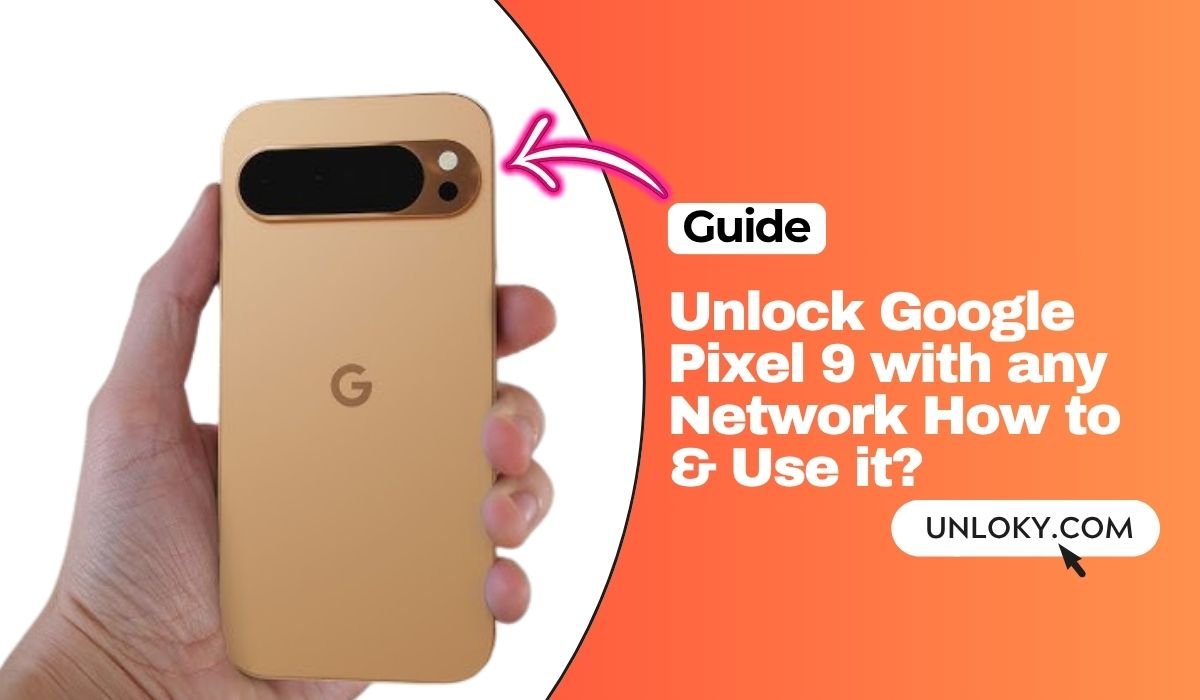
Want your Google Pixel 9 to work on any network? The quickest path is to buy it factory-unlocked from the Google Store or a trusted retailer. If yours came from a carrier, you can usually unlock it for free once you meet their rules: find your IMEI in Settings > About phone, submit an unlock request through the carrier’s portal or support, wait for approval, then restart and insert a different SIM or add an eSIM to confirm.
To use it anywhere, turn on 5G/VoLTE/Wi-Fi Calling, install or convert to eSIM if you want dual lines, and update APN settings so data and MMS work. Always test with a second SIM/eSIM make a call, send a text, and open a webpage.
Remember, unlocking removes only the carrier restriction; it doesn’t clear blacklist or unpaid balances, and you should still check that your Pixel 9 supports the bands your new carrier uses.
Key Takeaways
- Unlocking your Pixel 9 only removes the carrier restriction it won’t clear a blacklist or unpaid balance, so always check your IMEI status before switching networks.
- The most reliable way to unlock is by requesting it directly from your carrier once you meet their eligibility rules, or by purchasing a factory-unlocked Pixel 9 from the start.
- After an unlock, confirm it worked by inserting a SIM or adding an eSIM from another carrier and testing calls, texts, and data right away.
- Even when unlocked, certain features like 5G speeds, VoLTE calling, and Visual Voicemail may behave differently depending on your new carrier’s network support.
- Keep a record of your unlock approval emails, texts, or portal screenshots and keep your software updated to maintain full compatibility with current and future carriers.
What “Unlocked” Really Means on a Pixel 9
Carrier unlock vs. bootloader unlock (they are not the same)
A carrier unlock removes the network restriction so your Pixel 9 can accept any compatible SIM or eSIM. You usually get this from your carrier (or by buying the phone already unlocked). A bootloader unlock is a developer feature that lets you flash custom firmware. It does not remove a carrier lock. Bootloader unlocking can also break things like Google Pay, some banking apps, Widevine HD streaming, and SafetyNet checks and may affect warranty or support. In short: carrier unlock = use any network; bootloader unlock = modify software.
Unlocked from the Google Store vs. carrier-sold devices
Pixel 9 units bought from the Google Store are typically SIM-unlocked out of the box, so you can pop in any supported SIM/eSIM and go. Models bought through carriers often ship locked for a period (e.g., after activation or for a set number of days/payments). Those usually auto-unlock when you meet the carrier’s rules or after you submit an unlock request. Same phone, different sale channel very different lock status.
Why unlocked ≠ blacklist-free or paid-off
“Unlocked” only means there’s no carrier restriction. It does not guarantee the phone is paid off or clean. A device can be unlocked yet still be blocked if it’s reported lost/stolen or tied to fraud/overdue financing (blacklisted IMEI). Blacklisted phones may not work on many networks even if they’re unlocked. Always check IMEI status and confirm the device isn’t under financing before you buy or switch.
What you gain: freedom to switch carriers, use travel eSIMs, better resale
With an unlocked Pixel 9, you can switch carriers, use local or travel eSIMs abroad, and run dual lines (DSDS) to keep your home number while using cheap data on trips. You also get better resale value because more buyers can use the phone. Just remember: features like 5G bands, VoLTE, Wi-Fi Calling, Visual Voicemail, and RCS can vary by carrier so check compatibility and set the correct APN if data/MMS don’t work right away.
Before You Start: Check Status & Eligibility
Find and save your IMEI(s)
Before you do anything, note the phone’s unique ID numbers. On your Pixel 9, go to Settings > About phone to see IMEI (and EID for eSIM). You can also dial *#06# to pop them up instantly, or check the sticker on the box. Save these in a safe place screenshots in Google Photos or a note in Google Keep—because carriers will ask for them during an unlock request and you’ll need them for any blacklist check.
Is your Pixel 9 locked right now?
The fastest test is to try another network. Power off, insert a different carrier’s SIM, then power on; or add a temporary eSIM from another provider. If it’s locked, you may see “SIM not supported,” “Network locked,” or you’ll get signal with no calls/data. If it’s unlocked, it should register on the new network within a minute or two place a quick call, send a text, and open a webpage to confirm.
Clean history check
“Unlocked” doesn’t help if the phone is on a blacklist or still under unpaid financing. Use the IMEI to check status with the carrier or a reputable IMEI checker. A blacklisted device (lost/stolen/fraud) may be barred from service even if it’s unlocked, and financed phones can be re-blocked if payments lapse. Make sure the IMEI is clean and the device is fully paid off to avoid surprises after you switch.
Backups & prep
Before you swap SIMs or request an unlock, back up everything. Turn on Google account sync for contacts, photos, messages, and app data; confirm recent backups in Settings > System > Backup. If you use eSIM, make sure you have the QR code or know how to reissue it from your carrier, since eSIM profiles don’t “back up” like apps. Charge to at least 50% and connect to Wi-Fi so updates, carrier settings, and profile downloads complete smoothly.
The Easiest Path: Buy It Unlocked from Day One
Google Store / Google Fi models
Pixel 9 phones bought directly from the Google Store or as part of a Google Fi plan are typically factory unlocked. That means you can insert any compatible SIM or set up an eSIM right out of the box, without waiting for a carrier to lift restrictions. In some cases—especially with Google Fi—your phone might still need an initial activation on Fi before you can pop in another carrier’s SIM. This is usually quick and doesn’t affect its unlocked status, but it’s worth knowing so you’re not surprised when setting up for the first time.
Retailers (Best Buy/online)
Big-box stores like Best Buy, or online sellers such as Amazon, can sell Pixel 9 models in both locked and unlocked versions. Some listings say “activation required”—which means the store discounts the phone if you activate it on a carrier plan, often adding a temporary lock. To avoid this, look for listings that clearly say “Unlocked” and have no activation conditions in the fine print. When buying online, check the seller’s return policy and confirm the model number matches the unlocked variant for your region.
Pros and cons vs. buying from a carrier
Buying unlocked from day one gives you immediate flexibility—no waiting for eligibility windows, no unlock requests, and freedom to use local SIMs or travel eSIMs abroad. It also avoids carrier-specific firmware tweaks that sometimes hide features like network selection menus. However, carriers may offer discounts, trade-in deals, or financing plans that make the upfront cost lower. The trade-off is you might be locked in for several months, and switching early could mean paying off the full device balance. If flexibility matters most, go unlocked; if cost savings and bundled perks are a priority, a carrier deal might make more sense.
Official Unlock Paths by Carrier (U.S.)
Verizon
Verizon generally locks Pixel 9 devices for 60 days after purchase or activation. After that period, if your account is in good standing (no past-due balance or fraud flags), the phone is automatically unlocked—no request needed. You can confirm by inserting a SIM from another carrier or checking with Verizon support. If 60 days have passed and it’s still locked, contact Verizon via chat or phone with your IMEI handy; they can manually push the unlock through if there’s a system glitch.
AT&T
AT&T requires you to submit an unlock request through its online unlock portal. You’ll enter your IMEI, choose “Customer” or “Non-customer,” and follow prompts. For postpaid accounts, you must have fully paid off the device and kept it active for at least 60 days. Prepaid AT&T phones require six months of paid service before unlocking. Once approved, AT&T emails you with confirmation—on Pixel models, the unlock typically applies instantly and doesn’t require a code. If denied, the email should state the reason so you can resolve it.
T-Mobile
T-Mobile’s policy requires that your Pixel 9 be active on their network for 40 days and fully paid off before they’ll process an unlock. You also need a good account history no past-due bills or fraud holds. The unlock is pushed to your phone’s system over the air, often within minutes of approval. You can request it through the T-Mobile app, website, or by calling customer care at 611. Call: 1-800-937-8997. Common denial reasons include not meeting the active-use period, unpaid device balances, or having multiple recent unlock requests on the same account.
Google Fi & MVNOs (Mint, Boost, Cricket, Visible, Spectrum/Xfinity Mobile, etc.)
Many Google Fi phones, including Pixel 9 models purchased directly from Fi, are already unlocked. For MVNOs, policies vary:
- Mint Mobile sells phones unlocked in most cases.
- Visible (Verizon-based) follows Verizon’s 60-day lock policy.
- Boost Mobile and Cricket may require 12 months of active service before unlocking.
- Spectrum and Xfinity Mobile often have a 60-day lock window like Verizon.
If your MVNO locks devices, you’ll usually need to contact their customer support with your IMEI and proof of purchase to request an unlock. Always check the specific MVNO’s unlock policy page, as terms can change.
📖 Also Read: Unlock Phone for Any Network (How to Step-by-Step Guide)
Outside the U.S.: Finding Your Carrier’s Rules Fast
Canada, UK/EU, Australia — how policies typically differ
In Canada, all carriers have been required to sell phones unlocked since 2017, so if your Pixel 9 is locked, it’s likely due to an older activation or a rare erroryour carrier should unlock it for free on request. in the UK and EU, most major carriers now sell phones unlocked by default, and for those that don’t, regulations often require free unlocking after a short period (sometimes immediately). in Australia, major providers like Telstra, Optus, and Vodafone generally sell high-end devices like the Pixel 9 unlocked, though some prepaid models may still have a short lock period or small unlocking fee.
Where to look for official unlock pages
Every major carrier usually has an unlock policy page on its official website. Search with terms like “Pixel 9 unlock [carrier name] site:[carrier domain]” to go straight to the right page. Look for sections covering eligibility rules, required account status, and request forms. Avoid third-party “unlock” websites for policy info many exist just to sell paid unlocking services you may not need.
Tips for contacting support and what info to provide
When you call, chat, or visit a store, have your IMEI(s) ready, along with:
- The account holder’s name and account number (if applicable)
- Proof of purchase (receipt, invoice, or carrier bill showing the device)
- Details of your service history (start date, payment status)
Explain that you meet their eligibility rules and simply need the unlock processed. Stay polite but firm; if the rep isn’t familiar with Pixel devices, remind them that no code is needed—unlocking is done via their system push. Always ask for a case or reference number in case you need to follow up.
Step-by-Step: Requesting a Carrier Unlock
Step 1: Gather what they’ll ask for
Before starting an unlock request, make sure you have all the details your carrier will need. This usually includes your IMEI number(s) (found in Settings > About phone or by dialing *#06#), the account holder’s name, the phone number associated with the Pixel 9, and proof of purchase such as a receipt or invoice. Having these ready prevents delays if the representative asks for verification.
Step 2: Submit the request (online portal, chat, or phone)
Most carriers have an online unlock portal—if so, use it first since it’s often faster. If you choose chat or phone, clearly state: “I’d like to request a carrier unlock for my Google Pixel 9. I meet the eligibility requirements, and I have my IMEI ready.” Mentioning that you meet the rules can help avoid unnecessary troubleshooting. Keep your request concise and stick to facts—this makes it easier for the rep to process quickly.
Step 3: Wait for approval & watch for the confirmation message
Approval times vary: Verizon auto-unlocks in 60 days, T-Mobile and AT&T often take 1–3 business days, and some MVNOs may take a week. Carriers usually send a text or email when the unlock is complete. In rare cases, they’ll call you or update your online account with the status. Keep an eye on all communication channels so you can act quickly once approved.
Step 4: Finish the unlock on the phone
Once you’re approved, complete the process on your Pixel 9. Power it off, insert a SIM from another carrier (or set up an eSIM), then power it back on. The phone should connect to the new network and may prompt you to update carrier settings—accept and install these updates. Test by making a call, sending a text, and using mobile data.
Step 5: Verify it’s truly unlocked
To confirm the unlock worked, insert a different carrier’s SIM or install a second eSIM profile. Check that you get signal bars, can place calls, send SMS/MMS, and use mobile data. If you have 5G on your plan, confirm that the “5G” icon appears when in coverage. Also, verify VoLTE and Wi-Fi Calling toggles are available this ensures your Pixel 9 is fully ready for any network you choose.
📖 Also Read: How to Carrier Unlock Any Phone for Free
eSIM on Pixel 9: Add, Convert, and Travel
Add an eSIM (QR code / activation code / carrier app)
Your Pixel 9 supports eSIM, letting you activate service without a physical SIM card. To add one, go to Settings > Network & Internet > SIMs > Add SIM. Choose Download a SIM instead?, then scan the QR code or enter the activation code from your carrier. Some carriers also let you activate directly through their mobile app—just follow the on-screen prompts. Once downloaded, your eSIM should connect within minutes; if not, restart the phone and ensure you’re on Wi-Fi for activation.
Convert physical SIM to eSIM (if your carrier supports it)
If you already have a physical SIM and want to switch it to an eSIM (to free up the SIM slot for travel or a second line), go to Settings > Network & Internet > SIMs, tap your SIM, and look for Convert to eSIM. If the option isn’t there, your carrier may not support SIM-to-eSIM conversion yet—contact them for a replacement eSIM profile. After conversion, your old physical SIM becomes inactive, and your Pixel will use the eSIM for service.
Dual SIM Dual Standby (DSDS) on Pixel 9
The Pixel 9 supports DSDS, meaning you can use two lines at once—either one physical SIM + one eSIM, or two eSIM profiles. You can pick which line handles mobile data, calls, and SMS/MMS in Settings > Network & Internet > SIMs. For example, you could keep your home number active for calls/texts while using a local eSIM for cheaper data abroad. Switching between lines for data is instant, while changing the call/SMS default may require reselecting contacts or messaging apps.
Travel eSIMs
Travel eSIMs make it easy to stay connected abroad without swapping SIM cards. Providers like Airalo, Holafly, and carrier-specific travel plans sell eSIMs you can install before your trip. Once active, set the travel eSIM as your data line while keeping your home line for calls and texts. This way, friends and family can still reach you on your usual number, but you avoid roaming charges. Before traveling, check your Pixel 9’s supported bands to ensure the eSIM will work in your destination country.
Make It Work Anywhere: Compatibility & Features
Network bands and 5G types (SA/NSA)
Even when your Pixel 9 is unlocked, it must still support the frequency bands your carrier uses. The Pixel 9 covers most global LTE and 5G bands, but some regional or rural carriers use niche frequencies. 5G also comes in two main types—NSA (non-standalone) and SA (standalone)—and your carrier may require specific bands for each. To avoid surprises, check your carrier’s band list on its website and compare it to the Pixel 9’s spec sheet from Google. If your carrier uses a missing band, you might see reduced coverage or slower speeds in certain areas.
Turn on VoLTE/VoWiFi & 5G options
For clear calls and better coverage, ensure VoLTE (Voice over LTE) and VoWiFi (Wi-Fi Calling) are enabled. On Pixel 9, go to Settings > Network & Internet > SIMs, tap your active SIM/eSIM, and toggle VoLTE and Wi-Fi Calling on. For 5G, check Preferred network type and select “5G/LTE/3G/2G (auto)” for full compatibility. Some carriers hide these toggles on devices they haven’t certified—if you don’t see them, try updating carrier settings or contact your provider to confirm support.
APN settings
Access Point Name (APN) settings tell your phone how to connect to mobile data and send MMS messages. Most carriers push APN settings automatically, but if data or picture messaging doesn’t work after inserting a new SIM, you may need to enter them manually. Go to Settings > Network & Internet > SIMs > [your SIM] > Access Point Names, and make sure fields like APN, MMSC, MMS Proxy, and MMS Port match the values listed by your carrier. Save, restart, and test with a web page and a picture message.
RCS Chat, Visual Voicemail, and Wi-Fi Calling
Some advanced features may vary even on an unlocked Pixel 9. RCS Chat in Google Messages works best when both you and your contacts are on carriers that support the Universal Profile. Visual Voicemail depends on whether your new carrier’s app or native Android support is enabled. Wi-Fi Calling is widely supported, but certain carriers require their firmware to toggle it on. If these features don’t work right away, try installing your carrier’s official app, updating the Google Carrier Services app, or contacting support to check if they can enable them on your account.
After the Unlock: Common Issues & Fixes
No service or “Emergency calls only”
If your Pixel 9 shows no bars or only “Emergency calls only” after unlocking, start with the basics: power off, remove and reinsert the SIM card, or if using eSIM, delete and re-download the profile from your carrier. Go to Settings > Network & Internet > SIMs and try manual network selection to see if your carrier appears in the list. If it does, select it and wait for registration. If not, your APN settings may be wrong—reset them to default or enter your carrier’s APN manually, then restart the phone.
Data works but MMS/group texts fail
When you can browse the web but picture messages or group texts won’t send, the culprit is often incorrect MMSC or MMS proxy settings. Check your carrier’s APN info and make sure those fields match exactly. Also, confirm you’re using a messaging app that supports MMS on your network. Google Messages works on most carriers, but some require their own app for full MMS support. After making changes, restart your Pixel 9 and send a test group message.
5G not showing up
If you only see LTE after unlocking, first confirm your plan actually includes 5G access—some carriers require you to switch to a newer plan. Check that your SIM or eSIM profile is the latest version; older profiles may not be provisioned for 5G. Then go to Settings > Network & Internet > SIMs > Preferred network type and ensure it’s set to include 5G. If your carrier uses a 5G band your Pixel 9 doesn’t support, you may only see LTE in some areas.
eSIM activation stuck
If your eSIM gets stuck at “Activating…” try removing the profile from Settings > Network & Internet > SIMs, restarting your phone, and adding it again. Use Wi-Fi during activation to avoid data dropouts. If the problem persists, ask your carrier to issue a new QR code or activation code—sometimes the original profile expires or becomes corrupted.
“Still locked” errors after approval
Occasionally, even after the carrier says your Pixel 9 is unlocked, you’ll still see “SIM not supported” with a new SIM. First, restart your phone, insert the SIM again, and accept any carrier settings updates that pop up. If that fails, test with a SIM from a different carrier to see if it’s a provisioning issue. If the error persists, contact your carrier and reference your unlock case number so they can push the unlock through their system again.
📖 Also Read: AT&T 16-Digit Network Unlock Code
Buying a Used Pixel 9? Avoid Headaches
Meet-up checklist
If you’re buying a used Pixel 9 in person, protect yourself before handing over cash. Start with an IMEI check—and remember, Pixel 9 models with dual SIM capability have two IMEIs (one for physical SIM, one for eSIM). Verify both are clean and not blacklisted using your carrier’s IMEI checker or a reputable online tool. Ask for proof of purchase, such as the original receipt or carrier invoice, to confirm ownership and payment status. Finally, make sure the seller has removed their Google account from the phone in Settings > Passwords & accounts—this prevents Factory Reset Protection (FRP) from locking you out after a reset.
On-the-spot unlock test
The best way to confirm a Pixel 9 is truly unlocked is to test it on the spot. Power it on, insert your own SIM card, or add a temporary eSIM if your carrier supports instant activation. Wait for signal bars, then make a quick call, send a text, and load a website to ensure voice, messaging, and data all work. This immediate test can save you from buying a “locked” device that the seller claimed was unlocked.
Red flags
Walk away if the seller says the phone is still financed—it could be re-locked or blacklisted later if they stop paying. Be wary of mismatched boxes or serial numbers that don’t match the device, as these can indicate stolen goods. Avoid any Pixel 9 that shows an activation lock screen, which means it’s tied to someone else’s Google account. Also, check for tampered screws, gaps in the frame, or non-original parts—these may point to unauthorized repairs that can affect performance, warranty, and resale value.
Myths to Ignore (So You Don’t Waste Time)
“Factory reset unlocks the phone” — it doesn’t
Wiping your Pixel 9 with a factory reset will remove your personal data, but it will not remove a carrier lock. The lock is tied to the device’s IMEI in the carrier’s database, not to your stored files or settings. After a reset, the phone will still reject SIM cards from other networks unless the carrier has officially unlocked it.
“There’s a universal code for Pixels” — there isn’t
Unlike some older feature phones, there’s no single “master code” that will magically unlock all Pixel devices. Unlock codes, when used, are unique to the IMEI and generated by the carrier or manufacturer. For most modern Pixels—including the Pixel 9—unlocks are done via the carrier’s system, not with a code you can enter.
“Bootloader unlock = carrier unlock” — false and risky
Unlocking the bootloader lets you modify the phone’s software or install custom ROMs, but it does not free the phone from a carrier lock. They’re completely separate processes. Bootloader unlocking can also trip security flags, disable certain apps (like Google Pay), and potentially void warranty. It’s not a shortcut to network freedom—and if done carelessly, it can brick the phone.
“Paid remote tools always work” — many are scams; proceed with caution
Plenty of websites claim they can unlock any phone instantly for a fee, but many simply take your money and disappear. Some tools might work for specific older models, but Pixel 9 unlocks are generally controlled by carriers. Even legitimate third-party services often rely on the same carrier process you could request yourself for free. If you consider a paid service, vet it thoroughly, check reviews, and understand that no one can override a blacklist or bypass a carrier’s database without authorization.
Travel & Roaming Tips for Pixel 9
Local SIM vs. travel eSIM: cost, coverage, convenience
When traveling abroad, you can choose between buying a local SIM card or activating a travel eSIM. Local SIMs usually offer the best rates and full access to local network features, but you’ll need to find a store, show ID in some countries, and physically swap your SIM. Travel eSIMs, like those from Airalo or Holafly, can be bought and activated before you even land, letting you skip the store visit. They’re convenient but may cost slightly more and sometimes offer limited speed tiers or coverage compared to local SIMs.
Keep your number active while using a travel data eSIM
With the Pixel 9’s Dual SIM Dual Standby (DSDS), you can keep your home number active for calls and texts while using a travel eSIM for data. In Settings > Network & Internet > SIMs, set the travel eSIM as your default for mobile data and keep your home line for voice and SMS. This way, you can receive two-factor authentication codes and important calls on your main number while avoiding high roaming charges for data.
Avoid surprise bills: roaming toggles, preferred network type, data warning
Before you leave, turn off roaming on your home SIM if you don’t plan to use it for data abroad—this prevents accidental background data usage at premium rates. You can also set preferred network type to LTE or 3G on your home line to block 5G roaming costs where they apply. In Settings > Network & Internet > Data warning & limit, set a data warning to get alerts before you hit your plan’s cap, especially if you’re on a prepaid travel eSIM with a set data amount.
WhatsApp/iMessage/RCS behavior when switching lines
Messaging apps can behave differently when you change data lines. WhatsApp stays tied to the phone number you registered with, regardless of which SIM is active for data. iMessage lets you choose which number to send from if both are active, but switching data lines won’t affect delivery to your Apple ID email. RCS Chat in Google Messages may pause if you switch to a carrier that doesn’t support it—though it usually re-registers automatically when you return to your home SIM. For all three, make sure your contacts know how to reach you during your trip to avoid missed messages.
Keep Your Pixel 9 Unlocked in the Future
Don’t swap to a carrier replacement model that’s locked
If your unlocked Pixel 9 ever needs a warranty replacement or repair, be careful about accepting a carrier-issued replacement. Even if your original phone was unlocked, carriers sometimes send locked replacements that restart the lock period. To avoid losing your unlocked status, request that the replacement come directly from Google or confirm in writing that the carrier’s replacement will be shipped unlocked. Always check lock status as soon as the new device arrives.
Keep software updated (carrier configs often ride with updates)
Regular system and security updates don’t just patch bugs—they often include updated carrier configuration files that improve compatibility with new networks, 5G bands, and calling features like VoLTE and Wi-Fi Calling. Delaying updates can leave you with outdated network settings, which might cause problems after switching carriers. Enable auto-updates or check manually in Settings > System > System update to stay current.
Save approval emails/portal screenshots for proof
When your carrier approves an unlock, save the confirmation email, text, or portal screenshot. While rare, some devices get mistakenly re-locked after software repairs, swaps, or carrier account changes. Having proof of the original unlock makes it much easier to get the lock removed again without having to re-meet eligibility requirements. Store these records in your Google Drive or another safe, accessible location.
Legal, Warranty, and Safety Notes
Is unlocking legal? (general guidance)
In most countries, including the U.S., UK, Canada, Australia, and much of the EU, carrier unlocking is legal as long as you own the device outright or have permission from the account holder. Many regions even have regulations requiring carriers to unlock devices for free once eligibility requirements are met. The key is to go through official channels—using unauthorized tools or bypass methods may violate laws, void warranties, or breach your carrier’s terms of service.
Warranty & repairs on unlocked devices
Unlocking your Pixel 9 through your carrier or buying it factory-unlocked does not void Google’s warranty. Official unlocking is a network setting change, not a hardware modification, so your coverage stays intact. That said, warranty status depends on region, and if you’ve also unlocked the bootloader or modified software, certain repairs might be denied. For repairs, Google or authorized service centers will usually honor the warranty for officially unlocked phones.
Blacklisted or stolen devices cannot be properly “unlocked” for legit use
A phone on a blacklist—reported lost, stolen, or involved in fraud—will be blocked from most carrier networks that share IMEI databases, even if it’s technically “unlocked.” No legal unlock process can remove a blacklist flag; the only fix is for the original owner to resolve the issue with their carrier. If you buy a blacklisted Pixel 9, you risk ending up with a device that works only on Wi-Fi and cannot be activated on most networks. Always check the IMEI status before buying or trying to unlock a phone.
Step-By-Step Mini Guides (Skimmable)
AT&T Unlock in 6 Steps
- Find your Pixel 9’s IMEI in Settings > About phone or by dialing *#06#.
- Go to the AT&T Unlock Portal online.
- Select “Customer” if you have an AT&T account, or “Non-customer” if you bought the phone secondhand.
- Enter your IMEI, account details (if applicable), and submit.
- Wait for the approval email (usually 1–3 business days).
- Restart your Pixel 9 with a different carrier’s SIM/eSIM to confirm it’s unlocked.
Verizon Auto-Unlock: What to Expect & How to Confirm
- Verizon locks new devices for 60 days from activation.
- After 60 days, it auto-unlocks if your account is in good standing.
- No request is needed, but you can call or chat if it’s still locked after the window.
- To confirm, insert another carrier’s SIM/eSIM—if it connects and works, you’re unlocked.
T-Mobile Unlock: Account history, requests, and finalizing on-device
- Keep your Pixel 9 active on T-Mobile for 40 days and fully paid off.
- Log in to your T-Mobile account or open the T-Mobile app.
- Submit an unlock request online or through customer support.
- Wait for the unlock to be pushed over-the-air (often same day if approved).
- Restart your Pixel 9, insert a new SIM, and accept any carrier settings update.
- Test calls, texts, and data to confirm it’s working.
Add a Travel eSIM on Pixel 9 in 60 Seconds
- Buy a travel eSIM from a provider like Airalo, Holafly, or your carrier’s travel plan.
- On your Pixel 9, go to Settings > Network & Internet > SIMs > Add SIM.
- Choose Download a SIM instead?
- Scan the QR code or enter the activation code from the provider.
- Set the travel eSIM as your data line, and keep your home SIM for calls/texts.
- Test with a quick web search or map load to confirm it’s active.
Troubleshooting Playbook
APN templates (fields to ask your carrier for)
If mobile data or MMS isn’t working after unlocking your Pixel 9, ask your carrier for their APN (Access Point Name) settings. Key fields include:
- Name (can be anything descriptive)
- APN (main internet access point)
- MMSC (for picture messaging)
- MMS Proxy and MMS Port (if required)
- Authentication type (PAP/CHAP or none)
- APN type (e.g., default,supl,mms)
Enter these in Settings > Network & Internet > SIMs > [Your SIM] > Access Point Names, save, and restart.
Signal but no data: quick toggles to try
If you have bars but can’t browse the web, toggle Airplane mode on and off to refresh the connection. You can also try switching Preferred network type between LTE and 5G in SIM settings. If you’re on eSIM, delete and re-add the profile. A quick APN reset to default can also restore data if the settings were corrupted.
MMS fails on one carrier but not another
If MMS or group texts work on one carrier but not your new one, it’s usually an APN issue. Double-check the MMSC and APN type fields. Some carriers require their own messaging app for MMS, so try installing that temporarily to see if messages go through. Switching from Wi-Fi to mobile data while sending can also fix certain MMS problems.
eSIM QR won’t scan—manual activation code flow
If your Pixel 9 won’t recognize an eSIM QR code, tap Enter details manually when adding a new SIM. Enter the SM-DP+ address and activation code provided by your carrier. Make sure you’re connected to Wi-Fi during setup. If it still fails, restart and retry, or request a new activation code—some expire shortly after being issued.
Frequently Asked Questions (FAQs)
Can I unlock a Pixel 9 that’s still financed?
Usually, no. Most carriers require the phone to be fully paid off before approving an unlock. Some may allow it while financed if you’re a long-term customer in good standing, but this is rare. If you stop payments after unlocking, the phone could be re-locked or blacklisted.
How long after I submit will the unlock finish?
It varies by carrier—Verizon auto-unlocks after 60 days without a request, T-Mobile and AT&T often process requests within 1–3 business days, and some MVNOs can take up to a week. You’ll usually get a text or email confirmation once it’s done.
Will unlocking wipe my data?
No. Official carrier unlocking does not erase your data. However, it’s always smart to back up your Pixel 9 before making changes, especially if you’re switching SIMs or eSIM profiles, which might reset certain network settings.
Is an IMEI blacklist the same as a carrier lock?
No. A carrier lock just limits which networks your phone can connect to. A blacklist means the phone has been reported lost, stolen, or involved in fraud, and most carriers will block it entirely. An unlocked but blacklisted Pixel 9 still won’t work on most networks.
Do I need the original account holder?
If the Pixel 9 is still tied to the original owner’s carrier account, you may need their help to request the unlock. For secondhand devices, carriers often require proof of purchase to verify ownership before processing an unlock.
Will 5G, Wi-Fi Calling, and Visual Voicemail work on any carrier?
Not always. While the Pixel 9 supports most global 5G and VoLTE bands, some features depend on the carrier’s provisioning and certification. You may get calls and data but lose access to certain extras unless your new carrier fully supports Pixel devices.
The Bottom Line
The safest way to unlock your Google Pixel 9 is always through official carrier channels or by purchasing it factory-unlocked from the start. This ensures the unlock is permanent, won’t void your warranty, and keeps your device recognized in carrier databases worldwide. Once unlocked, you can validate it in minutes by inserting a SIM or adding an eSIM from another carrier—if calls, texts, and data work without errors, you’re good to go. To stay network-flexible for years, avoid swapping to locked replacement devices, keep your proof of unlock, and update your phone regularly so it’s ready for any carrier, anywhere.